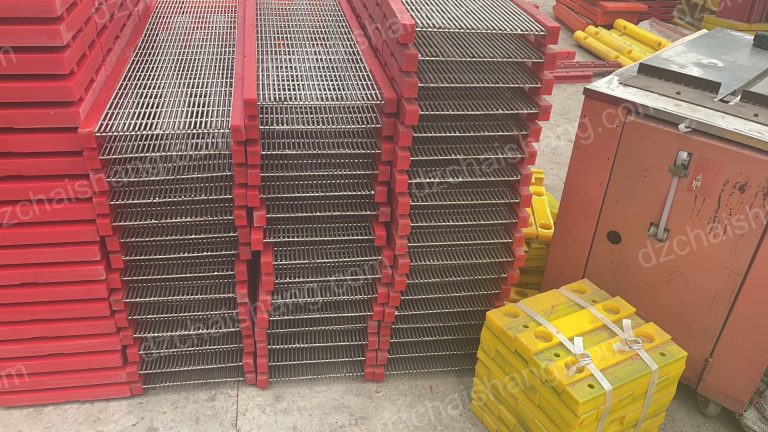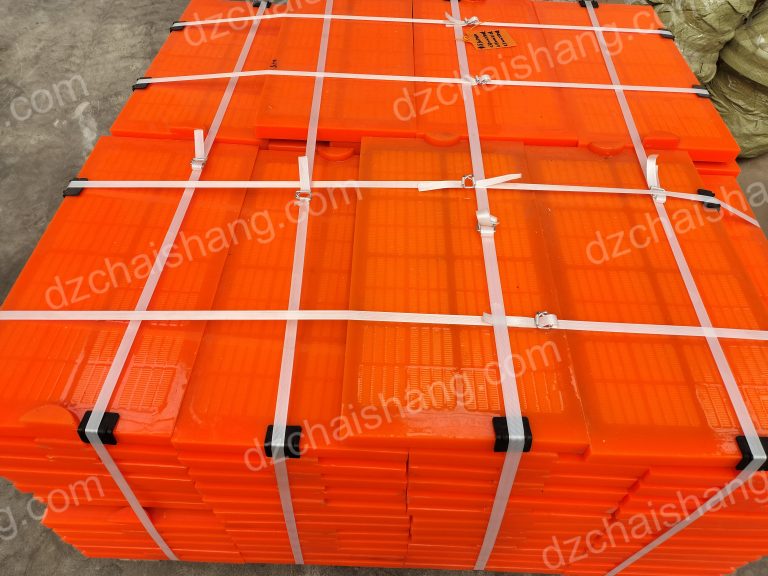

Good PU Screen Material Isn’t Always Easy to See?
Good PU Material Isn't Always Easy to See?
Choosing the right PU material for <a href="/tag/polyurethane-screen-panels" target="_blank"><strong><a href="/tag/polyurethane-screen" target="_blank"><strong><a href="/tag/polyurethane" target="_blank"><strong>polyurethane</strong></a> <a href="/tag/screen" target="_blank"><strong>screen</strong></a></strong></a> panels</strong></a> seems straightforward — until a brand-new batch cracks before it even reaches the vibrating deck. The frustration is real: you've invested in <a href="/tag/screening-media" target="_blank"><strong>screening media</strong></a>, waited for delivery, and before a single ton of material passes through, the surface shows cracks. The root cause often hides beneath a flawless appearance.
Good PU material and poor PU material can look virtually identical on the surface. The difference only reveals itself over time — sometimes as quickly as a few months of shelf storage. High-quality polyurethane <a href="/tag/screen-panels" target="_blank"><strong>screen panels</strong></a> maintain structural integrity during storage and operation, while inferior PU material degrades, cracks, and fails prematurely, even without being used. Visual inspection alone is not a reliable quality gate.

I've seen this scenario play out more times than I'd like to count over our 30-plus years of manufacturing polyurethane screen panels. A customer receives panels, stores them properly, and months later discovers surface cracking — with no one to blame but the raw material itself. Below, I break down exactly why this happens, how to evaluate PU material quality before it's too late, and what procurement teams should demand from suppliers.
Why Does PU Material Crack Before It's Even Used?
You unbox polyurethane screen panels that look perfect. Three months later, cracks spider across the surface. No impact, no abrasion, no vibration — just time and air. It's one of the most confusing failures in mineral processing consumables.
PU material cracks during storage primarily because of poor-quality raw polyurethane compounds. Inferior prepolymers, incorrect curative ratios, or low-grade chain extenders create internal stresses that manifest as surface cracking over weeks or months. This degradation occurs even in controlled storage environments, confirming that the failure is material-driven, not handling-related.

The Chemistry Behind Shelf Cracking
[Polyurethane is formed by reacting a polyol with a diisocyanate](https://en.wikipedia.org/wiki/<a href="/tag/urethane" target="_blank"><strong>urethane</strong></a>)[^1]. The quality, purity, and ratio of these components determine everything — hardness, elasticity, UV resistance, and long-term stability. When a manufacturer cuts corners on raw materials, several things go wrong at the molecular level:
- Incomplete cross-linking[^2]: If the curative ratio is off, the polymer network has weak spots. These spots are where cracks initiate.
- Residual moisture contamination: Water reacts with isocyanates to form CO₂ gas, creating micro-voids inside the casting[^3]. These voids act as stress concentrators.
- Low-grade chain extenders: Cheap chain extenders produce less uniform hard segments[^4], reducing the material's ability to resist internal stress relaxation.
- Poor UV and oxidation stabilizers: Without adequate stabilizer packages, even indoor ambient light and oxygen begin degrading the polymer backbone.
I once had a customer ship panels back to us for failure analysis. The panels had been stored in a covered, dry warehouse — ideal conditions. Yet within roughly three months, visible cracks had appeared across multiple panels. Logistics was investigated. Storage conditions were reviewed. Everything checked out. The conclusion was unavoidable: the PU material itself was the problem.
What "Good Storage" Can and Cannot Fix
| Storage Factor | Impact on Good PU Material | Impact on Poor PU Material |
|---|---|---|
| Temperature (15–25 °C) | Maintains full integrity | Slows but does not prevent degradation |
| Humidity (<65% RH) | No measurable effect | Slightly reduces surface moisture absorption |
| UV exposure (indirect) | Negligible | Accelerates surface yellowing and cracking |
| Duration (3–6 months) | No performance loss | Cracking, hardening, or surface tackiness likely |
The table tells a clear story: proper storage protects good PU material but cannot save poor PU material. If your panels crack in storage, the warehouse isn't the problem — the chemistry is.
How Can You Tell Good PU Material from Bad PU Material?
This is the central challenge for procurement teams. Two polyurethane screen panels can sit side by side on a warehouse floor, look identical in color, surface finish, and dimensional accuracy — and have completely different lifespans.
You generally cannot distinguish good PU material from poor PU material through visual inspection alone. Reliable differentiation requires material testing (hardness, tensile strength, rebound resilience, tear resistance), supplier documentation (raw material certificates, batch traceability), and — most practically — observing performance consistency over time across multiple orders.

Visual Clues — Limited but Not Useless
While surface appearance alone won't confirm quality, there are a few subtle signs that experienced buyers learn to look for:
- Surface uniformity: High-quality PU material tends to have a very consistent surface texture with no pinholes, bubbles, or uneven gloss areas. Micro-bubbles suggest moisture contamination during casting.
- Color consistency: Variations in color across a single panel or between panels in the same batch may indicate inconsistent mixing or curing.
- Edge finish: Clean, sharp edges with no crumbling or flashing often correlate with well-controlled casting processes.
However, I want to be honest: these are indicators, not guarantees. I've seen beautifully finished panels with terrible durability, and rough-looking panels that outlasted everything on the deck.
Material Testing Methods
For buyers who need certainty, laboratory testing provides objective data. Here are the key tests to request or perform:
| Test | What It Measures | Why It Matters for PU Material Quality |
|---|---|---|
| Shore A / Shore D hardness[^5] | Resistance to indentation | Confirms material meets specification; inconsistency flags poor mixing |
| Tensile strength (MPa) | Force needed to pull material apart | Higher values indicate better cross-linking and raw material quality |
| Elongation at break (%) | How far material stretches before failure | Low elongation in a flexible PU suggests brittleness and premature cracking |
| Tear resistance (kN/m)[^6] | Resistance to crack propagation | Directly correlates with screen panel longevity under vibration |
| Rebound resilience (%)[^7] | Energy return after deformation | Indicates elastomer quality; low rebound suggests excessive filler content |
| DIN abrasion loss (mm³)[^8] | Volume lost under standardized abrasion | Lower is better; critical for screening abrasive ores and aggregates |
Pro tip: Request a sample panel from a new supplier and have it independently tested at a polymer lab before committing to a bulk order. The cost of testing is trivial compared to the cost of a full batch failure on-site.
Supplier Documentation You Should Demand
Beyond testing, good suppliers provide transparency. When we ship polyurethane screen panels, we can trace every batch back to raw material lot numbers. Here's what serious buyers should ask for:
- Raw material certificates of analysis (COA) from the prepolymer and curative manufacturers
- Batch traceability records linking finished panels to specific production runs
- In-house QC test reports showing hardness, tensile, and elongation data per batch
- Material Safety Data Sheets (MSDS) confirming the chemical identity of the polyurethane system used
If a supplier hesitates to provide these documents, that hesitation itself is a data point.
Does Imported Raw Material Actually Make a Difference?
Sourcing conversations in polyurethane manufacturing eventually arrive at this question. Some buyers view "imported raw materials" as a marketing claim. Others treat it as a hard requirement. The truth sits in the middle — but leans heavily toward one side.
Imported PU raw materials from established global chemical producers generally offer more consistent molecular weight distribution, higher purity, and better-characterized performance profiles than many domestic alternatives. This consistency translates directly into more predictable screen panel performance, longer shelf life, and fewer in-field failures. However, the key variable is not origin — it is quality control rigor at the chemical supplier level.

Why Consistency Matters More Than Origin
A polyurethane prepolymer from a top-tier global producer (think Covestro, BASF, Huntsman, or Dow[^9]) comes with tight specifications:
- NCO content controlled within ±0.1%
- Viscosity batch-to-batch variation under 5%
- Moisture content guaranteed below 0.05%
- Shelf life clearly defined and conservative
These tight tolerances mean that when we set our casting parameters — mix ratio, mold temperature, cure time — the outcome is highly repeatable. Every panel in a production run behaves the same way. Every subsequent order behaves the same way as the last.
With lower-grade raw materials, batch-to-batch variation widens. One batch may produce excellent panels. The next batch, from the same supplier, may produce panels that crack in storage. The inconsistency is the problem, not necessarily the country of origin.
Our Approach to Raw Material Sourcing
In our factory, we use imported prepolymers and curatives processed on imported production equipment. Over 30 years, we've learned that the upfront cost premium on quality raw materials pays for itself many times over in:
- Reduced warranty claims
- Longer intervals between screen panel replacements for our customers
- Consistent Shore hardness and mechanical properties across thousands of panels
- Reliable shelf life — panels that can be stored without fear of degradation
This isn't marketing. It's a manufacturing reality we've verified across decades of production data.
What Should Buyers Look for When Selecting a <a href="/tag/pu-screen-panel" target="_blank"><strong><a href="/tag/pu-screen" target="_blank"><strong>pu screen</strong></a> panel</strong></a> Supplier?
Price per panel is easy to compare. Quality per panel is not. Procurement teams face the recurring challenge of evaluating suppliers when the product looks the same regardless of who made it.
When selecting a polyurethane screen panel supplier, buyers should evaluate raw material sourcing transparency, manufacturing process controls, batch traceability, independent test data availability, production experience, and — critically — real-world performance history from reference customers in similar applications. A supplier who can explain their PU material choices and back them with data is far more trustworthy than one who competes on price alone.

A Practical Supplier Evaluation Framework
Based on our experience both as a manufacturer and as a partner to <a href="/tag/mining" target="_blank"><strong>mining</strong></a> and aggregate operations globally, here's the framework I recommend:
| Evaluation Criteria | What to Ask | Red Flag |
|---|---|---|
| Raw material sourcing | "What prepolymer system do you use? Can you share COAs?" | Vague answers, refusal to name chemical suppliers |
| Production equipment | "What casting and curing equipment do you use?" | Manual-only processes with no temperature controls |
| QC process | "Do you test every batch? What parameters?" | No in-house testing lab or testing done only on complaint |
| Shelf life guarantee | "How long can panels be stored without degradation?" | No guarantee offered, or excessive caveats |
| Batch traceability | "Can you trace a failed panel back to its raw material lot?" | No traceability system in place |
| Experience | "How many years have you been producing <a href="/tag/pu-screen-panels" target="_blank"><strong>PU screen panels</strong></a>?" | New entrant with no reference installations |
| ODM/OEM capability | "Can you manufacture to our specifications and drawings?" | Inflexible product range, no custom capability |
| Lead time | "What is your typical production and delivery timeline?" | Unrealistically short or excessively long lead times |
Why Manufacturing Integration Matters
Suppliers who are pure traders — buying finished panels from various factories and reselling — have limited control over PU material quality. Every order might come from a different production line with different raw materials.
Integrated manufacturers who own their production lines can control the entire process: incoming raw material inspection, mixing, casting, curing, demolding, finishing, and final QC. This vertical control is the single most reliable predictor of consistent quality.
We operate as an integrated manufacturing and trading company with our own factory floor. When a customer reports an issue, we can pull production records, check raw material lot data, and identify the root cause. That capability only exists when you control the process end to end.
How Can You Protect Yourself from PU Material Failures?
Even with the best supplier, procurement teams should build safeguards into their buying process. Material failures carry costs far beyond the panel price — unplanned downtime, emergency orders, expedited shipping, and lost production tonnage[^10].
Protect yourself from PU material failures by implementing incoming inspection protocols, requesting shelf-life guarantees in purchase contracts, ordering pilot batches before committing to full volumes, maintaining relationships with at least two qualified suppliers, and documenting performance data to hold suppliers accountable over time.

Incoming Inspection Protocol
You don't need a polymer lab on-site. A basic incoming inspection can catch many issues:
- Visual inspection: Check for surface defects, bubbles, color inconsistency, and dimensional accuracy against drawings.
- Hardness spot-check: A portable Shore A durometer costs under $100 and takes seconds to use. Test multiple spots on each panel and compare to the specification.
- Flexibility check: Flex the panel edges gently. Panels with poor PU material may feel unusually stiff or show whitening (stress whitening) at bend points.
- Sample retention: Keep one panel from each shipment as a reference sample. Store it alongside the installed panels. If installed panels fail, compare them to the stored sample to determine if degradation occurred before or after installation.
Contractual Protections
Work these clauses into your supply agreements:
- Minimum shelf life guarantee (e.g., 12 months from delivery without degradation under specified storage conditions)
- Batch traceability requirement (supplier must provide lot numbers traceable to raw materials)
- Performance warranty (minimum operating hours or tonnage throughput before replacement)
- Right to independent testing (buyer may submit samples for third-party lab analysis at supplier's cost if defects are found)
These clauses cost nothing to include and dramatically shift accountability to where it belongs — with the manufacturer.
Frequently Asked Questions
Can you tell PU material quality just by looking at a polyurethane screen panel?
No. Good PU material and poor PU material are virtually indistinguishable by visual inspection alone. Surface finish, color, and dimensional accuracy do not reliably indicate the underlying polymer quality. Mechanical testing (hardness, tensile strength, elongation) and supplier documentation are the most reliable ways to evaluate PU material quality before installation.
Why do some polyurethane screen panels crack in storage without being used?
Storage cracking occurs because of inferior raw PU material — specifically, poor-quality prepolymers, incorrect curative ratios, or contamination during manufacturing. These defects create internal stresses that cause surface cracking within weeks to months, even under proper storage conditions. Good PU material maintains full integrity for 12 months or more in appropriate environments.
How long should polyurethane screen panels last in storage?
High-quality polyurethane screen panels made from good PU material should remain crack-free and fully functional for at least 12 months when stored indoors at moderate temperature (15–25 °C) and humidity (below 65% RH), away from direct sunlight[^11]. If panels degrade within three to six months of storage, the PU material quality should be investigated.
Does the brand of raw PU material matter for screen panel quality?
The brand itself matters less than the consistency and purity of the raw material. However, established global chemical producers typically maintain tighter manufacturing tolerances, better quality documentation, and more reliable batch-to-batch consistency. Specifying raw material from reputable producers reduces the risk of PU material variability reaching your screen deck.
What is the most cost-effective way to verify PU material quality?
Request a pilot batch of 5–10 panels before placing a full order. Install half and store the other half. Monitor both sets over three to six months. Simultaneously, request the supplier's raw material COAs and perform a portable hardness test on arrival. This combined approach costs very little but provides strong evidence of PU material reliability.
Conclusion
Good PU material doesn't announce itself with a different color or a shinier surface. The difference between a polyurethane screen panel that lasts years and one that cracks in three months of storage is entirely invisible to the naked eye. It lives in the chemistry — in the purity of the prepolymer, the precision of the mix ratio, and the quality controls governing every step of production.
The lesson I've learned over 30-plus years of manufacturing <a href="/tag/polyurethane-screening" target="_blank"><strong>polyurethane screening</strong></a> media is simple: trust data, not appearance. Request material certificates, test incoming hardness, retain reference samples, and build accountability into your supplier contracts
[^1]: "Urethane", https://en.wikipedia.org/wiki/Urethane. Polyurethanes are produced by the addition polymerization reaction between polyols (compounds with multiple hydroxyl groups) and diisocyanates; the resulting polymer properties—including hardness, elasticity, and chemical resistance—are governed by the structure and ratio of these reactants (see 'Polyurethane,' Wikipedia). Evidence role: definition; source type: encyclopedia. Supports: Polyurethane polymers are formed through the reaction of polyols with diisocyanates, and the stoichiometry and quality of reactants influence final material properties.. Scope note: General chemistry reference; does not specifically address screen panel applications. [^2]: "Comprehensive Investigation of Stoichiometry–Structure ...", https://pmc.ncbi.nlm.nih.gov/articles/PMC9501594/. Studies on polyurethane elastomer formulation demonstrate that the NCO/OH index critically determines crosslink density; sub-stoichiometric or super-stoichiometric ratios produce networks with dangling chain ends or excess hard segments, both of which reduce tensile strength and crack resistance (Hepburn, C., Polyurethane Elastomers, Elsevier Applied Science, 1992). Evidence role: mechanism; source type: paper. Supports: Deviations from the optimal NCO/OH stoichiometric ratio in polyurethane systems result in reduced crosslink density and inferior mechanical properties.. [^3]: "Role of Air Bubble Inclusion on Polyurethane Reaction Kinetics", https://pmc.ncbi.nlm.nih.gov/articles/PMC9104360/. The reaction of water with isocyanate groups is a well-documented side reaction in polyurethane processing, producing CO₂ gas and substituted urea; in cast elastomer systems, this leads to void formation that compromises mechanical integrity (Oertel, G., Polyurethane Handbook, Hanser Publishers). Evidence role: mechanism; source type: research. Supports: Water reacts with isocyanate groups to produce carbon dioxide gas and urea linkages, which can cause bubble formation and void defects in cast polyurethane products.. Scope note: The mechanism is general to polyurethane processing and not specific to screen panel manufacturing. [^4]: "Effects of Molecular Length and Polarity of Chain Extenders ...", https://pmc.ncbi.nlm.nih.gov/articles/PMC12899458/. Research on segmented polyurethane elastomers demonstrates that chain extender structure and purity significantly affect hard-segment ordering and phase separation, with less uniform hard domains correlating with reduced mechanical performance and increased susceptibility to stress relaxation (Petrović, Z.S. & Ferguson, J., Progress in Polymer Science, 1991). Evidence role: mechanism; source type: paper. Supports: Chain extender purity and type influence the regularity of hard segment domains in polyurethane elastomers, which in turn affects mechanical properties and stress relaxation behavior.. Scope note: Academic studies typically examine model systems; direct applicability to commercial screen panel formulations may vary. [^5]: "Shore hardness", https://en.wikipedia.org/?title=Shore_hardness&redirect=no. Shore durometer hardness, measured per ASTM D2240 or ISO 868, quantifies the resistance of elastomeric materials to localized surface indentation; the Shore A scale is used for softer elastomers while Shore D is applied to harder materials, making both scales relevant across the range of polyurethane screen panel formulations (see 'Shore durometer,' Wikipedia). Evidence role: definition; source type: encyclopedia. Supports: Shore hardness (A and D scales) is a standardized indentation hardness measurement widely used for characterizing polyurethane elastomers.. [^6]: "Tear strength of five elastomeric impression materials at ...", https://pubmed.ncbi.nlm.nih.gov/18533981/. Tear strength, measured per ASTM D624 or ISO 34-1, quantifies a material's resistance to the growth of a cut or nick under tension; in elastomeric screening media subjected to repeated dynamic loading, higher tear resistance has been associated with extended service life by inhibiting fatigue crack propagation. Evidence role: general_support; source type: paper. Supports: Tear resistance is a critical mechanical property for polyurethane components subjected to cyclic loading and vibration, as it governs resistance to crack propagation under service conditions.. Scope note: Direct correlation studies specific to polyurethane screen panels under <a href="/tag/vibrating-screen" target="blank"><strong>vibrating screen</strong></a> conditions are limited in the open literature; most evidence is extrapolated from general elastomer fatigue research. [^7]: "Effect of Surface-Modified Mica in Hybrid Filler Systems on the ...", https://pmc.ncbi.nlm.nih.gov/articles/PMC12389428/. Rebound resilience, measured per ASTM D2632 or ISO 4662, reflects the elastic recovery of an elastomer; research shows that increasing filler loading in polyurethane systems progressively reduces rebound resilience due to enhanced hysteresis losses, making it a useful indirect indicator of filler content (Prisacariu, C., Polyurethane Elastomers, Springer, 2011). Evidence role: mechanism; source type: paper. Supports: Rebound resilience in polyurethane elastomers decreases with increasing filler content due to greater energy dissipation during deformation.. Scope note: Low rebound resilience can also result from formulation choices unrelated to filler content, such as soft segment type or hard segment concentration. [^8]: "Abrasion (mechanical)", https://en.wikipedia.org/wiki/Abrasion(mechanical). The DIN abrasion test, originally specified in DIN 53516 and now internationally harmonized as ISO 4649, measures the volume of material removed from a test specimen by a rotating abrasive drum under standardized conditions, providing a comparative index of wear resistance for elastomeric materials. Evidence role: definition; source type: institution. Supports: DIN abrasion testing (now harmonized as ISO 4649) is a standardized method for measuring the abrasion resistance of rubber and polyurethane elastomers by quantifying volume loss under controlled abrasive conditions.. Scope note: The standard defines laboratory test conditions that may not perfectly replicate the complex wear environment of a vibrating screen deck. [^9]: "Polyurethane Market (2026 - 2033)", https://www.grandviewresearch.com/industry-analysis/polyurethane-pu-market. Industry analyses consistently identify Covestro, BASF, Dow, and Huntsman among the leading global producers of isocyanates (MDI and TDI) and polyurethane systems, collectively accounting for a substantial share of worldwide production capacity (see, e.g., ICIS Supply & Demand Database; 'Polyurethane,' Wikipedia). Evidence role: general_support; source type: research. Supports: Covestro, BASF, Huntsman, and Dow are among the world's largest producers of MDI, TDI, and polyurethane system chemicals.. Scope note: Market positions shift over time; the ranking reflects recent industry structure and may not capture all regional suppliers. [^10]: "Every 60 minutes of unplanned downtime costs mining ...", https://www.facebook.com/weathersolve/posts/every-60-minutes-of-unplanned-downtime-costs-mining-operations-an-estimated-3000/1668351145084859/. Industry studies estimate that unplanned downtime in mining and mineral processing can cost operations thousands to tens of thousands of dollars per hour, encompassing lost production, emergency procurement, and cascading process disruptions (see, e.g., McKinsey & Company, 'Unlocking the potential of the mining value chain,' or similar mining productivity analyses). Evidence role: general_support; source type: research. Supports: Unplanned downtime in mineral processing operations carries significant costs that typically far exceed the replacement cost of the failed component.. Scope note: Downtime cost figures vary widely by operation scale, commodity, and geography; no single figure is universally applicable. [^11]: "Shelf Life of Elastomeric Components", https://www.epri.com/research/products/NP-6608. ISO 2230 provides guidelines for the storage of rubber and elastomeric products, recommending cool, dry conditions away from direct sunlight and ozone sources to preserve material properties; these principles are broadly applicable to polyurethane elastomers. Evidence role: general_support; source type: institution. Supports: Elastomeric products including polyurethanes should be stored under controlled temperature, humidity, and light conditions to prevent premature degradation.. Scope note: ISO 2230 primarily addresses vulcanized rubber; polyurethane-specific storage standards are less formalized, though the underlying degradation mechanisms are analogous.