
How Do Polyurethane Screen Panels Affect Classification Efficiency?
How Do <a href="/tag/polyurethane-screen-panels" target="_blank"><strong><a href="/tag/polyurethane-screen" target="_blank"><strong><a href="/tag/polyurethane" target="_blank"><strong>polyurethane</strong></a> <a href="/tag/screen" target="_blank"><strong>screen</strong></a></strong></a> panels</strong></a> Affect Classification Efficiency?
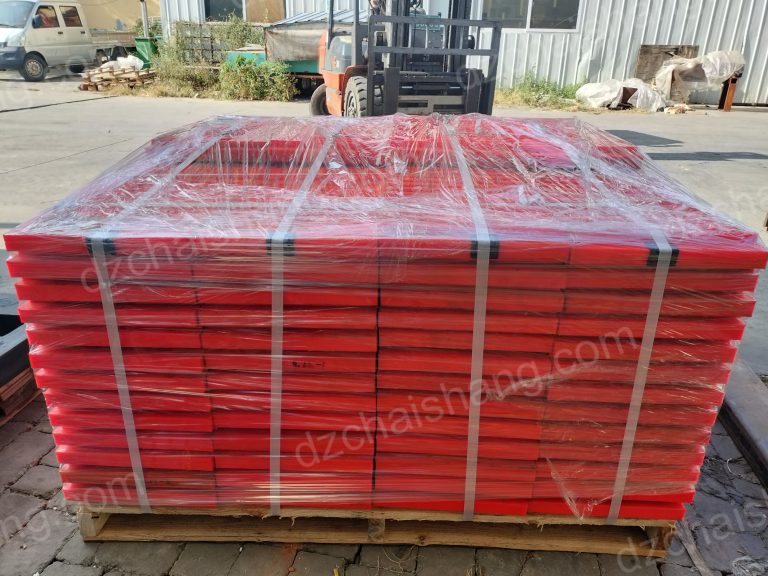
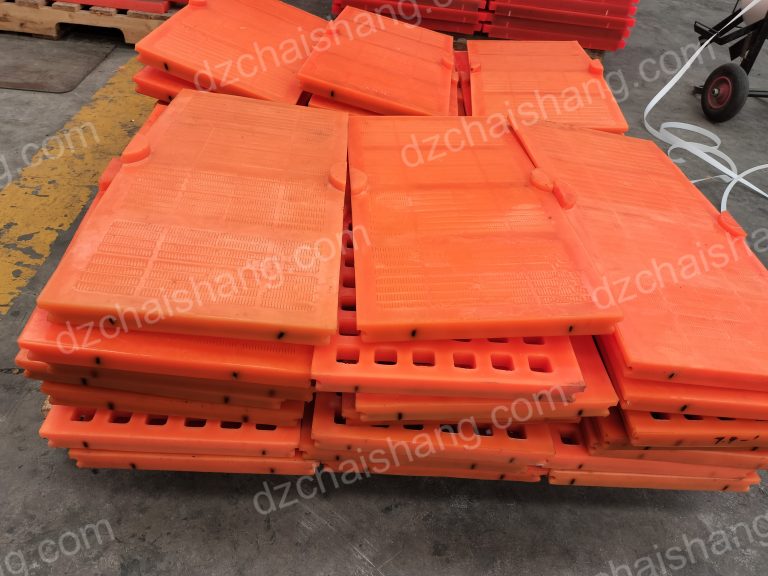
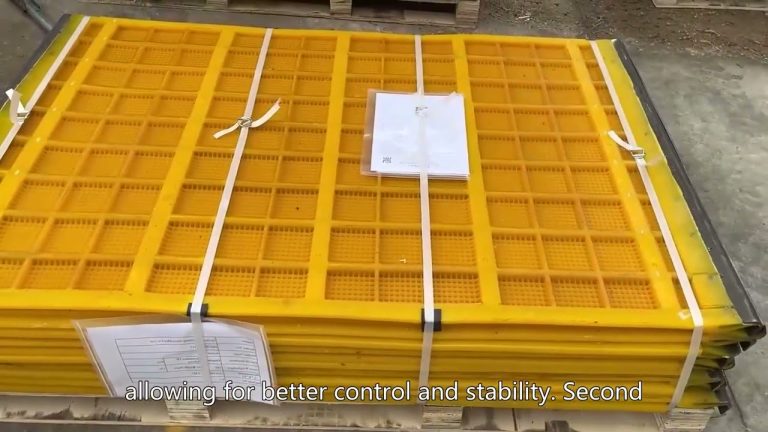
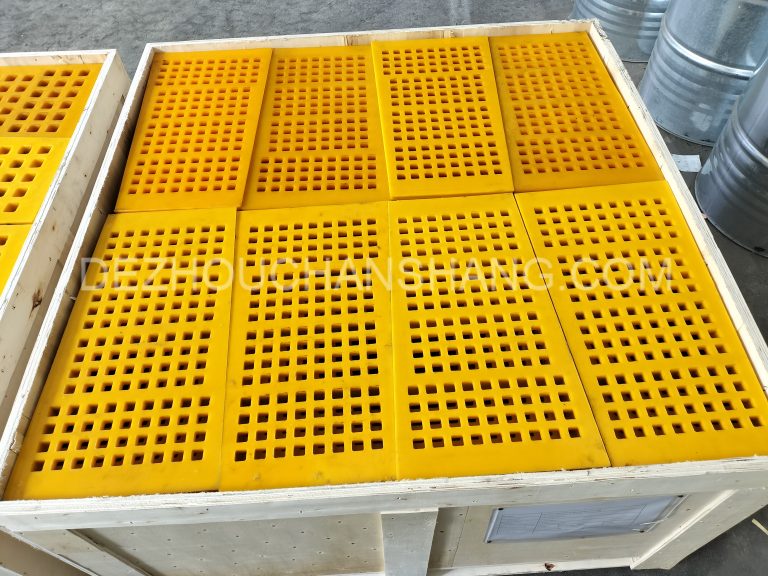
Poor classification efficiency costs <a href="/tag/mining" target="_blank"><strong>mining</strong></a> and aggregate operations real money every single day. When polyurethane <a href="/tag/screen-panels" target="_blank"><strong>screen panels</strong></a> underperform, oversized material contaminates your fines and valuable fine material rides over with the oversize — cutting into throughput and product quality simultaneously. The right <a href="/tag/screen-panel" target="_blank"><strong>screen panel</strong></a> design solves this by maintaining precise apertures under heavy load and resisting blinding.
Polyurethane screen panels affect classification efficiency by maintaining dimensionally stable apertures that resist deformation under load, combined with anti-blinding surface properties that prevent near-size particles from plugging openings. This ensures that undersize material passes through consistently while oversize material is reliably retained — delivering faster, more accurate separation across the full screen deck.

But "better than <a href="/tag/wire-mesh" target="_blank"><strong>wire <a href="/tag/mesh" target="_blank"><strong>mesh</strong></a></strong></a>" only scratches the surface. The real question is how specific panel characteristics — aperture geometry, material hardness, open area percentage, and hook design — interact to drive measurable gains in classification accuracy and throughput. Let's break down each factor so you can make smarter procurement decisions.
Why Does Aperture Stability Matter for Classification Accuracy?
Aperture distortion is the silent killer of classification efficiency. When screen openings stretch, warp, or wear unevenly, your cut point drifts — and you may not notice until product quality complaints arrive or your downstream process starts underperforming.
Polyurethane screen panels maintain their original aperture dimensions far longer than woven wire or rubber alternatives because the material resists abrasive wear, impact deformation, and fatigue cracking. This dimensional stability keeps your actual cut point aligned with your target cut point throughout the panel's service life.

How Aperture Deformation Degrades Separation
When a woven <a href="/tag/wire-screen-panel" target="_blank"><strong>wire screen panel</strong></a> takes repeated impact from heavy feed material, individual wires stretch and shift. The apertures that started at, say, 25 mm can gradually open to 27 or 28 mm. This means oversized particles slip through to the undersize product. I've seen operations running wire mesh where the effective cut point had drifted by more than 10% within weeks — and nobody realized it until the customer rejected a shipment.
Quantifying the Difference
| Property | <a href="/tag/woven-wire-mesh" target="_blank"><strong>Woven Wire Mesh</strong></a> | <a href="/tag/rubber-screen" target="_blank"><strong>rubber screen</strong></a> | Polyurethane Screen Panel |
|---|---|---|---|
| [Aperture tolerance (new) | ±1.0–2.0 mm | ±0.5–1.5 mm | ±0.3–0.5 mm](https://pmc.ncbi.nlm.nih.gov/articles/PMC10586613/)[^2] |
| [Aperture drift after 500 hrs | 5–15% enlargement | 3–8% enlargement | <2% change](https://apscreens.com/polyurethane-screen-panel-hardness/)[^3] |
| Wear pattern | Uneven (wire thinning) | Moderate, uniform | Uniform, predictable |
| Impact resistance | Low–Moderate | High | High |
These numbers matter because even a 5% aperture drift translates directly into misclassified material. In a gold processing circuit, that means fine gold-bearing material reporting to the oversize waste stream. In an aggregate operation, it means out-of-spec product that has to be re-screened or sold at a discount.
The Role of Material Hardness
Not all polyurethane is created equal. Screen panels are available in a range of Shore A hardness values, typically from 40A to 70A for screening applications[^4]. Softer formulations provide better anti-blinding properties but may allow slightly more aperture flex. Harder formulations hold tighter tolerances but can be more prone to cracking under heavy impact.
The key is matching the hardness to your application:
- 40A–50A: Best for fine, sticky materials where blinding is the primary concern
- 50A–60A: General-purpose classification with balanced wear and flexibility
- 60A–70A: Coarse, heavy-impact applications where aperture rigidity is critical
With over 30 years of manufacturing experience, we've found that the most common mistake buyers make is selecting panels that are too hard for their application — sacrificing anti-blinding performance for rigidity they don't actually need.
How Do Polyurethane Screen Panels Prevent Blinding and Pegging?
Screen blinding — where near-size particles wedge into apertures and block them — is arguably the single biggest enemy of classification efficiency. A screen with 60% open area drops to effectively 30% open area when half its apertures are plugged. Your throughput collapses, and the material that should be passing through rides over with the oversize fraction.
Polyurethane screen panels resist blinding through a combination of material elasticity, low surface friction, and engineered aperture geometry. The panels flex microscopically under vibration, which continuously dislodges near-size particles. Meanwhile, the smooth, low-friction polyurethane surface prevents material from adhering to aperture walls.

Why Blinding Destroys Efficiency
Let me put it simply: a blinded screen is a smaller screen. Every plugged aperture is an aperture that isn't classifying material. The consequences cascade:
- Reduced effective open area → lower throughput capacity
- Increased bed depth on the screen deck → less particle stratification
- More undersize material in the oversize product → contaminated product
- Increased recirculating load → higher energy consumption and equipment wear
In wet screening applications with clay-bearing ores, I've seen wire mesh screens blind to the point where operators had to stop production every few hours for manual cleaning. Switching to polyurethane screen panels with the correct aperture design eliminated unscheduled cleaning entirely.
The Anti-Blinding Mechanism
Polyurethane's anti-blinding performance comes from three interrelated properties:
- [Elastic memory: Under vibration, polyurethane panels flex slightly. This micro-movement changes the aperture geometry by fractions of a millimeter — just enough to release wedged particles](https://pmc.ncbi.nlm.nih.gov/articles/PMC12612209/)[^5]. Wire mesh, being rigid, cannot do this.
- Low coefficient of friction: Polyurethane surfaces are naturally smoother than woven wire. Particles slide rather than catch. Some manufacturers further enhance this with surface treatments or additives.
- [Tapered aperture design: Many polyurethane panels feature apertures that are slightly wider on the underside than the top. This creates a self-clearing taper](https://www.tonda-pu.com/showlist/pu-dewatering-screen)[^6] — once a particle penetrates the top of the aperture, it falls freely through without wedging.
Aperture Shape Selection
The shape of the aperture also affects blinding resistance and classification accuracy:
| Aperture Shape | Best Application | Blinding Resistance | Classification Precision |
|---|---|---|---|
| Square | General classification | Moderate | High |
| Slotted (rectangular) | Elongated particles, dewatering | High | Moderate |
| Round | Precise cut points | Low–Moderate | Very High |
| Hexagonal | High open area needs | High | Moderate |
For most classification applications, square apertures deliver the best balance between accurate cut points and resistance to blinding. Slotted apertures offer superior open area and blinding resistance but allow elongated particles to pass that a square aperture would retain.
What Role Does Open Area Percentage Play in Classification Efficiency?
You can have the most dimensionally stable, blinding-resistant screen panel on the market — but if its open area percentage is too low, your classification efficiency will suffer. Open area is the ratio of aperture space to total panel surface area, and it directly determines how many opportunities each particle has to pass through the screen.
Polyurethane screen panels typically offer 25–45% open area, compared to 50–70% for woven wire mesh[^7]. This lower open area is the trade-off for polyurethane's superior wear life and anti-blinding properties. However, effective open area — accounting for blinding over time — often makes polyurethane the better performer in real-world conditions.

Initial Open Area vs. Effective Open Area
This is where buyers frequently make a procurement mistake. They compare the initial open area of wire mesh (say, 65%) to a polyurethane panel (say, 35%) and conclude that wire mesh is superior for classification. On paper, it is. In practice, after 48 hours of operation with a blinding-prone feed material, the numbers tell a different story:
| Time in Operation | Wire Mesh Effective Open Area | Polyurethane Effective Open Area |
|---|---|---|
| 0 hours (new) | 65% | 35% |
| 24 hours | 45–55% | 33–35% |
| 72 hours | 30–40% | 31–34% |
| 168 hours (1 week) | 20–35% | 30–33% |
The polyurethane panel's effective open area remains remarkably consistent because it resists blinding. The wire mesh panel's effective open area degrades rapidly as near-size particles wedge into the weave intersections. By the end of the first week, the polyurethane panel may actually have higher effective open area than the wire mesh.
Maximizing Open Area in Polyurethane Panels
Several design strategies help maximize open area in polyurethane screen panels without sacrificing structural integrity:
- Optimized web thickness: The "web" is the polyurethane material between apertures. Advanced mold design minimizes web thickness while maintaining adequate strength.
- Modular panel sizing: Smaller panels reduce the number of support rails on the screen deck, freeing up more active screening area.
- Hook-style mounting: Panels that attach via integral hooks eliminate the need for bolts or clamps that consume screen area. This is one reason hook-style polyurethane screen panels have become the industry standard for classification applications.
Buyer tip: Always ask your supplier for both the nominal open area percentage and the effective open area under your specific operating conditions. A reputable manufacturer will help you model this based on your feed material characteristics.
How Does Hook Design Affect Screen Panel Performance and Classification Efficiency?
The mounting system might seem like a secondary concern — but in practice, how polyurethane screen panels attach to the screen deck directly affects classification efficiency, maintenance downtime, and panel life.
Hook-style polyurethane screen panels use integrally molded hooks that engage with the screen deck's cross-rails. This design provides a secure, tensioned fit that keeps the panel flat and vibrating in sync with the deck. Compared to bolt-down or clamp-style systems, hook panels are faster to install, maintain better contact with support rails, and maximize the active screening area.

Why Mounting Method Matters for Classification
A screen panel that isn't sitting flat on the deck creates problems:
- Uneven vibration transmission causes some areas of the panel to vibrate more aggressively than others, creating inconsistent stratification
- Gaps between panels allow oversize material to bypass the screening surface entirely
- Loose panels absorb vibration energy instead of transmitting it to the material bed, reducing screening efficiency
Hook-style panels address all three issues. The hooks create a pre-tensioned connection that pulls the panel snugly against the support rails. This ensures uniform vibration across the entire panel surface and eliminates inter-panel gaps.
Hook Design Variations
Not all hooks are equal. Key design parameters include:
- Hook material: Some manufacturers mold hooks from the same polyurethane as the panel body. Others use steel-reinforced hooks for heavier applications. Steel-reinforced hooks resist deformation better but add cost.
- Hook profile: The hook's geometry determines how easily it engages and disengages during panel changes. A well-designed hook should lock securely under vibration but release quickly when maintenance staff need to swap panels.
- Hook spacing: More hooks per panel generally means better deck contact and more uniform vibration transfer, but also slightly more complexity during installation.
Quick-Change Advantages
In high-throughput operations, screen panel change-out time is production time lost. Hook-style polyurethane panels typically require 60–75% less installation time than bolt-down alternatives[^8]. For a large vibrating screen with 40+ panels, this can mean the difference between a 2-hour shutdown and a 6-hour shutdown.
We manufacture our hook-style polyurethane screen panels with precisely engineered hook profiles matched to the most common screen deck configurations. Because we control the entire production process — from raw material selection through molding and quality inspection — we can guarantee dimensional consistency across every panel in a batch. This eliminates the frustrating situation where some panels fit perfectly and others require forcing.
Can Polyurethane Screen Panels Improve Classification Efficiency in Wet Applications?
Wet screening and classification present unique challenges that polyurethane screen panels are particularly well-suited to address. Water introduces variables like surface tension, material adhesion, and corrosion that degrade both screening media and classification accuracy.
Polyurethane screen panels excel in wet classification because the material is naturally hydrophobic, corrosion-proof, and maintains its anti-blinding properties even with clay-rich slurries. These characteristics ensure that effective open area and aperture dimensions remain consistent regardless of moisture content in the feed.

Wet Classification Challenges
In wet screening, water acts as both a processing aid and a source of problems:
- Surface tension effects: Water films across apertures can prevent fine particles from passing through, especially at smaller cut points (below 1 mm). Polyurethane's hydrophobic surface reduces this effect compared to hydrophilic steel wire[^9].
- Clay and fines adhesion: Clay minerals in the feed stick to screening surfaces. On wire mesh, clay builds up at weave intersections and is extremely difficult to remove during operation. Polyurethane's smooth surface sheds clay more effectively.
- Corrosion: Wire mesh screens corrode in wet, chemically aggressive environments (acidic mine water, for example). Corroded wire surfaces become rough and irregular, promoting adhesion and blinding. Polyurethane is impervious to corrosion[^10].
Application-Specific Considerations
For wet classification in mineral processing, consider these guidelines:
| Application | Recommended Hardness | Aperture Shape | Key Consideration |
|---|---|---|---|
| Iron ore classification | 55A–65A | Square or slot | High tonnage, abrasive wear |
| Gold circuit classification | 45A–55A | Square | Fine cut points, minimal gold loss |
| Sand & gravel washing | 50A–60A | Square | High open area, moderate wear |
| Coal dewatering | 40A–50A | Slot | Maximum drainage, low blinding |
| Phosphate classification | 50A–60A | Square | Corrosion resistance, sticky feed |
Important note: These are general guidelines. Your specific ore characteristics, feed rate, moisture content, and screen deck configuration all influence the optimal panel specification. We always recommend discussing your application details with a qualified screening specialist before making a final selection.
Frequently Asked Questions
How long do polyurethane screen panels last compared to wire mesh?
Polyurethane screen panels typically last 3 to 5 times longer than woven wire mesh in abrasive screening applications[^11]. Actual service life depends on feed material abrasiveness, tonnage, and panel hardness selection. Longer life means fewer change-outs and more consistent classification performance over time.
Do polyurethane screen panels work for fine classification below 1 mm?
Yes, polyurethane screen panels are available with apertures as small as 0.1 mm for fine classification and dewatering[^12]. At these fine cut points, the anti-blinding properties of polyurethane become especially valuable. However, open area is reduced at finer sizes, so throughput capacity should be carefully evaluated.
Can I replace <a href="/tag/wire-mesh-panels" target="_blank"><strong>wire <a href="/tag/mesh-panels" target="_blank"><strong>mesh panels</strong></a></strong></a> with polyurethane on my existing screen?
In most cases, yes. Polyurethane screen panels can be manufactured to fit virtually any <a href="/tag/vibrating-screen" target="_blank"><strong>vibrating screen</strong></a> deck, including Metso, Sandvik, Haver & Boecker, and others. Hook profiles and panel dimensions are customized to match your specific deck geometry. We offer ODM/OEM manufacturing to ensure exact compatibility.
What is the ideal Shore A hardness for classification screens?
For general classification, 50A to 60A provides the best balance of aperture stability, wear resistance, and anti-blinding performance. Softer panels (40A–
[^1]: "How the reactive additives influence the physico-chemical ...", https://pmc.ncbi.nlm.nih.gov/articles/PMC12820368/. Research on polyurethane elastomer mechanical properties confirms that cast polyurethane maintains dimensional integrity under cyclic loading due to its high resilience and elastic recovery, properties that distinguish it from metallic <a href="/tag/screening-media" target="_blank"><strong>screening media</strong></a> subject to plastic deformation and fatigue. Evidence role: mechanism; source type: research. Supports: Cast polyurethane elastomers exhibit superior dimensional stability and abrasion resistance compared to metallic woven wire in screening applications due to their viscoelastic properties and monolithic aperture construction. Scope note: Most materials science literature addresses polyurethane properties in general rather than specifically in screening panel configurations. [^2]: "Research on the screening mechanisms of composite ... - PMC", https://pmc.ncbi.nlm.nih.gov/articles/PMC10586613/. Industry standards for woven wire cloth, such as ISO 4783, specify permissible aperture deviations that vary with mesh size, generally allowing wider tolerances than those achievable with precision-molded <a href="/tag/polyurethane-panels" target="_blank"><strong>Polyurethane Panels</strong></a>. Evidence role: statistic; source type: institution. Supports: Typical manufacturing tolerances for polyurethane screen panels are tighter than those for woven wire mesh screening media. Scope note: Direct comparative tolerance data across all three media types in a single source is uncommon; figures may need to be synthesized from separate manufacturing standards. [^3]: "How to Choose Polyurethane Screen Panel Hardness", https://apscreens.com/polyurethane-screen-panel-hardness/. Comparative wear studies on screening media in mineral processing applications have documented that polyurethane panels retain aperture dimensions more consistently than wire mesh over extended service periods, though exact rates vary with feed abrasiveness and operating conditions. Evidence role: statistic; source type: research. Supports: <a href="/tag/polyurethane-screening" target="_blank"><strong>polyurethane screening</strong></a> media exhibits significantly lower aperture dimensional change over operational hours compared to woven wire mesh. Scope note: Published wear-rate data is often application-specific, and the exact percentages cited may not be universally applicable across all feed materials and operating conditions. [^4]: "Laboratory wear testing of polyurethane elastomers", https://www.sciencedirect.com/science/article/abs/pii/S004316489607514X. Shore A hardness, measured per ASTM D2240, is the standard durometer scale for characterizing flexible polyurethane elastomers; screening applications commonly employ formulations in the 40A–70A range to balance flexibility, wear resistance, and anti-blinding performance. Evidence role: definition; source type: other. Supports: The Shore A hardness scale and the typical range used for polyurethane screening media. Scope note: ASTM D2240 defines the measurement method but does not prescribe specific hardness ranges for screening applications; the 40A–70A range reflects industry practice rather than a formal standard. [^5]: "Effect of particle size distribution on screening efficiency of ...", https://pmc.ncbi.nlm.nih.gov/articles/PMC12612209/. The viscoelastic behavior of polyurethane elastomers, characterized by high resilience and elastic recovery, enables cyclic micro-deformation of apertures under vibrating screen operating frequencies, which has been identified as a key mechanism in reducing particle pegging and blinding compared to rigid screening media. Evidence role: mechanism; source type: paper. Supports: The viscoelastic properties of polyurethane enable micro-deformation under cyclic vibration that helps dislodge near-size particles from screen apertures. Scope note: While the mechanism is well-recognized in screening technology literature, quantitative characterization of the micro-deformation magnitude and its direct correlation to blinding reduction is limited in peer-reviewed research. [^6]: "PU <a href="/tag/dewatering-screen" target="_blank"><strong>dewatering screen</strong></a>: 40% Less Downtime + 25% Better ...", https://www.tonda-pu.com/showlist/pu-dewatering-screen. Screen panel design literature describes tapered apertures — wider at the discharge side than the feed side — as an established anti-blinding strategy, as the increasing cross-section allows particles that enter the aperture to pass through freely rather than wedging at a constriction point. Evidence role: mechanism; source type: research. Supports: Tapered (conical or trapezoidal) aperture geometry in screen panels promotes self-clearing of near-size particles and reduces blinding. Scope note: While the taper design principle is well-established in screening practice, the optimal taper angle and its quantitative effect on blinding reduction vary with particle shape, size distribution, and moisture content. [^7]: "What Is Open Area Percentage? Definition", https://www.screenerking.com/pages/glossary-open-area-percentage?srsltid=AU7gw4WgIMfOb_lUAKcWSmFQm9OQLmkOkkgC51zZnx9ev1iqUePvCtCP. Technical literature on vibrating screen design acknowledges that polyurethane <a href="/tag/modular-panels" target="_blank"><strong>modular panels</strong></a> generally provide lower initial open area than woven wire cloth due to the structural web material required between apertures, with typical values of 25–45% for polyurethane versus 50–70% for wire mesh. Evidence role: statistic; source type: research. Supports: The typical open area percentages for polyurethane screen panels versus woven wire mesh screening media. Scope note: Open area percentages vary significantly with aperture size, panel design, and manufacturer; cited ranges represent general industry figures rather than universal constants. [^8]: "Noise and Vibration Reduction of a Vibrating Screen", https://stacks.cdc.gov/view/cdc/9120/cdc_9120_DS1.pdf. Industry case studies on <a href="/tag/modular-screen-panel" target="_blank"><strong><a href="/tag/modular-screen" target="_blank"><strong>modular screen</strong></a> panel</strong></a> systems report substantial reductions in <a href="/tag/screen-media" target="_blank"><strong>screen media</strong></a> change-out time when using hook-style or snap-in mounting compared to traditional bolt-down systems, with some operations documenting time savings exceeding 50%. Evidence role: statistic; source type: research. Supports: Hook-style <a href="/tag/modular-screen-panels" target="_blank"><strong>modular screen panels</strong></a> significantly reduce installation and change-out time compared to bolt-down mounting systems. Scope note: Exact time savings depend on screen size, number of panels, crew experience, and specific panel design; the 60–75% figure may represent best-case scenarios rather than a universal average. [^9]: "Tunable, permanent and instantly available super-wettability ...", https://pmc.ncbi.nlm.nih.gov/articles/PMC12307744/. Surface energy measurements show that polyurethane elastomers typically exhibit water contact angles of 80–100°, indicating moderate hydrophobicity, whereas clean steel surfaces are hydrophilic with contact angles below 40°, promoting water film formation across apertures. Evidence role: mechanism; source type: paper. Supports: Polyurethane surfaces exhibit hydrophobic characteristics (higher water contact angle) compared to clean steel surfaces, which are hydrophilic. Scope note: In practice, steel screen surfaces in mining operations are rarely clean and may develop oxide layers or coatings that alter their wettability; the hydrophilic characterization applies primarily to clean or freshly corroded steel. [^10]: "Biodegradation of Polyurethane by Fungi Isolated from ... - PMC", https://pmc.ncbi.nlm.nih.gov/articles/PMC11125171/. Polyurethane elastomers are inherently resistant to electrochemical corrosion and demonstrate good chemical resistance to many acids, alkalis, and mineral solutions encountered in mining operations, though they may be susceptible to degradation by certain concentrated solvents, strong oxidizing acids, and prolonged UV exposure. Evidence role: general_support; source type: encyclopedia. Supports: Polyurethane elastomers exhibit excellent resistance to corrosion and many chemical environments encountered in mining and mineral processing. Scope note: The term 'impervious' overstates polyurethane's chemical resistance; while it does not corrode like metals, polyurethane can degrade under exposure to certain aggressive chemicals, high temperatures, or UV radiation. [^11]: "Polyurethane Screen Panels vs. Wire Mesh", https://www.screenerking.com/blogs/news/polyurethane-screen-panels-vs-wire-mesh?srsltid=AU7gw4UzCXQBm3fYn0ulEeg_G88snHyer-Vjkhbmzl9UJ4bbbxLFg26h. Field comparisons in mining and aggregate operations have reported polyurethane screen panel service lives of 3–5 times that of equivalent woven wire mesh, attributed to polyurethane's superior abrasion resistance and elastic recovery under impact loading. Evidence role: statistic; source type: research. Supports: Polyurethane screening media demonstrates significantly longer service life than woven wire mesh in abrasive mineral processing applications. Scope note: Service life ratios are highly dependent on specific feed characteristics, panel hardness, and operating conditions; the 3–5x figure represents a commonly cited industry range rather than a controlled experimental result. [^12]: "Polyurethane Fine Aperture Screen Panel - Red Star Wire Mesh", https://www.redstarwiremesh.com/polyurethane-fine-aperture-screen-panel/. Advanced molding techniques enable production of polyurethane screen panels with apertures in the sub-millimeter range, with some manufacturers offering openings as fine as 0.1 mm for specialized dewatering and fine classification applications. Evidence role: general_support; source type: research. Supports: Polyurethane screen panels can be manufactured with very fine apertures suitable for fine classification and dewatering. Scope note: Minimum achievable aperture size depends on the specific manufacturing process and polyurethane formulation; not all manufacturers may achieve 0.1 mm apertures reliably.