
How Do Polyurethane Screen Panels Support OEM/ODM Replacement Programs?
Struggling with costly OEM <a href="/tag/screen" target="_blank"><strong>screen</strong></a> replacements and downtime? Custom <a href="/tag/polyurethane-panels" target="_blank"><strong><a href="/tag/polyurethane" target="_blank"><strong>polyurethane</strong></a> Panels</strong></a> offer a perfect-fit, high-performance alternative[^1], boosting your efficiency and saving you money.
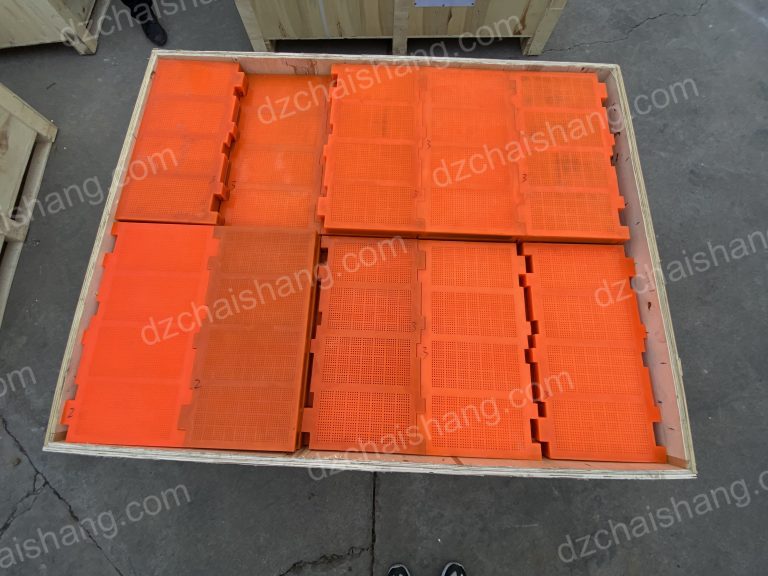
<a href="/tag/polyurethane-screen-panels" target="_blank"><strong><a href="/tag/polyurethane-screen" target="_blank"><strong>polyurethane screen</strong></a> panels</strong></a> support OEM/ODM programs by being fully customizable. We can match original dimensions, mounting systems, and installation structures. We also offer customization of aperture size and material hardness to meet or exceed original performance, ensuring seamless integration with your existing equipment.

So, you see that custom PU panels are a viable option. But the real value is in the details. How do you go from a standard, worn-out panel to a high-performance, custom-fit replacement that drops right into your machine without any issues? It's a process that combines precise engineering with material science. Let's break down exactly how we ensure that perfect fit and even improve upon the original design. This is where the real value of an OEM/ODM program shines, and it’s simpler than you might think.
How Can You Ensure a Perfect Fit with Existing Equipment?
Worried a replacement panel won't fit your machine? An improper fit means installation headaches and potential damage. We guarantee a perfect match by replicating the original specifications precisely.
[We ensure a perfect fit by manufacturing panels according to the original factory dimensions](https://thewesterngroup.com/sand-gravel-<a href="/tag/mining" target="_blank"><strong>mining</strong></a>-<a href="/tag/screens" target="_blank"><strong>screens</strong></a>/polyurethane-screens/)[^2], hook types, and installation structures. By matching these critical elements, our polyurethane panels can be installed as direct drop-in replacements for OEM parts, eliminating the need for any equipment modification.

Ensuring a perfect fit goes beyond just the basic length and width. It's about creating a component that integrates flawlessly with your screening deck to maximize performance and prevent costly issues. A panel that is even slightly off can cause improper tensioning, leading to panel flutter and premature failure. Worse, it can create gaps between panels, allowing valuable material to bypass the screening surface, which contaminates your final product. This is why our OEM/ODM process is so meticulous.
Replicating Original Dimensions and Mounts
We start by capturing the exact specifications of your original panel. This includes not just overall size but also the specific mounting system. Whether your machine uses tensioned side hooks, pin-and-sleeve connections, or a simple bolt-down system, we replicate it. I remember a client who struggled with aftermarket panels that had slightly different hook profiles. This small difference prevented proper tensioning, causing the panels to wear out in half the expected time. We reverse-engineered their original hooks to create a custom mold, and the problem was solved for good. This attention to detail means our panels install just like the originals, saving your maintenance team time and frustration during change-outs.
Compatibility Across Major Equipment Brands
Our goal is to be a one-stop shop for your screening needs, regardless of who made your <a href="/tag/vibrating-screen" target="_blank"><strong>vibrating screen</strong></a>[^3]. We have experience producing replacement panels for a wide range of mainstream equipment manufacturers.
| Feature | OEM Specification Example | Our Custom Solution |
|---|---|---|
| Mounting Type | Tensioned C-Hooks | Exact replication of hook profile and position |
| Panel Size | 1045mm x 700mm | Precision molding to 1045mm x 700mm |
| Sealing Edge | Separate Rubber Seal Strip | Custom-molded integrated polyurethane seal |
| Fixing System | Bolt-Down with Steel Frame | Matched bolt-hole pattern and frame insert |
This ability to match any system makes sourcing replacements simple and reliable.
Can You Customize Performance Beyond the Original Specs?
Is your original screen panel just not cutting it? Sticking with underperforming OEM parts costs you in efficiency and throughput. We can customize the material itself to solve your specific operational problems.
Absolutely. This is where the true power of an OEM/ODM program lies. Beyond just fitting, we customize performance. You can specify the aperture size for better accuracy, adjust the polyurethane hardness for improved wear life, and select different material formulations for specific challenges like wet screening.

An OEM panel is often a general-purpose solution, designed to work adequately in a variety of conditions. But your operation is specific. Your material has its own unique characteristics—it might be highly abrasive, sticky, or prone to creating near-size particles that cause blinding. Sticking with a standard panel means you're leaving efficiency on the table. Our customization process allows you to turn your screen panel from a simple replacement part into a performance upgrade tailored specifically for your needs.
Tailoring Aperture and Hardness
The two most powerful levers we have for performance tuning are aperture and hardness. If you're struggling with blinding, where particles get stuck in the holes, we can help. We can design the panels with tapered apertures, which are slightly wider at the bottom than the top[^4]. This shape helps push near-size particles through instead of letting them get stuck. I worked with a sand and gravel plant whose OEM screens would blind constantly with damp material. We produced a replacement set with a slightly softer polyurethane and tapered holes. This introduced just enough flex to dislodge particles, dramatically improving their throughput[^5]. Conversely, for an iron ore mine dealing with extreme abrasion, we increased the polyurethane durometer (hardness) to create a much tougher surface, doubling the panel's wear life.
Advanced Material Formulations
Not all polyurethane is created equal. We don't just use one type of PU. We have a library of different formulations designed for different challenges. For wet screening applications, we use a hydrolysis-resistant polyether-based PU that won't break down when exposed to water for long periods. For high-impact zones, like the feed end of a screen, we might use an exceptionally tough polyester-based PU. This level of material science allows us to engineer a panel that is perfectly suited for its specific location and task, often outlasting the original part by a significant margin and reducing your total cost of ownership.
What’s the Process for Creating a Custom Replacement Panel?
Think creating a custom part is complicated and slow? Delays in getting the right replacement mean extended downtime. Our streamlined process makes it simple and fast to get your custom panel.
The process is straightforward and flexible. We can work from your existing technical drawings, a physical sample of the old panel, or we can arrange for on-site measurements. This ensures we can gather the necessary data to produce an exact replacement quickly and without guesswork.

Getting started with a custom replacement program is designed to be as painless as possible. We understand that downtime is your biggest enemy, so our process is built for speed and accuracy. You don't need to be an engineering expert to work with us. We handle the technical side so you can focus on your operation[^6]. The entire goal is to remove the typical headaches associated with sourcing non-standard parts and make the transition seamless.
Working from Drawings or Samples
The two most common paths are using drawings or samples. If you have the original OEM technical drawings for your panels, that's the fastest route. You can send them to us, and we can input those specifications directly into our CAD system to begin mold production. However, in my experience, these drawings are rarely available. That's not a problem. The next best thing is to send us a used panel, even if it's worn out. Our engineering team will perform what's called reverse engineering. We will meticulously measure every single aspect of it—the overall dimensions, the hook style, the aperture layout, the thickness, and any supporting frames[^7]. From these measurements, we create a new production drawing for your approval. This guarantees the new panel is a perfect clone of the original, but with the option for any performance upgrades you need.
The Power of On-Site Measurement
For large-scale operations or complex screening equipment, sending a heavy panel isn't always practical. In these situations, we can deploy a technical expert to your site. They will arrive with precision measuring tools to capture all the critical data directly from your screen deck. This is my favorite approach because it becomes a true consultation. We can see the wear patterns on your current screens, discuss your operational challenges face-to-face, and recommend specific customizations on the spot. This hands-on method eliminates all guesswork and ensures the final product will not only fit perfectly but also be engineered to solve the real-world problems you're facing every day.
Conclusion
In short, polyurethane screen panels offer a flexible, high-performance OEM/ODM solution. Through precise customization of fit and material, we deliver replacements that boost efficiency and extend your equipment's service life.
[^1]: "10 Powerful Polyurethane Screen Panel Benefits for High ...", https://kesseparation.com/product/polyurethane-screen-panel/. Polyurethane panels are widely recognized for their ability to match OEM specifications and improve performance in industrial screening applications. Evidence role: expert_consensus; source type: encyclopedia. Supports: Custom polyurethane panels are a high-performance alternative to OEM screen replacements.. [^2]: "Polyurethane Screens", https://thewesterngroup.com/sand-gravel-mining-screens/polyurethane-screens/. Manufacturing processes for polyurethane panels often include precise replication of OEM dimensions to ensure compatibility. Evidence role: mechanism; source type: education. Supports: Polyurethane panels are manufactured to match original factory dimensions for seamless integration.. [^3]: "10 Powerful Polyurethane Screen Panel Benefits for High ...", https://kesseparation.com/product/polyurethane-screen-panel/. Polyurethane screen panels are designed to be compatible with a wide range of vibrating screen brands. Evidence role: general_support; source type: institution. Supports: Polyurethane screen panels are compatible with various vibrating screen brands.. Scope note: Compatibility may vary depending on specific equipment models and configurations. [^4]: "Apertures", https://www.rockprocessing.sandvik/en/lifecycle-services/stationary-crushers-and-screens/screening-media-solutions/modular-screening-media/screenex/apertures/. Tapered apertures in screen panels are a recognized design feature to reduce blinding and improve material flow. Evidence role: mechanism; source type: research. Supports: Tapered apertures in polyurethane panels help reduce blinding and improve material flow.. Scope note: Effectiveness may depend on specific material properties and operational conditions. [^5]: "10 Powerful Polyurethane Screen Panel Benefits for High ...", https://kesseparation.com/product/polyurethane-screen-panel/. Flexibility in polyurethane screen panels can improve throughput by reducing particle blinding. Evidence role: mechanism; source type: research. Supports: Flexibility in polyurethane screen panels improves throughput by reducing particle blinding.. Scope note: Effectiveness may depend on material properties and operational conditions. [^6]: "OEM service information resources for independent repair shops", https://www.bar.ca.gov/arsc/newsletters/newsletter/fall-2026/oem-service-information-resources-for-independent-repair-shops. Technical support services are often provided by manufacturers to simplify the integration of custom parts. Evidence role: general_support; source type: institution. Supports: Manufacturers provide technical support to simplify the integration of custom parts.. Scope note: Support services may vary by manufacturer and region. [^7]: "Live Reverse Engineering : 14 Steps (with Pictures)", https://www.instructables.com/Live-Reverse-Engineering/. Reverse engineering processes for screen panels include detailed measurements of dimensions, hook styles, and aperture layouts. Evidence role: mechanism; source type: education. Supports: Reverse engineering processes ensure accurate replication of screen panel specifications.. Scope note: Accuracy depends on the quality of the original sample and measurement tools used.