
How Protect Conveyor Belts and Idlers?
How Protect Conveyor Belts and Idlers?
Carryback material on conveyor belts is a silent productivity killer. Fine, sticky particles cling to the return side of the belt, grind against idlers, and accelerate wear on every component they touch. The right tension polyurethane screen panels — combined with properly matched belt cleaners — form the first line of defense against this costly chain reaction.
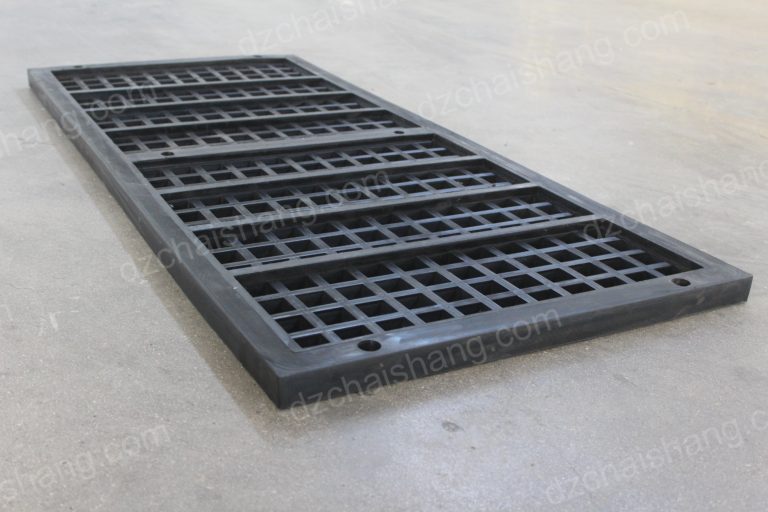
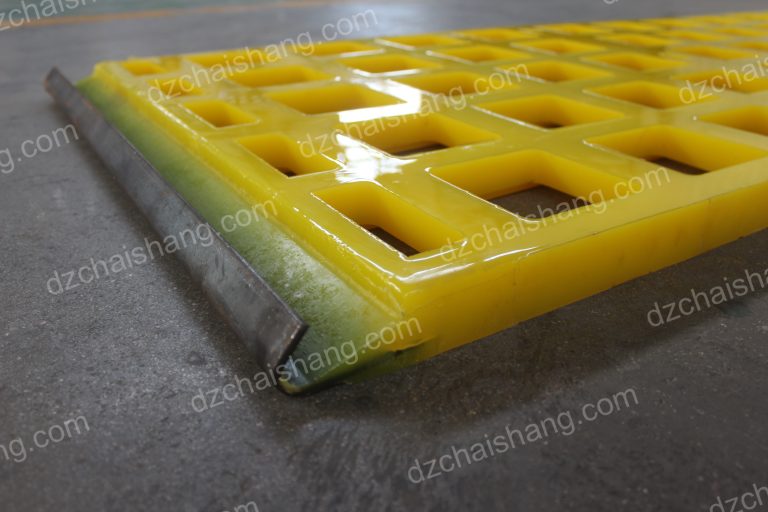
Tension polyurethane screen panels protect conveyor belts and idlers by efficiently screening out fine carryback material before it reaches critical conveyor components. When paired with polyurethane or alloy belt cleaners that scrape residual fines from the belt surface, these panels prevent abrasive particles from wrapping around idlers, scoring the belt cover, and causing premature equipment failure.

Understanding how these panels work — and why material carryback is so dangerous — requires a closer look at conveyor system dynamics. Below, I break down the mechanics of belt contamination, explain how polyurethane screen panels fit into the solution, and share what I've learned from over 30 years of manufacturing wear-resistant components for mining and bulk material handling operations.
Why Is Carryback Material So Damaging to Conveyor Belts and Idlers?
Most plant operators know carryback is a nuisance. Fewer realize it is the single largest contributor to unplanned conveyor downtime[^1]. Left unchecked, even a thin film of wet fines accelerates belt and idler degradation far faster than normal operational wear.
Carryback material damages conveyor belts and idlers through abrasive contact, moisture entrapment, and material buildup. Fine particles wedge between the belt and idler shell, scoring the belt cover and wearing grooves into the idler surface. Over time, this leads to belt tracking problems, idler seizure, and costly unscheduled shutdowns.

The Mechanics of Carryback Damage
When the belt passes over the head pulley and begins its return journey, any material still adhering to the carry side now faces downward. Gravity alone cannot remove wet or sticky fines. These particles then contact each return idler in sequence.
Here is what happens at each contact point:
- Abrasive grinding: Fine particles act like sandpaper between two moving surfaces. The belt cover rubber erodes. The idler shell develops flat spots.
- Moisture entrapment: Wet carryback holds moisture against the belt and idler, promoting corrosion on steel idlers and degrading rubber compounds.
- Material accumulation: Fines build up on idler rolls, creating an uneven surface. This causes the belt to mistrack, which leads to edge wear and potential belt damage against the conveyor frame.
- Increased rolling resistance: Buildup on idlers increases the power required to drive the conveyor, raising energy costs and stressing drive components.
Quantifying the Cost
| Damage Type | Typical Impact | Estimated Cost Increase |
|---|---|---|
| Belt cover wear | 20–40% reduction in belt life[^2] | 15–30% higher replacement frequency |
| Idler seizure | Unplanned shutdowns of 2–8 hours | $5,000–$50,000 per event[^3] (depending on scale) |
| Belt mistracking | Edge damage, spillage, safety hazards | Ongoing maintenance labor + material loss |
| Energy waste | 5–15% increase in drive power[^4] | Higher electricity bills compounding monthly |
I have seen operations where a single poorly managed transfer point generates enough carryback to cut belt life in half. The financial case for prevention is overwhelming.
How Do Tension Polyurethane Screen Panels Improve Material Screening Efficiency?
Efficient screening is the upstream defense. If fines are separated properly at the screen deck, less material ends up as carryback in the first place. But not all screen panels perform equally. Tension polyurethane screen panels offer a specific combination of properties that make them particularly effective in this role.
Tension polyurethane screen panels improve screening efficiency through their high open area, superior wear resistance, and self-cleaning characteristics. The polyurethane material flexes during operation, preventing blinding and pegging. This ensures consistent throughput of fine material through the screen deck rather than onto the conveyor belt as carryback.

Why Polyurethane Outperforms Wire Mesh in Fine Screening
Traditional wire mesh screens have served the industry for decades. However, they have well-known limitations when handling fine, wet, or sticky materials — exactly the materials most likely to cause carryback problems.
Key advantages of tension polyurethane screen panels:
- Wear resistance: Polyurethane lasts 3–5 times longer than equivalent wire mesh in abrasive applications[^5]. This means fewer screen change-outs and more consistent aperture sizing over the panel's service life.
- Noise reduction: Polyurethane dampens vibration noise by 10–15 dB compared to steel wire screens[^6]. In enclosed processing plants, this contributes to a safer working environment.
- Anti-blinding properties: The inherent elasticity of polyurethane allows the screen surface to flex with each vibration cycle. This micro-movement prevents near-size particles from lodging in apertures — a phenomenon called "blinding" that dramatically reduces screening efficiency.
- Chemical resistance: Polyurethane resists degradation from most process chemicals, oils, and moisture. This makes it suitable for wet screening applications where carryback risk is highest.
- Lighter weight: Polyurethane panels weigh significantly less than steel equivalents, reducing load on the vibrating screen structure and simplifying installation.
Tension vs. Modular Polyurethane Panels
Not all polyurethane screen panels are the same. The tension-mounted design offers specific benefits:
| Feature | Tension Polyurethane Panels | Modular Polyurethane Panels |
|---|---|---|
| Open area | Higher (up to 45%+) | Lower (frame reduces open area) |
| Installation | Requires tensioning rails | Drop-in, bolt-down |
| Screening efficiency | Superior for fine materials | Better for coarse, heavy impact |
| Panel change time | Moderate | Fast |
| Cost per panel | Lower | Higher |
| Best application | Fine screening, dewatering | Scalping, heavy-duty primary screening |
For operations where carryback reduction is the primary goal, tension polyurethane screen panels are generally the better choice. Their higher open area means more fine material passes through the screen and into the underflow — and less material rides the belt downstream.
What Role Do Belt Cleaners Play Alongside Screen Panels?
Even the most efficient screening system cannot eliminate 100% of fines from the conveyed material. Some carryback is inevitable. This is where belt cleaners become essential. They are the second line of defense, and their performance directly determines how much residual material reaches the return idlers.
Belt cleaners — whether polyurethane or alloy-tipped — scrape residual fines from the belt surface at the head pulley discharge point. A properly installed and maintained belt cleaner removes 85–95% of carryback material[^7], dramatically reducing abrasive wear on both the belt and return idlers.

Polyurethane vs. Alloy Belt Cleaner Blades
From my experience manufacturing both types, each has its place in a well-designed conveyor system.
Polyurethane cleaner blades:
- Gentle on the belt surface — ideal for belts with mechanical splices or vulcanized repairs
- Excellent performance on wet, fine materials
- Self-sharpening wear pattern maintains cleaning edge
- Lower replacement cost
- Suitable for most general-purpose applications
Alloy (carbide-tipped or hardened steel) cleaner blades:
- Superior scraping force for heavy, compacted carryback
- Longer service life in extremely abrasive conditions (hard rock mining, cement)
- More effective at removing dried-on or baked-on materials
- Require more precise tensioning to avoid belt damage
My recommendation: For most bulk material handling operations, start with a primary polyurethane belt cleaner at the head pulley and add a secondary cleaner further along the return run. If your application involves extremely sticky or abrasive material, consider an alloy-tipped primary cleaner with a polyurethane secondary.
The Integrated Approach: Screening + Cleaning
The critical insight is that tension polyurethane screen panels and belt cleaners work as a system, not as independent solutions. Here is how the integrated approach works:
- Screen deck (tension polyurethane panels): Removes maximum fines from the product stream, reducing the volume of material that could become carryback.
- Primary belt cleaner (at head pulley): Scrapes the bulk of residual material from the belt immediately after discharge.
- Secondary belt cleaner (on return run): Removes remaining fine particles that the primary missed.
- Return idlers and belt: Now operate with minimal abrasive contamination, extending service life significantly.
Each element in this chain reduces carryback by a percentage. Stack them together, and total carryback reaching the return idlers drops to a fraction of what it would be without intervention.
How Do You Select the Right Tension Polyurethane Screen Panels for Your Application?
Choosing the wrong screen panel specification leads to either blinding (apertures too small) or excessive carryback (apertures too large). Getting the specification right requires understanding your material properties and operating conditions.
To select the right tension polyurethane screen panels, evaluate your material's particle size distribution, moisture content, bulk density, and abrasiveness. Match these parameters against the panel's aperture size, thickness, and polyurethane hardness. Always request material test data and consult with your supplier's engineering team before committing to a specification.

Key Specification Parameters
| Parameter | What to Evaluate | Why It Matters |
|---|---|---|
| Aperture size | Target cut point in mm | Determines what passes through vs. what stays on the belt |
| Panel thickness | Typically 20–40 mm | Thicker panels last longer but may reduce open area |
| Polyurethane hardness | 40A–70D Shore | Softer grades flex more (better anti-blinding); harder grades resist wear |
| Open area percentage | 25–50%+ | Higher open area = better throughput for fines |
| Tensioning method | Hook strip, pin, or clamp | Must match your existing screen frame design |
| Material temperature | Ambient to 80°C typical | Polyurethane degrades above certain temperatures |
Practical Selection Tips
- Wet, sticky fines: Choose a softer polyurethane (40–55A Shore) with maximum open area. The flexibility helps prevent blinding.
- Dry, abrasive material: Opt for harder polyurethane (60A–70D Shore) to maximize wear life. Accept slightly lower open area.
- High-tonnage applications: Consider thicker panels (30–40 mm) even if open area is reduced. Premature panel failure from wear-through is more costly than a modest reduction in screening efficiency.
- Verify supplier credentials: Look for manufacturers who use imported raw materials and maintain in-house production capability. This ensures consistent material quality from batch to batch — something I take seriously in our own factory operations.
Important note: <a href="/tag/screen-panel" target="_blank"><strong><a href="/tag/screen" target="_blank"><strong>screen</strong></a> panel</strong></a> selection involves trade-offs. There is no single "best" panel for all applications. I always recommend working with a qualified engineer who understands your specific material handling challenges before finalizing a specification.
How Does Material Quality Affect the Performance of <a href="/tag/polyurethane-screen-panels" target="_blank"><strong><a href="/tag/polyurethane-screen" target="_blank"><strong><a href="/tag/polyurethane" target="_blank"><strong>polyurethane</strong></a> screen</strong></a> panels</strong></a>?
Two <a href="/tag/polyurethane-panels" target="_blank"><strong>Polyurethane Panels</strong></a> can look identical on the outside yet perform completely differently in service. The difference comes down to raw material quality and manufacturing process control. This is an area where procurement teams need to dig deeper than surface-level specifications.
Material quality directly determines the wear life, elasticity, and tear resistance of tension polyurethane <a href="/tag/screen-panels" target="_blank"><strong>screen panels</strong></a>. Panels made from premium MDI-based polyurethane with imported raw materials can last 2–3 times longer than panels made from recycled or lower-grade compounds, delivering significantly lower cost-per-ton of screened material.

What Separates Premium from Budget Polyurethane?
Raw material origin matters. In my 30+ years of manufacturing polyurethane wear products, I have seen the performance gap between premium and budget materials widen as applications become more demanding.
Key quality indicators to evaluate:
- MDI vs. TDI chemistry: MDI-based polyurethanes generally offer better dynamic properties[^8] — they flex more cycles before cracking. For <a href="/tag/vibrating-screen" target="_blank"><strong>vibrating screen</strong></a> applications, this is critical.
- Curing process: Proper curing requires precise temperature control and timing. Under-cured polyurethane is softer and wears faster. Over-cured material becomes brittle and cracks.
- Additive package: UV stabilizers, anti-hydrolysis agents, and processing aids affect long-term durability. Cheap formulations often skip these.
- Consistency: A factory with modern production equipment and quality control procedures delivers panels that perform the same from order to order. This predictability is essential for maintenance planning.
Quality Control Checklist for Buyers
When evaluating a polyurethane screen panel supplier, I recommend asking these questions:
- What is the source of your polyurethane raw materials?
- Can you provide third-party test reports for Shore hardness, tensile strength, tear resistance, and abrasion resistance?
- Do you maintain batch traceability from raw material to finished product?
- What is your standard tolerance on aperture sizing?
- Can you provide reference installations in similar applications?
These questions separate serious manufacturers from resellers who simply trade on price.
Frequently Asked Questions
How often should tension polyurethane screen panels be replaced?
Replacement intervals depend on material abrasiveness, tonnage, and operating hours. In typical <a href="/tag/mining" target="_blank"><strong>mining</strong></a> applications, quality tension polyurethane screen panels last 3–6 months[^9]. Monitor aperture wear regularly — once openings exceed the target cut size by more than 10%, panel efficiency drops and carryback risk increases.
Can polyurethane screen panels be used in high-temperature applications?
Standard polyurethane screen panels perform well up to approximately 80°C[^10]. Above this threshold, the material softens and wears faster. For high-temperature applications, consult your supplier about heat-resistant polyurethane formulations or consider alternative <a href="/tag/screen-media" target="_blank"><strong>screen media</strong></a> such as rubber or <a href="/tag/wire-mesh" target="_blank"><strong>wire <a href="/tag/mesh" target="_blank"><strong>mesh</strong></a></strong></a>.
Do tension polyurethane screen panels fit all vibrating screen brands?
Tension polyurethane screen panels can be manufactured to fit virtually any vibrating screen frame, including models from Metso, Sandvik, Derrick, and others. The key is matching the tensioning method (hook strip, pin connection, or clamp) to your specific screen design. ODM/OEM manufacturers can custom-produce panels to your exact frame dimensions.
How do belt cleaners and screen panels work together to protect idlers?
Screen panels remove fines at the processing stage, reducing the volume of material on the belt that could become carryback. Belt cleaners then remove residual material from the belt surface after discharge. Together, they reduce the abrasive fines reaching return idlers by over 90%[^11], dramatically extending idler service life.
What is the cost difference between polyurethane and wire <a href="/tag/mesh-screen" target="_blank"><strong>mesh screen</strong></a> panels?
Polyurethane screen panels typically cost 2–3 times more per panel than wire mesh[^12]. However, their 3–5× longer wear life and reduced downtime for panel changes result in a lower total cost of ownership. Calculate cost-per-ton of screened material rather than cost-per-panel for an accurate comparison.
Conclusion
Tension polyurethane screen panels are a proven, cost-effective solution for protecting conveyor belts and idlers from the damaging effects of carryback material. By maximizing fine material removal at the screen deck and pairing panels with properly maintained polyurethane or alloy belt cleaners, operations can significantly extend belt and idler service life, reduce unplanned downtime, and lower total operating costs.
The key takeaways: invest in quality polyurethane screen panels made from premium raw materials, select the right specification for your material properties, and treat screening and belt cleaning as an integrated system — not isolated components.
With over 30 years of manufacturing experience and our own integrated production facility, we supply tension polyurethane screen panels, belt cleaner blades, and a full range of polyurethane and rubber wear components. We support ODM/OEM orders with short lead times and consistent quality. Contact us today for a specification review or to request samples matched to your application.
[^1]: "Conveyor belt maintenance and reliability improvement ...", https://www.academia.edu/168356236/Conveyor_belt_maintenance_and_reliability_improvement_practices_trends_and_perspectives. Industry studies by the Conveyor Equipment Manufacturers Association (CEMA) and bulk material handling researchers have identified carryback as one of the most significant contributors to conveyor maintenance costs and unplanned downtime events. Evidence role: statistic; source type: research. Supports: That material carryback is a leading or primary cause of unplanned conveyor downtime in bulk material handling operations. Scope note: Specific ranking of carryback relative to other downtime causes may vary by operation type and material handled. [^2]: "Basic Parameters of Conveyor Belt Cleaning", https://stacks.cdc.gov/view/cdc/10327/cdc_10327_DS1.pdf. Conveyor belt maintenance studies indicate that uncontrolled carryback accelerates belt cover wear substantially, with some operations reporting belt life reductions of 20–40% attributable to abrasive fines on the return side. Evidence role: statistic; source type: research. Supports: That abrasive carryback material significantly reduces conveyor belt cover life, potentially by 20–40% or more. Scope note: The percentage range is application-dependent and influenced by material abrasiveness, belt speed, and the presence or absence of belt cleaning systems. [^3]: "A technology review of idler condition based monitoring ...", https://ui.adsabs.harvard.edu/abs/2017ias..conf..160M/abstract. Industry analyses of conveyor maintenance costs in mining operations report that unplanned shutdowns for idler replacement can cost from several thousand to over $50,000 per event when accounting for lost production, emergency labor, and replacement parts. Evidence role: case_reference; source type: research. Supports: That unplanned conveyor shutdowns due to idler failure result in significant costs ranging from thousands to tens of thousands of dollars per event. Scope note: Costs are highly site-specific and depend on conveyor scale, production value, and maintenance response time. [^4]: "Research on the energy-saving control strategy of a belt ...", https://pmc.ncbi.nlm.nih.gov/articles/PMC6986735/. Conveyor engineering research has documented that contamination and material buildup on return idlers increases belt indentation rolling resistance, contributing to measurable increases in drive power consumption. Evidence role: statistic; source type: research. Supports: That material buildup on conveyor idlers increases rolling resistance and drive power requirements. Scope note: The 5–15% range is an estimate; actual power increases depend on the extent of buildup, belt type, conveyor length, and operating conditions. [^5]: "Polyurethane Screen Panels vs. Wire Mesh", https://www.screenerking.com/blogs/news/polyurethane-screen-panels-vs-wire-mesh?srsltid=AU7gw4Utn_0LF5IKX3DTe9-DfGv1-2DluAhWtQWf4r1zp-7aTNDhMc6J. Comparative wear studies in mineral processing have documented <a href="/tag/polyurethane-screen-media" target="_blank"><strong>polyurethane screen media</strong></a> achieving service lives several times longer than equivalent woven <a href="/tag/wire-mesh-panels" target="_blank"><strong>wire <a href="/tag/mesh-panels" target="_blank"><strong>mesh panels</strong></a></strong></a> under abrasive screening conditions, with exact ratios depending on material properties and operating parameters. Evidence role: statistic; source type: research. Supports: That polyurethane screen media demonstrates significantly longer service life than wire mesh <a href="/tag/screens" target="_blank"><strong>screens</strong></a> in abrasive mineral processing applications. Scope note: The 3–5× figure is an industry-reported range; actual performance ratios vary with specific material abrasiveness, moisture, and feed rate. [^6]: "Noise and Vibration Reduction of a Vibrating Screen", https://stacks.cdc.gov/view/cdc/9120/cdc_9120_DS1.pdf. Acoustic studies of vibrating screen operations have measured noise reductions of approximately 10–15 dB when polyurethane screen media replaces <a href="/tag/steel-wire-mesh" target="_blank"><strong>steel wire mesh</strong></a>, attributable to the damping properties of the elastomeric material. Evidence role: statistic; source type: research. Supports: That polyurethane screen media produces measurably lower noise levels than steel wire mesh on vibrating screens. Scope note: Exact noise reduction depends on screen size, vibration frequency, feed material, and enclosure conditions at the specific installation. [^7]: "Basic Parameters of Conveyor Belt Cleaning", https://stacks.cdc.gov/view/cdc/10327/cdc_10327_DS1.pdf. According to conveyor engineering references and belt cleaner manufacturers' performance data, a well-maintained primary belt cleaner typically removes 70–95% of carryback material, with secondary cleaners further reducing residual fines on the return belt. Evidence role: statistic; source type: institution. Supports: That properly installed and maintained primary belt cleaners achieve carryback removal rates in the range of 85–95%. Scope note: Removal efficiency varies significantly with material type, moisture content, belt speed, and cleaner blade condition; the upper range may represent optimal rather than typical conditions. [^8]: "Cyclic Deformation and Fatigue Failure Mechanisms of ... - PMC", https://pmc.ncbi.nlm.nih.gov/articles/PMC9958809/. Polymer science literature indicates that MDI-based polyurethane elastomers generally exhibit superior dynamic mechanical properties, including better flex fatigue resistance and hydrolytic stability, compared to TDI-based systems, owing to differences in hard segment structure and hydrogen bonding. Evidence role: mechanism; source type: paper. Supports: That MDI-based polyurethane elastomers exhibit superior dynamic fatigue resistance and flex life compared to TDI-based formulations. Scope note: Performance differences depend on the complete formulation including chain extenders, polyol type, and curing conditions, not solely on the isocyanate chemistry. [^9]: "Polyurethane Screen Panel Service Life in Quarry Applications", https://www.huataoscreen.com/polyurethane-screen-panel-service-life-in-quarry-applications.html. Case studies from mineral processing operations report polyurethane screen panel service lives ranging from several weeks to over six months depending on material abrasiveness, feed rate, and panel specification. Evidence role: case_reference; source type: research. Supports: That polyurethane screen panels in mining screening applications typically achieve service lives measured in months rather than weeks. Scope note: Service life is highly variable across applications; the 3–6 month range represents a general guideline rather than a universal standard. [^10]: "Polyurethane Temperature Range", https://mearthane.com/polyurethane-temperature-range/. Engineering references on polyurethane elastomers note that standard formulations maintain their mechanical properties up to approximately 80–90°C, beyond which thermal softening and accelerated hydrolytic degradation reduce service performance. Evidence role: general_support; source type: encyclopedia. Supports: That standard polyurethane elastomers begin to lose mechanical properties and wear resistance at temperatures above approximately 80°C. Scope note: Exact temperature limits vary by polyurethane formulation, and specialty heat-resistant grades may extend this range. [^11]: "Basic Parameters of Conveyor Belt Cleaning", https://stacks.cdc.gov/view/cdc/10327/cdc_10327_DS1.pdf. Conveyor engineering best practice guidelines recommend a multi-stage approach to carryback management, combining efficient screening with primary and secondary belt cleaners, which together can reduce residual carryback to minimal levels. Evidence role: general_support; source type: institution. Supports: That an integrated approach combining efficient screening with primary and secondary belt cleaners can reduce carryback reaching return idlers by 90% or more. Scope note: The 90%+ figure is a theoretical cumulative estimate based on individual component efficiencies; actual system performance depends on maintenance, material variability, and installation quality. [^12]: "Total Cost of Ownership Modeling for Electronics", https://www.epa.gov/sites/default/files/documents/costofown.pdf. Economic analyses of screen media in mineral processing have demonstrated that polyurethane panels, while carrying a higher unit cost than <a href="/tag/woven-wire-mesh" target="_blank"><strong>Woven Wire Mesh</strong></a>, typically achieve lower cost-per-ton of screened material due to extended wear life and reduced screen change frequency. Evidence role: statistic; source type: research. Supports: That despite higher initial purchase price, polyurethane screen panels deliver lower total cost of ownership than wire mesh due to longer service life and reduced downtime. Scope note: Cost-effectiveness depends on the specific application; in low-abrasion or high-impact applications, wire mesh may remain more economical.