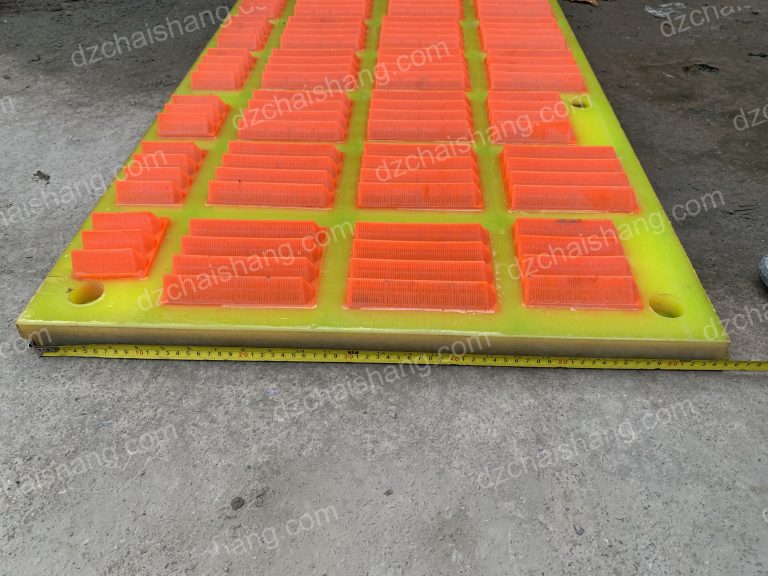

How to Choose V-Plow Belt Cleaner for Bulk Material Handling?
How to Choose V-Plow Belt Cleaner for Bulk Material Handling?
Choosing the right V-plow belt cleaner can mean the difference between a smoothly running conveyor and costly downtime caused by material buildup at the tail pulley. Many operations underestimate return-side carryback — until jammed pulleys, belt mistracking, and unplanned shutdowns start eating into productivity. The right V-plow eliminates these headaches before they start.
A V-plow belt cleaner is a return-side device mounted before the tail pulley that diverts residual material off the belt's non-carrying surface. To choose the correct one, you need to evaluate your conveyed material type, belt width, belt speed, available installation space, and belt splice type. Matching these factors ensures effective cleaning without damaging the belt or disrupting operations.

Below, I break down each selection factor in detail. Whether you handle coal, aggregate, ore, or grain, these guidelines will help you specify the right V-plow belt cleaner for your conveyor system — and avoid the common mistakes I see buyers make repeatedly.
What Is a V-Plow Belt Cleaner and Why Does It Matter?
Many operators focus heavily on primary and secondary cleaners at the head pulley but completely ignore the return side. That oversight is expensive. Material that falls onto the return belt or sticks to the carrying surface rides all the way back to the tail pulley — where it causes damage.[^1]
A V-plow belt cleaner is a chevron-shaped scraper installed on the return run of a conveyor belt, positioned just before the tail pulley. Its angled blades deflect spillage and carryback material to both sides of the belt, preventing it from wrapping around the tail pulley and causing belt mistracking, accelerated wear, or mechanical failure.

How Does a V-Plow Work?
The operating principle is straightforward. Two blades are arranged in a "V" or chevron pattern, with the point of the V facing the direction of belt travel[^2]. As the return-side belt moves beneath the plow, any material sitting on the belt surface contacts the angled blades and is pushed outward, off both edges of the belt.
Key characteristics of a well-designed V-plow belt cleaner include:
- Light, consistent belt contact — enough pressure to divert material, not enough to accelerate belt wear
- Self-adjusting or spring-loaded mounting — compensates for belt sag and vibration
- Durable blade material — typically polyurethane or rubber, selected based on the abrasiveness of the conveyed material
- Simple maintenance — blade replacement should be quick, ideally tool-free
Why the Tail Pulley Needs Protection
The tail pulley is arguably the most vulnerable point on a conveyor system[^3]. Unlike the head pulley, it typically lacks any cleaning device. When carryback material wraps around the tail pulley, several problems cascade:
| Problem | Consequence |
|---|---|
| Material buildup on tail pulley | Belt mistracking, uneven tension |
| Belt edge damage | Premature belt replacement costs |
| Seized bearings | Unplanned downtime, costly repairs |
| Fugitive material under conveyor | Housekeeping burden, safety hazards |
| Belt slippage | Reduced throughput, production delays |
In my experience, I have seen plants spend tens of thousands of dollars on belt replacements that could have been prevented with a properly selected V-plow belt cleaner costing a fraction of that amount[^4]. Prevention at the tail pulley is one of the highest-ROI maintenance investments in bulk material handling.
What Material Are You Conveying — and Why Does It Affect V-Plow Selection?
Not all bulk materials behave the same way on a return belt. Selecting a V-plow belt cleaner without considering your material properties is like choosing tires without knowing the road surface. It might work. It probably won't work well.
The type of material you convey directly determines the blade material, blade angle, and contact pressure your V-plow needs. Sticky, wet materials like clay or wet coal demand stiffer blades and steeper angles, while dry, abrasive materials like crusite or sharp aggregate require softer, more wear-resistant polyurethane to avoid gouging the belt.

Material Property Considerations
When evaluating your application, consider these material characteristics:
- Moisture content — Wet or damp materials cling more aggressively to the belt surface, meaning more carryback reaches the return side[^5]
- Particle size — Fine particles (dust, fines) embed in belt surface irregularities; large lumps roll more easily but can damage thin blades
- Abrasiveness — Highly abrasive materials (silica sand, iron ore, crushed rock) wear through blades faster, demanding harder-wearing polyurethane compounds[^6]
- Stickiness/adhesion — Materials like wet clay, gypsum, or certain coal grades adhere strongly and may require blades with low-friction surface coatings
- Temperature — Hot materials (cement clinker, sintered ore) degrade standard rubber blades rapidly; high-temperature polyurethane or ceramic-tipped options may be necessary
Blade Material Selection Guide
| Conveyed Material | Recommended Blade Material | Notes |
|---|---|---|
| Dry aggregate, sand | Medium-hardness polyurethane (55–65 Shore A) | Good balance of wear and flexibility |
| Wet coal, clay | Stiff polyurethane (70–85 Shore A) | Higher contact pressure needed for sticky material |
| Iron ore, copper ore | High-abrasion-resistant polyurethane | Consider tungsten carbide tips for extreme cases |
| Grain, food products | FDA-compliant polyurethane or rubber | Must meet food-safety standards |
| Hot clinker (>80°C) | Heat-resistant polyurethane or rubber compound | Standard blades deform at high temperatures |
I always recommend asking your supplier about the specific polyurethane or rubber formulation they use. Not all "polyurethane" is created equal. At our facility, we use imported raw materials to produce blades with consistent Shore hardness and elongation properties — details that matter when the blade is in constant contact with a moving belt.
How Do Belt Width and Belt Speed Influence Your V-Plow Choice?
Specifying a V-plow belt cleaner without knowing your belt width and speed is like ordering shoes without knowing your size. It seems obvious, but I regularly see procurement teams submit inquiries with incomplete conveyor data — and end up with cleaners that either don't fit or don't perform.
Belt width determines the physical size of the V-plow frame and blade span, while belt speed affects the required blade flexibility and mounting pressure. Wider belts need longer blades and stronger mounting structures. Faster belts generate more frictional heat and require blades that can handle dynamic loading without bouncing or chattering.

Standard Belt Width Sizing
V-plow belt cleaners are typically manufactured in standard sizes to match common belt widths. Here is a general sizing reference:
| Belt Width (mm) | Belt Width (inches) | V-Plow Frame Width | Typical Blade Length (each side) |
|---|---|---|---|
| 500 | 20" | ~450 mm | ~250 mm |
| 650 | 24" | ~600 mm | ~330 mm |
| 800 | 30" | ~750 mm | ~410 mm |
| 1000 | 36" | ~950 mm | ~510 mm |
| 1200 | 48" | ~1150 mm | ~610 mm |
| 1400 | 54" | ~1350 mm | ~720 mm |
| 1600 | 60" | ~1550 mm | ~820 mm |
| 1800 | 72" | ~1750 mm | ~920 mm |
| 2000+ | 78"+ | Custom | Custom |
Important: The V-plow should span the full belt width but must not extend beyond the belt edges. Blades that overhang the belt edge will snag and cause serious damage.
Belt Speed Considerations
Belt speed introduces dynamic forces that static analysis misses:
- Low speed (< 2 m/s): Standard rubber or polyurethane blades work well. Contact pressure can be moderate.
- Medium speed (2–4 m/s): Blade flutter becomes a concern. Spring-loaded or weighted mounts help maintain consistent contact.
- High speed (> 4 m/s): Frictional heat increases significantly[^7]. Blade material must resist thermal softening. Mounting must be rigid enough to prevent bouncing yet compliant enough to follow belt movement.
For high-speed applications, I always suggest testing a sample blade under actual operating conditions before committing to a full order. With over 30 years of manufacturing experience, we have seen that real-world performance can differ from catalog specifications — especially at speeds above 5 m/s.
Does Installation Space Affect V-Plow Belt Cleaner Selection?
You have identified the perfect V-plow on paper. The blade material is right, the size matches your belt width, and the price fits the budget. Then your maintenance team measures the available space before the tail pulley and discovers there is nowhere to mount it. This happens more often than you would think.
Installation space is a critical but frequently overlooked factor in V-plow belt cleaner selection. You must confirm that the return run of your conveyor has sufficient clearance — both vertically between the belt and the conveyor frame, and longitudinally before the tail pulley — to accommodate the V-plow assembly, including its mounting bracket and any adjustment mechanisms.

Key Dimensions to Verify
Before specifying a V-plow, measure and document these dimensions on your conveyor:
- Vertical clearance — Distance between the return belt's lowest point (under load sag) and the nearest structural member below it. Most V-plows need 100–200 mm of vertical space.
- Longitudinal space before tail pulley — The V-plow should be positioned 300–600 mm before the tail pulley centerline[^8], depending on the model. Confirm this space is free of snub pulleys, take-up devices, or other components.
- Frame/stringer width — The mounting bracket must attach securely to the conveyor frame. Measure the stringer flange width and bolt-hole pattern.
- Access for maintenance — Blade replacement should not require a confined-space entry or major disassembly. Factor in wrench clearance and safe access for personnel.
Retrofit vs. New Installation
For new conveyor installations, the structural engineer can design in proper clearance from the start. Retrofit applications are more challenging. If your existing conveyor has tight space constraints, consider these options:
- Low-profile V-plow designs — Some manufacturers offer compact models with reduced vertical height
- Internal V-plow — Mounted inside the belt trough area (less common but useful in tight spaces)
- Adjustable-angle mounting — Allows fine-tuning the blade angle to fit within available space without sacrificing performance
Pro tip: Always request a dimensional drawing from your supplier before ordering. Provide them with photos and measurements of your installation area. A reputable supplier will confirm fit before shipping.
Should You Choose Rigid or Flexible Blades for Your Belt Splice Type?
Here is a detail that many buyers miss entirely, and it can cause real damage. If your conveyor belt uses mechanical splices (metal fasteners), a rigid V-plow blade can catch on the splice, tear it open, and cause a catastrophic belt failure[^9] in seconds.
For conveyor belts with mechanical splices (clipper joints, alligator lacing, bolt-type fasteners), you should always choose a V-plow belt cleaner with flexible blades. Flexible <a href="/tag/polyurethane" target="_blank"><strong>polyurethane</strong></a> or rubber blades deflect momentarily as the splice passes through, then return to their cleaning position. Rigid blades — especially those with hard tips — can snag on raised fastener edges and rip the splice apart.

Belt Splice Types and Blade Compatibility
| Belt Splice Type | Blade Rigidity Recommended | Reason |
|---|---|---|
| Vulcanized (hot splice) | Rigid or flexible — both suitable | Smooth, flush surface with no raised edges |
| Cold-bonded (adhesive splice) | Flexible preferred | Slight surface irregularity possible |
| Mechanical fastener (clipper) | Flexible only | Raised metal edges will catch rigid blades |
| Mechanical fastener (bolt plate) | Flexible only | Bolt heads protrude above belt surface |
What Makes a Blade "Flexible" Enough?
Flexibility is not just about the polyurethane hardness. It involves multiple design factors:
- Shore hardness — Blades in the 40–55 Shore A range deflect more easily than 70+ Shore A blades[^10]
- Blade thickness — Thinner blades flex more. However, thinner blades also wear faster. Finding the right balance is essential.
- Blade geometry — A tapered leading edge flexes more readily than a blunt, square-cut edge
- Mounting compliance — Spring-loaded or pivot-mounted blades add system-level flexibility even if the blade itself is moderately stiff
Avoiding Costly Mistakes
I have personally seen a conveyor belt splice ripped apart within hours of installing a rigid V-plow. The maintenance team had not communicated to the procurement department that the belt used mechanical fasteners. The $200 V-plow destroyed a $15,000 belt splice. This is entirely preventable with proper communication between operations, maintenance, and procurement.
Before you order, answer these questions:
- What type of belt splice does your conveyor use?
- How high do the splice fasteners protrude above the belt surface?
- What is the blade's Shore A hardness?
- Does the mounting allow the blade to retract momentarily?
If you are unsure about any of these, send your supplier a photo of your belt splice and ask for their recommendation. We deal with this question regularly and can advise on the appropriate blade flexibility for your specific splice configuration.
Frequently Asked Questions
Where exactly should a V-plow belt cleaner be installed on the conveyor?
A V-plow belt cleaner should be mounted on the return run of the conveyor belt, approximately 300–600 mm before the tail pulley centerline. The point of the "V" faces the direction of belt travel so material is deflected off both sides of the belt before reaching the pulley.
How often should V-plow blades be replaced?
Replacement frequency depends on material abrasiveness, belt speed, and blade material. In typical <a href="/tag/mining" target="_blank"><strong>mining</strong></a> or aggregate applications, inspect blades monthly and replace them when blade wear reaches 50–60% of the original thickness. High-quality polyurethane blades typically last 3–12 months under normal conditions[^11].
Can a V-plow belt cleaner replace primary and secondary cleaners?
No. A V-plow serves a different purpose. Primary and secondary cleaners remove carryback at the head pulley discharge point. A V-plow belt cleaner handles material that has already fallen onto the return-side belt surface. Most well-designed conveyor systems use all three types for comprehensive cleaning.
What information should I provide to a V-plow supplier when requesting a quote?
Provide your belt width, belt speed, conveyed material type, belt splice type (vulcanized or mechanical), operating temperature, and available installation space measurements. Photos of the installation area and the belt splice are extremely helpful for accurate sizing and material selection.
Is polyurethane or rubber better for V-plow blades?
Polyurethane generally outperforms natural rubber in abrasion resistance and service life for most bulk material handling applications[^12]. However, rubber may be preferred for food-grade applications or where chemical compatibility is a concern. Ask your supplier about the specific compound they use — formulation quality matters more than the generic material name.
Conclusion
Choosing the right V-plow belt cleaner for bulk material handling comes down to five key factors: your conveyed material type, belt width, belt speed, available installation space, and belt splice configuration. Get these right, and you protect your tail pulley, extend belt life, and reduce unplanned downtime. Get them wrong, and you risk belt damage, costly repairs, and production losses that far exceed the cost of the
[^1]: "Basic Parameters of Conveyor Belt Cleaning", https://stacks.cdc.gov/view/cdc/10327/cdc_10327_DS1.pdf. The Conveyor Equipment Manufacturers Association (CEMA) identifies return-side carryback as a primary cause of tail pulley buildup, belt mistracking, and accelerated component wear in belt conveyor systems. Evidence role: mechanism; source type: institution. Supports: Carryback material on the return side of a conveyor belt accumulates at the tail pulley, causing mistracking, component wear, and mechanical failure. Scope note: CEMA guidelines address conveyor design broadly; specific damage severity varies by application and material type. [^2]: "Section 14500 - Belt Conveyors", https://www.sandiego.gov/sites/default/files/legacy/mwwd/business/cwpspecs/pdf/14500.pdf. CEMA's Belt Conveyors for Bulk Materials (7th edition) describes V-plows as chevron-shaped return-side devices positioned ahead of the tail pulley, designed to deflect spillage and carryback off both edges of the belt. Evidence role: definition; source type: institution. Supports: The V-plow belt cleaner uses angled blades in a chevron configuration to divert material laterally off the return belt before the tail pulley. Scope note: Specific design details such as blade angle and mounting vary by manufacturer and are not fully standardized. [^3]: "Industrial Conveyor Belt System Failure Analysis", https://ncd.io/blog/preventive-maintenance-of-conveyor-belt-failure-analysis/. Research on conveyor belt reliability identifies the tail pulley zone as a critical failure point, with material entrapment contributing to bearing seizure, belt mistracking, and accelerated wear of pulley lagging and belt covers (see, e.g., Swinderman et al., Foundations: The Practical Resource for Cleaner, Safer, More Productive Dust & Material Control, Martin Engineering). Evidence role: general_support; source type: research. Supports: The tail pulley area is particularly susceptible to material buildup, bearing failure, and belt mistracking due to the absence of cleaning devices on the return side. Scope note: Whether the tail pulley is the single most vulnerable point depends on the specific conveyor configuration and maintenance practices. [^4]: "Basic Parameters of Conveyor Belt Cleaning", https://stacks.cdc.gov/view/cdc/10327/cdc_10327_DS1.pdf. Industry cost analyses indicate that conveyor belt replacement in mining operations can cost $10,000–$100,000+ depending on belt width, length, and grade, while return-side cleaning devices such as V-plows typically cost a small fraction of this amount, yielding significant ROI through extended belt life and reduced downtime. Evidence role: statistic; source type: research. Supports: Conveyor belt replacement costs in mining and aggregate operations can reach tens of thousands of dollars, while return-side belt cleaners represent a comparatively small capital investment. Scope note: Actual costs vary widely by belt specification, conveyor length, geographic location, and labor rates; the ROI depends on site-specific carryback severity. [^5]: "Basic Parameters of Conveyor Belt Cleaning", https://stacks.cdc.gov/view/cdc/10327/cdc_10327_DS1.pdf. Research on bulk material adhesion to conveyor belts shows that moisture content is a dominant factor in carryback volume, with wet and cohesive materials exhibiting significantly higher adhesion forces than dry equivalents (see Roberts, A.W., 'Bulk Solids Handling,' and related work on surface adhesion in material handling). Evidence role: mechanism; source type: research. Supports: Increased moisture content in bulk materials raises adhesion forces between the material and the belt surface, resulting in greater carryback volumes on the return side. Scope note: The degree of increased carryback depends on material type, belt surface condition, and belt speed, not moisture alone. [^6]: "The Abrasive Wear Resistance of the Segmented Linear ...", https://pmc.ncbi.nlm.nih.gov/articles/PMC6418577/. Studies on polyurethane wear in bulk material handling applications demonstrate that abrasive particles such as silica and iron ore significantly accelerate blade erosion, with abrasion resistance varying by polyurethane formulation, crosslink density, and hardness (see ASTM D4060 and related tribology literature). Evidence role: mechanism; source type: research. Supports: Polyurethane elastomers with higher abrasion resistance are necessary for contact with highly abrasive bulk materials such as silica sand and iron ore. Scope note: Abrasion resistance depends on multiple factors beyond Shore hardness, including polyurethane chemistry, particle shape, and contact pressure. [^7]: "Basic Parameters of Conveyor Belt Cleaning", https://stacks.cdc.gov/view/cdc/10327/cdc_10327_DS1.pdf. Tribological studies of elastomer-belt contact in conveyor cleaning applications confirm that frictional heat generation is proportional to belt speed and contact pressure, with elevated temperatures at higher speeds contributing to thermal softening and accelerated wear of polyurethane blades. Evidence role: mechanism; source type: research. Supports: Frictional heat generated between belt cleaner blades and the conveyor belt surface increases with belt speed, potentially causing thermal degradation of polyurethane blades. Scope note: Exact temperature thresholds depend on blade contact pressure, ambient conditions, and specific polyurethane formulation. [^8]: "Basic Parameters of Conveyor Belt Cleaning", https://stacks.cdc.gov/view/cdc/10327/cdc_10327_DS1.pdf. Industry guidelines from CEMA and conveyor engineering references recommend positioning return-side V-plows at a distance before the tail pulley that allows adequate material discharge clearance, typically in the range of 300–600 mm depending on belt width and speed. Evidence role: general_support; source type: institution. Supports: V-plow belt cleaners should be positioned at a sufficient distance before the tail pulley to allow deflected material to clear the belt edges before the belt wraps around the pulley. Scope note: Exact recommended distances vary by manufacturer and conveyor configuration; no single universal standard specifies this dimension precisely. [^9]: "Top 10 Belt Conveyor Quick Fixes", https://info.flexco.com/top-10-belt-conveyor-quick-fixes. Conveyor maintenance literature documents that rigid belt cleaning devices positioned on the return side can catch on raised mechanical splice fasteners (e.g., clipper or alligator lacing), causing splice separation and potential belt failure (see Swinderman et al., Foundations, Martin Engineering; Flexco splice compatibility guidelines). Evidence role: case_reference; source type: research. Supports: Rigid belt cleaner blades can snag on protruding mechanical splice fasteners, leading to splice failure and belt damage. Scope note: The severity of the failure depends on fastener protrusion height, blade rigidity, belt speed, and specific splice type. [^10]: "Shore durometer", https://en.wikipedia.org/wiki/Shore_durometer. The Shore A durometer scale (ASTM D2240) measures the indentation hardness of elastomers; materials in the 40–55 Shore A range are classified as soft and flexible, while those above 70 Shore A are significantly stiffer, with correspondingly higher resistance to deformation. Evidence role: definition; source type: other. Supports: Lower Shore A hardness values correspond to softer, more flexible elastomers that deflect more readily under applied force. Scope note: Flexibility in application also depends on blade geometry, thickness, and mounting compliance, not hardness alone. [^11]: "Basic Parameters of Conveyor Belt Cleaning", https://stacks.cdc.gov/view/cdc/10327/cdc_10327_DS1.pdf. Field data from bulk material handling operations indicate that polyurethane belt cleaner blade service life ranges from approximately 3 to 12 months, with variation driven by material abrasiveness, belt speed, contact pressure, and blade formulation quality. Evidence role: statistic; source type: research. Supports: Polyurethane belt cleaner blades in mining and aggregate applications typically require replacement every 3–12 months depending on operating conditions. Scope note: Service life is highly application-specific; extreme conditions (high abrasion, high speed, wet sticky materials) can shorten life well below 3 months. [^12]: "Polyurethane vs. Rubber for Industrial Components", https://mearthane.com/polyurethane-versus-rubber/. Comparative wear testing (e.g., per ASTM D4060 Taber abrasion and DIN 53516 methods) consistently shows that polyurethane elastomers outperform natural rubber in abrasion resistance by factors of 2–10×, depending on formulation and test conditions. Evidence role: general_support; source type: research. Supports: Polyurethane elastomers exhibit superior abrasion resistance compared to natural rubber in most bulk material handling contact applications. Scope note: Performance advantage varies with specific polyurethane and rubber formulations, operating temperature, and chemical environment; rubber may be preferred in certain chemical or food-grade applications.