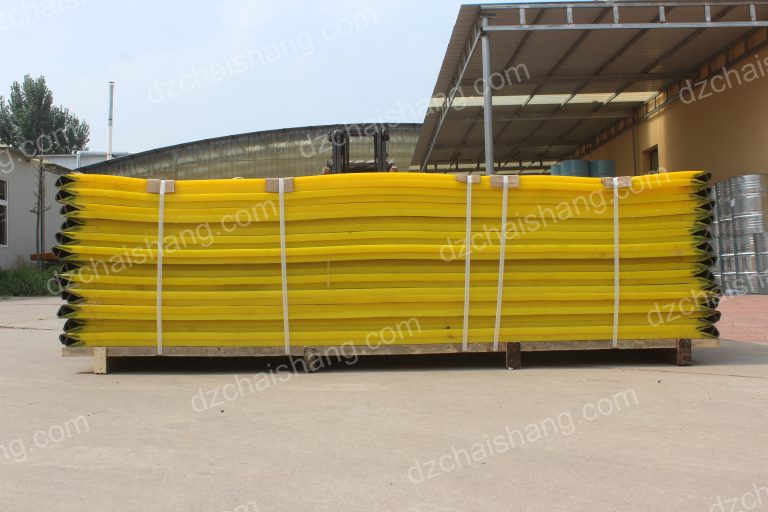

Is Your Polyurethane Screen Panel Hardness Wrong?
Your <a href="/tag/screen-panels" target="_blank"><strong><a href="/tag/screen" target="_blank"><strong>screen</strong></a> panels</strong></a> wear out too fast and give inaccurate results. This means more downtime and wasted material. The problem might just be the hardness of your <a href="/tag/polyurethane" target="_blank"><strong>polyurethane</strong></a>.
The hardness of a <a href="/tag/polyurethane-screen-panel" target="_blank"><strong><a href="/tag/polyurethane-screen" target="_blank"><strong>polyurethane screen</strong></a> panel</strong></a> is critical for performance. A panel that is too soft, like 70 Shore A, will deform under load, wear out quickly, and cause inaccurate screening. A harder panel, around 85 Shore A, maintains its shape and resists abrasion for much longer.

I want to share a story about this. A client of mine recently had a big problem. They were using polyurethane frame screen panels to process some very high-abrasion ore. He called me and said the panels were failing in a very short amount of time. Even worse, the material they were screening was not uniform. The final product had a low qualification rate. This was costing them a lot of money. After looking at photos and data from his site, I knew exactly what the issue was. It's a common mistake, but one that has a huge impact. This experience shows just how important one small detail can be.
Why Do Soft <a href="/tag/polyurethane-screens" target="_blank"><strong>polyurethane <a href="/tag/screens" target="_blank"><strong>screens</strong></a></strong></a> Fail So Quickly?
Are you tired of replacing screen panels all the time? Soft panels can sag, tear, and fail, costing you time and money. The reason for this is actually quite simple.
Soft polyurethane lacks the structural integrity and abrasion resistance needed for heavy-duty mining. It deforms under load, stretching the apertures. It also wears down fast from friction, leading to early failure and poor screening efficiency.

When a screen panel is too soft, several problems happen at once. My client was using a panel with a hardness of about 70 Shore A. This is too soft for high-abrasion ore. Here is a breakdown of why it failed.
Deformation and Sagging
A soft <a href="/tag/polyurethane-panel" target="_blank"><strong>polyurethane panel</strong></a> is not rigid enough. When the heavy ore sits on it and the machine vibrates, the panel starts to sag downwards. It can't hold its shape. This constant flexing puts a lot of stress on the material. The screen holes get pulled and stretched out of their original shape. This is the first sign of failure. The panel is no longer a flat, stable surface for screening.
Poor Abrasion Resistance
Softer materials are less resistant to wear and tear. Imagine sharp, heavy ore constantly rubbing against the surface. A soft panel is like a pencil eraser; it just gets worn away. My client’s panels were getting thin and developing pits very quickly. The surface was being ground down with every vibration. A harder material is tougher. It can stand up to that friction for much longer without losing its structure.
Tearing and Delamination
The combination of sagging and abrasion leads to the final failure. The constant flexing creates weak spots. Over time, under high-frequency vibration, these weak spots can turn into tears. Even worse, the soft polyurethane can start to separate from the internal metal frame. We call this delamination. Once that happens, the entire panel loses its strength and has to be thrown away. My client saw this happen again and again, leading to expensive replacements and a lot of downtime.
| Failure Mode | Soft Polyurethane (e.g., 70A) | Hard Polyurethane (e.g., 85A) |
|---|---|---|
| Deformation | High. Sags under load. | Low. Remains rigid and flat. |
| Abrasion | Poor. Wears down quickly. | Excellent. Resists friction. |
| Tearing | Prone to tearing from flexing. | Much more tear-resistant. |
| Lifespan | Short. Frequent replacement. | Long. Reduced maintenance. |
How Does Hardness Affect Screening Accuracy?
Are oversized particles contaminating your fine product? Your screen panel's hardness could be the reason, ruining the quality of your output and costing you money.
The correct hardness maintains a precise aperture size. Soft panels let the holes stretch, allowing coarse material to pass through.[^1] Harder, stable panels ensure consistent particle separation and a high rate of qualified product.

The main goal of a screen is to separate materials by size. If it can't do that accurately, it's not doing its job. This was the second part of my client's problem. Not only were his panels failing, but the product he was making was not up to standard. The hardness of the panel was the direct cause.
The Problem of "Running Coarse"
When a soft panel sags and deforms, the screen holes get stretched. A round hole might become an oval. A square hole might become a rectangle. This means the opening is now larger than it was designed to be. As a result, larger particles that should have stayed on top of the screen fall through. This is a huge problem in the industry, sometimes called "running coarse." It means your fine material is contaminated with oversized particles. For my client, this meant his final product was failing quality checks.
Maintaining Aperture Integrity
A harder polyurethane panel, like the 85 Shore A one I recommended, is much more rigid. It holds its shape even under the heavy load of ore and intense vibration. This means the screen holes, or apertures, remain the correct size and shape. The screening is precise and consistent. Every particle is sorted correctly according to its size. This is how you get a high-quality, uniform final product that meets specifications. The panel does its job from the first day to the last day of its service life.
| Hardness Level | Aperture Stability | Screening Result |
|---|---|---|
| Soft (e.g., 70A) | Low. Holes stretch and deform. | Inaccurate. Coarse particles mix with fines. |
| Correct (e.g., 85A) | High. Holes maintain size and shape. | Accurate. Consistent and qualified product. |
Switching to the harder panel solved my client's quality issues almost immediately. His product qualification rate went way up because the screens were finally sorting the material correctly.
How Do You Choose the Right Hardness for Your Application?
Choosing the wrong screen hardness is a costly guess. You end up with failed parts and bad product. You need a better way to select the right one for your specific job.
You must consider your material's abrasiveness, particle size, and the impact load.[^2] For high-abrasion, heavy-duty ore, a harder polyurethane (85A-95A) is best. For finer, less abrasive materials, a slightly softer panel can work.

After I helped my client, he asked me how he could avoid this mistake in the future. The answer is to analyze your specific needs before you buy. There is no single "best" hardness for everyone. It's about matching the material to the job. Here’s a simple guide to help you think through it.
Step 1: Assess Your Material
First, look at what you are screening. Is it sharp and abrasive, like granite or certain types of ore? Or is it smoother, like sand? The more abrasive the material, the harder your panel needs to be to resist wear. Also, consider the size and weight of the particles. Heavier, larger particles create more impact, which requires a tougher, harder panel.
Step 2: Evaluate Your Operating Conditions
Next, think about your process. Is it a dry screening or wet screening application? Wet conditions can sometimes require different properties. Also, how heavy is the load on the screen? A machine that is heavily loaded puts more stress on the panels, so a harder polyurethane is needed to prevent sagging. The frequency and force of the vibration also play a role. Higher force requires more rigidity.[^3]
General Hardness Recommendations
Based on these factors, you can choose a hardness range. This is not an exact science, but a good starting point. My client's move from 70A to 85A was perfect for his high-abrasion ore.
| Application | Common Material | Recommended Shore A Hardness | Why? |
|---|---|---|---|
| Heavy-Duty Mining | Coarse, Abrasive Ore | 85A - 95A | Resists high impact and abrasion.[^4] |
| Sand & Gravel | Medium Abrasive Aggregate | 75A - 85A | Good balance of wear life and flexibility. |
| Fine Material Sizing | Fine Sand, Powders | 65A - 75A | More flexibility can help prevent blinding. |
| Dewatering | Wet Slurry, Sand | 80A - 90A | Needs rigidity to support wet weight. |
By thinking through these steps, you can make an informed decision. You avoid the guesswork and select a panel that will last longer and perform better.
Conclusion
Choosing the right polyurethane hardness is not a small detail. It is essential for screen panel life, accuracy, and your bottom line. If you need professional advice, just contact us.
[^1]: "Drivers of bias in diagnostic test accuracy estimates when ...", https://pmc.ncbi.nlm.nih.gov/articles/PMC12016307/. This source provides evidence on how soft polyurethane panels deform under load, leading to inaccurate particle separation. Evidence role: mechanism; source type: research. Supports: Soft panels let the holes stretch, allowing coarse material to pass through.. [^2]: "Polyurethane Screen Selection for Aggregate: Complete Guide", https://www.huataoscreen.com/polyurethane-screen-selection-for-aggregate-complete-guide.html. This source outlines the factors to consider when selecting polyurethane screen panels, including material abrasiveness and impact load. Evidence role: definition; source type: education. Supports: You must consider your material's abrasiveness, particle size, and the impact load.. [^3]: "High-frequency vibrating screens - Wikipedia", https://en.wikipedia.org/wiki/High-frequency_vibrating_screens. This source discusses the relationship between vibration force and the rigidity requirements of polyurethane screen panels. Evidence role: mechanism; source type: education. Supports: Higher force requires more rigidity.. [^4]: "10 Powerful Polyurethane Screen Panel Benefits for High ...", https://kesseparation.com/product/polyurethane-screen-panel/. This source provides evidence on the abrasion and impact resistance of polyurethane panels with higher Shore A hardness levels. Evidence role: mechanism; source type: research. Supports: Resists high impact and abrasion..