
Modular vs. Full Deck Screens: Which Is The Right Choice For Your Operation?
Struggling with clogged <a href="/tag/screens" target="_blank"><strong>screens</strong></a> and constant downtime? Sticky, fine materials can grind your operation to a halt. It's frustrating and costly, but there is a solution built into the design.
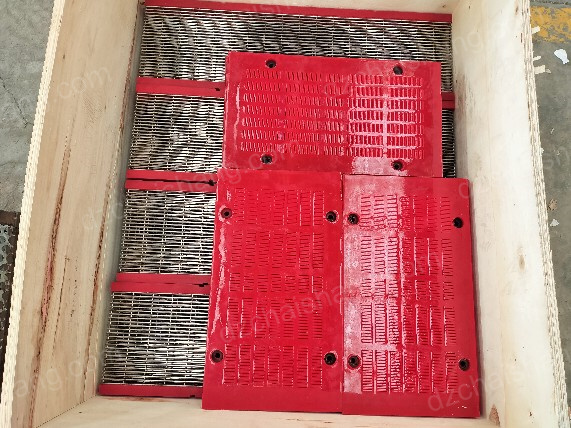
A <a href="/tag/flip-flow" target="_blank"><strong>Flip Flow</strong></a> <a href="/tag/screen" target="_blank"><strong>screen</strong></a> prevents blinding through a unique "trampoline" effect.[^1] The flexible <a href="/tag/polyurethane-panels" target="_blank"><strong><a href="/tag/polyurethane" target="_blank"><strong>polyurethane</strong></a> Panels</strong></a> are stretched and relaxed at <a href="/tag/high-frequency" target="_blank"><strong>high frequency</strong></a>. This action actively dislodges near-size particles and sticky material, ensuring continuous and efficient screening without manual cleaning.

This high-frequency movement is the secret sauce, but it's not the whole story. The real magic is in the small details of the screen's design. I've spent years working with these screens, and I've seen how tiny adjustments can make a huge difference. The core philosophy is simple: don't give the material a chance to get stuck. Let's look closer at the specific design elements that make these screens so effective at fighting off blinding.
How Does Aperture Shape Affect Screen Blinding?
Are you finding that even with a flip flow screen, certain particle shapes still get stuck? This pegging can reduce efficiency. The problem often lies in using a standard square aperture.
The shape of the screen's openings is critical. Designers use non-standard shapes like elongated slots or teardrop apertures.[^2] These shapes reduce the chance of near-size particles getting wedged, promoting self-cleaning and maintaining high throughput for difficult materials.

When we design a screen, the first thing we think about is how to stop material from getting stuck. The shape of the hole, or aperture, is our first line of defense.[^3] A simple square hole works for many things, but it's not always the best choice for tricky materials.
Square vs. Slotted Apertures
Think about a square hole. It has four corners where a sharp or longish particle can get wedged. A slotted, or rectangular, aperture only has two short sides. This immediately cuts the chance of pegging in half for particles that are longer than they are wide.
Tapered and Teardrop Designs
We can get even smarter. A tapered aperture is designed to be slightly wider at the bottom than at the top.[^4] If a near-size particle does get pushed into the hole, it doesn't get stuck. The widening hole lets it fall right through.[^5] I remember a client screening compost. Their square <a href="/tag/mesh" target="_blank"><strong>mesh</strong></a> screens were blinding constantly. We switched them to a teardrop aperture flip flow screen, and their throughput nearly doubled overnight. It was a simple change with a massive impact.
Here is a simple breakdown:
| Aperture Type | Best For | Anti-Blinding Mechanism |
|---|---|---|
| Square | General Sizing | Basic, relies on screen flex |
| Slotted | Elongated Particles | Reduces pegging points |
| Tapered | Near-Size Particles | Self-releasing conical design |
| Teardrop | Sticky, Fibrous | Guides material, breaks clumps |
Why Does the Hardness of the Polyurethane Matter?
You installed a new polyurethane screen, but it's either wearing out too fast or not flexing enough to clean itself. This is a common problem. The material's hardness is likely mismatched.
The polyurethane's hardness, or durometer, is a balancing act.[^6] A softer material flexes more, providing excellent anti-blinding action. A harder material offers better wear life. The right durometer depends on the specific application, balancing cleaning efficiency with durability.

Choosing the right polyurethane hardness is a trade-off. You have to balance how well the screen cleans itself against how long it will last. We measure this hardness on a scale called Shore A.
The Role of Flex in Self-Cleaning
A softer polyurethane has a lower durometer number, maybe around 60A to 75A. This material is very flexible. It allows for a very strong "trampoline" effect. The <a href="/tag/screen-panel" target="_blank"><strong>screen panel</strong></a> moves a lot, and this powerful motion physically throws off any particles that are trying to stick or get wedged.[^7] This is perfect for light, sticky materials like damp sand, soil, or compost. The focus here is 100% on keeping the screen open and the material flowing.
The Need for Durability
But if you are screening sharp, heavy, abrasive material like crushed granite, a soft screen will be torn to shreds. For that, you need a harder polyurethane, perhaps 85A to 95A. This material is much tougher and resists cuts and wear. It doesn't flex as much, so the self-cleaning action is less aggressive. But the screen will last much, much longer. It's a balance.
Once, we supplied a standard 85A screen to a sand and gravel plant. They called back saying it was blinding with fine, wet sand. We switched them to a softer 70A screen. The wear life was a bit shorter, but they eliminated all their downtime from cleaning screens, which saved them far more money in the long run.
| Durometer (Shore A) | Flexibility | Anti-Blinding | Wear Resistance | Typical Application |
|---|---|---|---|---|
| 60A - 75A | High | Excellent | Moderate | Damp sand, soil, compost |
| 75A - 85A | Medium | Good | Good | Mixed aggregates, recycling |
| 85A - 95A | Low | Fair | Excellent | Crushed rock, abrasive ores |
Can the Screen's Surface Texture Really Prevent Clogging?
Is your material so sticky that it just coats the surface of your screen, blinding it completely? This "plastering" effect is a nightmare. A flat screen surface can actually make it worse.
Yes, surface texture is a clever anti-blinding trick. Designers add features like raised ridges, dams, or a dimpled texture.[^8] These elements disrupt the flow of material, create localized turbulence, and prevent a sticky layer from forming, keeping the apertures open.

Sometimes, the material is so sticky it doesn't just block the holes; it coats the entire screen surface like a layer of paint. When this happens, we have to change the surface itself. A smooth, flat surface gives sticky material a perfect place to grab onto. So, we make the surface uneven on purpose.
Rider Bars and Dams[^9]
One way to do this is with "rider bars" or "dams." These are just small ridges of polyurethane that run across the screen. As material flows down the screen, it hits these dams and gets tossed into the air for a split second. This brief moment of separation is often enough to break the surface tension and stop a sticky layer from building up. It also helps tumble the material, which gives every particle a better chance to fall through an open hole.
Dimpled or Textured Surfaces[^10]
Another trick is to use a textured surface, almost like a golf ball. This reduces the total surface area that the sticky material can touch. Less contact means less sticking. I have seen this work wonders with materials like wet coal fines. A flat screen would blind in minutes. But a dimpled one keeps running for hours because the small pockets of air created by the texture prevent a sticky, vacuum-like seal from forming between the material and the screen. It’s all about disrupting the material and keeping it moving.
| Surface Feature | How It Works | Best For |
|---|---|---|
| Flat Surface | Basic Flow | Dry, non-sticky material |
| Rider Bars/Dams | Tumbles material, creates air gaps | Moderately sticky material |
| Dimpled Texture | Reduces surface contact area | Very sticky, fine material |
| Combination | Multiple anti-blinding actions | The most challenging materials |
Conclusion
It's not just about the flip-flow action. The design details—aperture shape, material hardness, and surface texture—are what truly conquer blinding and keep your operation running smoothly and efficiently.
[^1]: "Flip-Flow Screen from SPALECK | 100% for your material", https://www.spaleck-us.com/screening-machines/flip-flow-screening-machine/. This source explains the mechanism of <a href="/tag/flip-flow-screens" target="_blank"><strong>flip flow screens</strong></a> and their anti-blinding properties, focusing on the trampoline effect created by high-frequency panel movement. Evidence role: mechanism; source type: education. Supports: Flip flow screens use a trampoline effect to prevent blinding and ensure efficient screening.. [^2]: "A comprehensive review on self-cleaning glass surfaces - PMC", https://pmc.ncbi.nlm.nih.gov/articles/PMC11514727/. This source discusses how aperture shapes like elongated slots and teardrop designs reduce pegging and improve self-cleaning in screens. Evidence role: mechanism; source type: research. Supports: Non-standard aperture shapes reduce the chance of near-size particles getting wedged and promote self-cleaning.. [^3]: "Effects of screen decks' aperture shapes and materials on ...", https://www.sciencedirect.com/science/article/pii/S0892687519300433. This source discusses how aperture shapes influence the likelihood of material getting stuck and the overall efficiency of screens. Evidence role: mechanism; source type: research. Supports: Aperture shapes influence the likelihood of material getting stuck and the overall efficiency of screens.. [^4]: "Flow dynamics through discontinuous clogs of rigid particles ...", https://pmc.ncbi.nlm.nih.gov/articles/PMC9803713/. This source explains how tapered apertures reduce the likelihood of near-size particles getting stuck by allowing them to fall through more easily. Evidence role: mechanism; source type: research. Supports: Tapered apertures reduce the chance of near-size particles getting stuck and improve screening efficiency.. [^5]: "Shared Aperture Technology Development", https://secwww.jhuapl.edu/techdigest/content/techdigest/pdf/V17-N03/17-03-Axness.pdf. This source explains how tapered apertures allow particles to fall through by reducing wedging points. Evidence role: mechanism; source type: research. Supports: Tapered apertures allow particles to fall through by reducing wedging points.. [^6]: "Investigating the Impact of Hardness on Dielectric Breakdown ...", https://pmc.ncbi.nlm.nih.gov/articles/PMC11171084/. This source explains the relationship between polyurethane hardness and its impact on screen durability and anti-blinding efficiency. Evidence role: mechanism; source type: research. Supports: Polyurethane hardness affects both the screen's wear life and its ability to flex for self-cleaning.. [^7]: "High-frequency vibrating screens", https://en.wikipedia.org/wiki/High-frequency_vibrating_screens. This source explains how high-frequency motion in <a href="/tag/screen-panels" target="_blank"><strong>screen panels</strong></a> dislodges particles and prevents blinding. Evidence role: mechanism; source type: research. Supports: High-frequency motion in screen panels dislodges particles and prevents blinding.. [^8]: "Effects of thermomechanical parameters on surface texture in ...", https://pmc.ncbi.nlm.nih.gov/articles/PMC11541081/. This source describes how surface texture features like ridges and dimples disrupt material flow and prevent sticky layers from forming on screens. Evidence role: mechanism; source type: research. Supports: Surface texture features prevent sticky material from coating the screen and promote continuous operation.. [^9]: "Handlebar in Ui Design", https://www.pinterest.com/ideas/handlebar-in-ui-design/947848590921/. This source describes how rider bars and dams create localized turbulence to prevent sticky material from forming a layer on screens. Evidence role: mechanism; source type: research. Supports: Rider bars and dams disrupt material flow and prevent sticky layers from forming on screens.. [^10]: "Blinding in Clinical Trials: Seeing the Big Picture - PMC", https://pmc.ncbi.nlm.nih.gov/articles/PMC8308085/. This source explains how dimpled or textured surfaces reduce contact area and prevent sticky material from adhering to screens. Evidence role: mechanism; source type: research. Supports: Dimpled or textured surfaces reduce contact area and prevent sticky material from adhering to screens..