
Polyurethane Screen Quotation Accuracy Depends on Drawings & Site Photos
Polyurethane Screen Quotation Accuracy Depends on Drawings & Site Photos
Getting an accurate polyurethane screen quotation is harder than most buyers realize. Many procurement teams send over a few dimensions and a basic description, then expect a reliable price. When the quote comes back, it rarely matches the final cost — leading to frustrating budget overruns and project delays.
A polyurethane screen quotation can only be truly accurate when the supplier receives detailed engineering drawings or clear site photos alongside dimensional data. Text descriptions alone leave too many variables undefined — panel profile, aperture shape, mounting style, and wear surface geometry all affect cost. Drawings and photos eliminate guesswork, enabling a precise, reliable price from the start.

In my 30+ years of manufacturing polyurethane and rubber screening media, I have seen this pattern thousands of times. Below, I will break down exactly why descriptions alone fall short, what information suppliers actually need, and how you can streamline the quoting process to save time and money.
Why Do Text-Only Descriptions Lead to Inaccurate Polyurethane Screen Quotes?
You might think sending width, length, and aperture size is enough to get a solid polyurethane screen quotation. But screens that share the same basic dimensions can differ dramatically in design — and therefore in cost.
When a supplier receives only text data, they must make assumptions about every undefined detail. Those assumptions introduce pricing buffers (to protect against underquoting) or errors (when they guess wrong). The result is a quote that is either inflated or dangerously low.

What Gets Lost in a Text Description?
Let me walk through a real scenario I encounter regularly. A buyer emails: "We need a polyurethane screen panel, 305 × 305 mm, 10 mm aperture, for a vibrating screen." That sounds specific, right? It is not. Here is what remains unknown:
- Panel thickness — Is it 20 mm, 30 mm, 40 mm, or something else entirely?
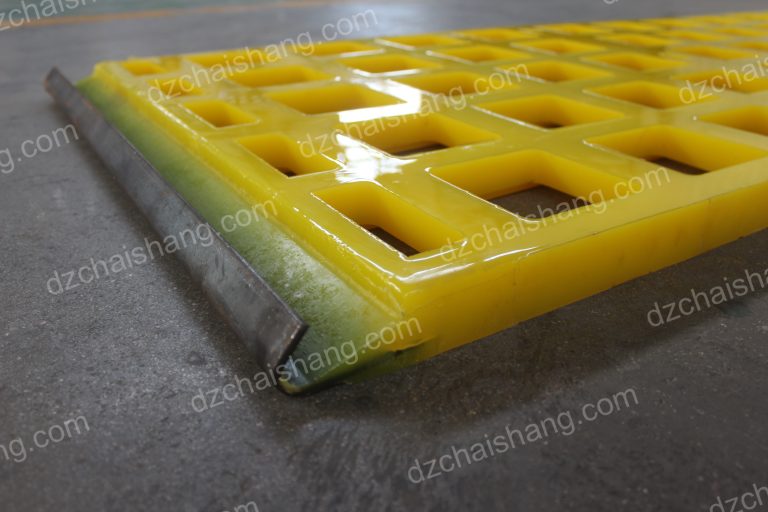
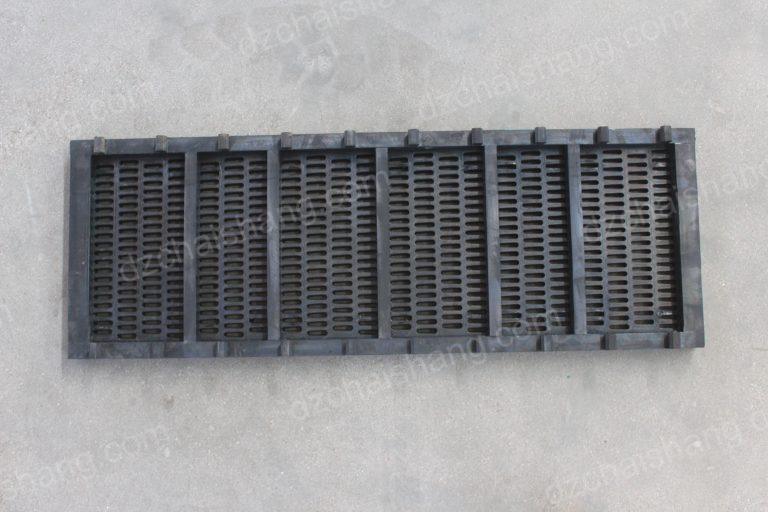
- Aperture shape — Square, round, slotted, or hexagonal? Each requires different mold tooling.
- Open area percentage — Two panels with the same aperture size can have very different open areas depending on bar/web width.
- Mounting method — Hook strip, bolt-down, tension, or modular clip system[^1]? This changes the entire panel edge profile.
- Surface profile — Flat deck, crowned, anti-blinding features, or tapered apertures[^2]?
- Material hardness — Polyurethane ranges from 40A to 75D Shore hardness[^3]. The application determines the right choice, but the text rarely specifies it.
- Steel reinforcement — Some panels require embedded steel cables or steel backing frames[^4]. Without a drawing, we cannot know.
| Information | From Text Description | From Drawing/Photo |
|---|---|---|
| Overall dimensions | ✅ Usually provided | ✅ Confirmed |
| Aperture size | ✅ Usually provided | ✅ Confirmed with shape |
| Aperture shape | ❌ Often missing | ✅ Clear |
| Panel thickness | ❌ Often missing | ✅ Dimensioned |
| Mounting system | ❌ Rarely specified | ✅ Visible |
| Edge profile detail | ❌ Almost never | ✅ Detailed |
| Reinforcement type | ❌ Almost never | ✅ Shown in cross-section |
| Surface geometry | ❌ Ambiguous | ✅ Clear |
When even two or three of these variables are undefined, the pricing variance can be 30–50% or more[^5]. That is not a minor rounding error — it is the difference between a project that stays on budget and one that does not.
The Hidden Cost of Assumptions
From a manufacturer's perspective, I face a dilemma when details are missing. If I quote low based on the simplest interpretation, and the actual product turns out to be more complex, I either absorb the loss or have an uncomfortable renegotiation with the buyer. If I quote high to cover all possibilities, I risk losing the order to a competitor who guessed differently. Neither outcome serves the buyer well.
Bottom line: A text-only description is a starting point for conversation — not a basis for a binding quotation.
What Drawings and Site Photos Reveal That Descriptions Cannot?
Engineering drawings and on-site photographs serve fundamentally different purposes in the polyurethane screen quotation process, but together they paint a complete picture. Understanding what each one contributes helps you provide the right documentation the first time.
Drawings give precise geometry and tolerances. Site photos show real-world context — the equipment model, wear patterns, mounting configuration, and operating environment. Together, they allow a manufacturer to quote with confidence and accuracy.

What an Engineering Drawing Provides
A proper engineering drawing — whether a formal CAD file or even a clear hand sketch with dimensions — communicates:
- Exact geometry in all three dimensions — length, width, thickness, and any tapers or contours.
- Aperture layout — not just size and shape, but pitch (center-to-center spacing), pattern, and open area.
- Cross-sectional profiles — how the panel mates with the deck frame, including hook strips, flanges, or bolt holes.
- Tolerances — critical when panels must fit tightly side by side on a deck with minimal gaps.
- Material callouts — hardness, reinforcement type, and any special wear-resistant formulations.
For ODM/OEM orders — which make up a significant portion of our production — drawings are essentially the manufacturing instruction set. Without them, we are guessing at what to build.
What Site Photos Add
Even with a good drawing, site photos provide context that flat geometry cannot:
- Equipment identification — Seeing the actual vibrating screen or trommel model helps us cross-reference known configurations. Sometimes we have existing molds for that exact machine.
- Current panel condition — Photos of worn-out screens tell us about the abrasion pattern, which informs material selection and hardness recommendations.
- Mounting reality — Drawings show the ideal. Photos show the actual. I have seen cases where field modifications to the screen deck mean the original drawing no longer matches the installed configuration.
- Environmental factors — Is the screen operating wet or dry? Is there chemical exposure? Are there visible temperature effects? These details affect polyurethane formulation.
- Scale reference — A photo with a tape measure or a person standing nearby helps verify that the dimensional data makes sense.
A Real Example
I recall a customer who sent dimensions for what they described as a "standard flat screen panel." When we finally received photos of their site, we discovered the panels were actually [crowned (arched) to improve material flow](https://www.grindercrusherscreen.com/blog/85751-vibrating-screen-guide)[^6], and the mounting system used a proprietary hook-strip design. The drawing they eventually provided confirmed a completely different geometry from what we would have assumed. Had we manufactured based on the initial text description, the panels would not have fit.
How Does Providing Complete Documentation Speed Up the Quotation Process?
Many buyers worry that gathering drawings and photos will slow things down. The opposite is true. Incomplete information creates back-and-forth email chains that stretch the quoting timeline from days into weeks.
When we receive drawings and site photos alongside dimensional data, we can typically provide an accurate polyurethane screen quotation within 24–48 hours[^7]. Without them, the process often takes a week or more — and even then, the quote comes with caveats and disclaimers.

The Typical Incomplete-Information Timeline
Here is what I see when documentation is insufficient:
| Step | Timeline Without Drawings | Timeline With Drawings |
|---|---|---|
| Initial inquiry received | Day 1 | Day 1 |
| Supplier requests clarification | Day 1–2 | — (not needed) |
| Buyer gathers missing info | Day 3–7 | — |
| Follow-up questions | Day 7–10 | — |
| Accurate quote issued | Day 10–14 | Day 2–3 |
| Mold feasibility confirmed | Day 14–18 | Day 3–5 |
That is a two-week difference in many cases. For operations facing downtime or urgent screen replacements, those two weeks are expensive.
Reducing Revision Cycles
Beyond the initial quote, incomplete documentation causes problems downstream. If the first production sample does not match expectations because the specification was ambiguous, we face:
- Sample rejection and remake costs — which either the buyer or supplier absorbs.
- Additional shipping time for revised samples.
- Delayed production runs while the revised design is confirmed.
In my experience, orders that start with complete drawings and photos have a first-sample approval rate above 90%[^8]. Orders that begin with text-only descriptions? That rate drops below 50%.
What "Complete" Documentation Looks Like
You do not need aerospace-level documentation. Here is the practical minimum I recommend for a smooth polyurethane screen quotation:
- A dimensioned drawing — CAD preferred (DWG, DXF, STEP, PDF), but a clear hand sketch with all key dimensions marked is workable.
- 3–5 site photos — showing the panel installed on the deck, a close-up of the mounting edge, and (if possible) a worn panel that needs replacement.
- Basic application data — material being screened, wet/dry operation, and approximate tonnage or feed rate.
- Quantity and delivery requirements — so we can quote tooling amortization accurately.
This package typically takes a site technician 15–30 minutes to prepare. It saves weeks of back-and-forth.
What If You Do Not Have Drawings — Can Photos Alone Work?
Not every operation has engineering drawings for their screen panels — especially for older equipment or third-party replacement parts. This is a common situation, and it does not have to be a dead end.
Clear, detailed site photos combined with accurate physical measurements can substitute for formal drawings in many cases. An experienced manufacturer can reverse-engineer the panel geometry from good photographic documentation and dimensional data[^9].

How Reverse Engineering Works
When a customer sends us photos and measurements but no drawing, our engineering team follows a systematic process:
- Photo analysis — We examine the images to identify panel type, mounting system, aperture pattern, and surface profile.
- Cross-referencing — With over 30 years of manufacturing experience and thousands of mold designs in our library, we can often match the panel to a known configuration or similar design.
- Dimensional verification — We compare the customer's measurements against our database and the proportions visible in the photographs.
- Draft drawing creation — We produce a preliminary drawing and send it to the customer for confirmation before quoting.
- Quotation — Once the customer approves the drawing, we issue a precise price.
Photo Quality Matters
Not all photos are created equal. Here is what makes site photos useful for quotation purposes:
- Good lighting — avoid backlighting and deep shadows that obscure detail.
- Multiple angles — top surface, underside (showing mounting features), edge profile, and a close-up of the aperture pattern.
- Scale reference — include a ruler, tape measure, or known-size object in at least one photo.
- Focus on details — mounting hooks, bolt holes, edge lips, and any identifying markings or part numbers stamped on the panel.
- Wear condition — photos of both new and worn panels (if available) help us understand the application demands.
Pro tip: A smartphone camera is perfectly adequate. Just make sure the lens is clean and the photos are in focus. I have received blurry, dark photos that were essentially useless — and crystal-clear phone photos that told me everything I needed to know.
When You Truly Need a Drawing
Some situations genuinely require formal engineering drawings:
- Completely custom designs with no existing reference panel
- Tight tolerance applications where panel-to-panel gaps must be minimized
- Complex geometries — multi-layer panels, embedded steel reinforcement, or unusual aperture patterns
- Large-volume OEM orders where tooling investment is significant and errors are costly
In these cases, if you do not have a drawing, consider engaging a local draftsperson or asking your supplier (like us) to create one based on detailed measurements and photos — then approve it before production begins.
How Do Accurate Quotations Benefit Long-Term Supplier Relationships?
The <a href="/tag/polyurethane-screen" target="_blank"><strong><a href="/tag/polyurethane" target="_blank"><strong>polyurethane</strong></a> <a href="/tag/screen" target="_blank"><strong>screen</strong></a></strong></a> quotation process is not just a transaction — it sets the tone for the entire business relationship. Accuracy in the initial quote builds trust, reduces disputes, and creates a foundation for efficient repeat ordering.
When both buyer and supplier work from verified documentation, the commercial relationship becomes predictable and scalable. Reorders become faster, quality remains consistent, and total cost of ownership drops.

Price Stability and Predictability
An accurate initial quote means fewer surprises. When the price is based on verified drawings rather than assumptions, it holds up through production. I have seen too many relationships sour because a "preliminary" quote based on incomplete data doubled once the real scope was understood. That erodes trust on both sides.
Faster Reorders
Once we have confirmed drawings and mold specifications on file, reordering becomes almost instantaneous. The customer simply references the previous order, and we can confirm price and lead time within hours. This is especially valuable for [wear parts like <a href="/tag/polyurethane-screens" target="_blank"><strong>polyurethane <a href="/tag/screens" target="_blank"><strong>screens</strong></a></strong></a>, which are consumables that need regular replacement](https://www.huataoscreen.com/polyurethane-screen-panel-lifespan-complete-<a href="/tag/mining" target="_blank"><strong>mining</strong></a>-guide.html)[^10].
Quality Consistency
Documentation is the anchor for quality control. When every production run references the same approved drawing, dimensional consistency is measurable and traceable. Our production line uses imported raw materials and equipment with strict QC protocols — but those protocols are only as good as the reference documents they measure against.
Competitive Advantage for Buyers
Buyers who provide complete documentation also get better pricing. Here is why:
- No risk premium — suppliers do not need to pad the quote for unknowns.
- Efficient production — less setup time and fewer errors mean lower manufacturing costs.
- Tooling optimization — when we can plan mold investment confidently, we pass savings along.
- Fewer rejects — higher first-pass yield keeps per-unit costs down.
Frequently Asked Questions
Can I get a polyurethane screen quotation with just dimensions and no drawing?
You can get a preliminary estimate, but not an accurate production quotation. Dimensions alone leave critical variables undefined — aperture shape, mounting system, thickness profile, and material hardness all significantly affect price. We always recommend providing drawings or detailed site photos for a reliable quote.
What file formats do you accept for <a href="/tag/screen-panel" target="_blank"><strong>screen panel</strong></a> drawings?
We accept CAD files (DWG, DXF, STEP, IGES), PDF drawings, and even clear hand sketches with dimensions marked. The key is that all critical dimensions, aperture details, and mounting features are clearly shown. If you have a 3D model, STEP format is ideal for our engineering team.
How quickly can you provide an accurate quotation with complete documentation?
With complete drawings, site photos, and application data, we typically deliver an accurate polyurethane screen quotation within 24–48 hours. For complex custom designs requiring mold feasibility analysis, allow 3–5 business days.
Do you provide drawing services if we only have photos and measurements?
Yes. With over 30 years of manufacturing experience and thousands of existing mold designs in our library, our engineering team can reverse-engineer panel specifications from detailed photos and accurate measurements. We create a draft drawing for your approval before quoting or manufacturing.
What if our screen panels are from an obsolete machine with no documentation?
This is more common than you might think. Send us clear photos from multiple angles along with careful physical measurements of the existing panel (including a worn one, if that is all you have). We will cross-reference our database, draft a specification, and work with you to confirm it before production.
Conclusion
Polyurethane screen quotation accuracy is not about the supplier's pricing skill — it is about the quality of information exchanged. Text descriptions and bare dimensions will always produce unreliable estimates because they leave too many critical variables undefined. Drawings define exact geometry. Site photos provide real-world context. Together, they enable a manufacturer to deliver a precise, trustworthy price.
From my experience running a manufacturing operation with over 30 years of production history, the single most impactful thing a buyer can do to improve quotation accuracy is invest 30 minutes in gathering proper documentation before sending the inquiry. It saves weeks of communication, prevents costly errors, and builds the foundation for a reliable long-term supply partnership.
If you are sourcing polyurethane screen panels — whether standard replacements or custom OEM/ODM designs — send us your drawings and site photos along with your dimensional data. We will provide an accurate quotation backed by our own production line, imported raw materials, and decades of <a href="/tag/screening-media" target="_blank"><strong>screening media</strong></a> expertise. Reach out today, and let us quote it right the first time.
[^1]: "<a href="/tag/vibrating-screen-panels" target="_blank"><strong><a href="/tag/vibrating-screen" target="_blank"><strong>vibrating screen</strong></a> panels</strong></a> Manufacturer | PU & Rubber Panels", https://apscreens.com/vibrating-screen-panels/. Screening media mounting systems vary by equipment manufacturer and application; common configurations include hook-strip (cross-tension), bolt-down, pin-and-slot, and modular interlocking clip systems, each dictating specific panel edge geometry and affecting interchangeability (referenced in OEM vibrating screen technical manuals and mineral processing equipment guides). Evidence role: general_support; source type: research. Supports: Polyurethane screen panels are manufactured with various mounting configurations—including hook strip, bolt-down, tensioned, and modular clip systems—each requiring distinct edge profiles. Scope note: No single universal standard classifies all mounting types; terminology and design details vary by equipment manufacturer. [^2]: "Screen Blinding and Pegging: Causes, Differences, and 7 ...", https://www.gmxvibra.com/screen-blinding-and-pegging-causes-differences-and-proven-solutions/. Tapered (conical) apertures are a well-established anti-blinding strategy in screening media design; the wider exit dimension reduces the likelihood of near-size particles wedging in the opening, a principle applied in both woven wire and polyurethane screen panels (see Beerkircher, 'Screening Technology,' or relevant patents on self-cleaning screen designs). Evidence role: mechanism; source type: research. Supports: Tapered apertures in screen panels reduce near-size particle pegging and blinding by allowing particles that enter the aperture to pass through more easily. Scope note: Effectiveness depends on the taper angle, material properties, and the particle size distribution of the feed. [^3]: "Cast <a href="/tag/urethane" target="_blank"><strong>urethane</strong></a> Hardness Chart", https://www.precisionurethane.com/hardness-chart.html. Polyurethane elastomers can be formulated across a broad hardness spectrum; standard industrial grades range from roughly 20 Shore A (very soft) to 80 Shore D (very hard), with screening and wear applications typically specified between 40A and 75D (see, e.g., the Polyurethane Handbook, Oertel, or ASTM D2240 for Shore hardness definitions). Evidence role: definition; source type: encyclopedia. Supports: Cast polyurethane elastomers are commercially available across a wide hardness range, typically from approximately 40 Shore A to 75 Shore D. Scope note: The exact range available depends on the specific polyurethane chemistry (polyester vs. polyether, MDI vs. TDI) and manufacturer capabilities. [^4]: "Polyurethane Screens | <a href="/tag/screen-media" target="_blank"><strong>screen media</strong></a> Manufacturer | Red ...", https://<a href="/tag/mesh" target="_blank"><strong>mesh</strong></a>-screen.com/3-polyurethane-screens.html. Steel-reinforced polyurethane screen panels, incorporating embedded steel cables or welded steel backing frames, are widely used in heavy-duty screening applications to improve structural rigidity and extend service life under high-tonnage or high-impact conditions (referenced in <a href="/tag/mining-equipment" target="_blank"><strong>mining equipment</strong></a> supplier technical literature and mineral processing handbooks). Evidence role: general_support; source type: research. Supports: Steel cable or frame reinforcement is used in polyurethane screen panels to increase tensile strength, dimensional stability, and resistance to deformation under heavy loads. Scope note: Specific reinforcement designs are often proprietary, and published academic literature on this topic is limited. [^5]: "Cost Overrun Gap Analysis in Construction Projects: State - ...", https://www.academia.edu/156991878/Cost_Overrun_Gap_Analysis_in_Construction_Projects_State_Of_The_Art. Research on procurement and custom manufacturing indicates that incomplete technical specifications are a leading cause of cost overruns, with variance often exceeding 25–50% when critical design parameters are left undefined at the quotation stage. Evidence role: statistic; source type: research. Supports: Incomplete or ambiguous engineering specifications lead to significant cost variances (30% or more) in custom-manufactured industrial components. Scope note: General manufacturing procurement research may not specifically address <a href="/tag/polyurethane-screening" target="_blank"><strong>polyurethane screening</strong></a> media, so the percentage range is indicative rather than sector-specific. [^6]: "Vibrating Screens for Sale: Types, Sizing and How to Choose", https://www.grindercrusherscreen.com/blog/85751-vibrating-screen-guide. Crowned screen deck configurations are employed in vibrating screen design to enhance material bed movement and stratification, reducing blinding and improving screening efficiency, as noted in mineral processing engineering references (e.g., SME Mineral Processing & Extractive Metallurgy Handbook). Evidence role: mechanism; source type: research. Supports: Crowned or arched screen deck profiles are used in vibrating screen design to promote material stratification and improve throughput. Scope note: The degree of benefit depends on the specific application, feed characteristics, and vibration parameters. [^7]: "Procurement", https://en.wikipedia.org/wiki/Procurement. Procurement best-practice literature indicates that request-for-quotation (RFQ) packages containing complete engineering specifications and drawings receive supplier responses significantly faster than incomplete inquiries; turnaround times of 24–72 hours are achievable for well-documented custom part inquiries (see APICS or ISM procurement guidelines). Evidence role: general_support; source type: research. Supports: Complete technical documentation enables significantly faster quotation turnaround in custom manufacturing, with well-prepared RFQs often receiving responses within 1–3 business days. Scope note: Actual turnaround times depend on supplier capacity, order complexity, and whether existing tooling is available; the 24–48 hour figure reflects an optimistic but plausible scenario for established supplier relationships. [^8]: "16.1 Shop Drawings | Bureau of Engineering", https://projectdeliverymanual.engineering.lacity.gov/chapter-16-construction-management-procedures/161-shop-drawings. Quality management literature consistently identifies complete design documentation as a primary driver of first-pass yield; studies on first-article inspection in custom manufacturing report that well-documented orders achieve approval rates substantially higher than those with incomplete specifications. Evidence role: statistic; source type: research. Supports: Complete and unambiguous engineering documentation significantly improves first-article inspection pass rates in custom manufacturing. Scope note: Published first-pass yield data typically comes from aerospace or automotive sectors; direct statistics for <a href="/tag/polyurethane-screen-manufacturing" target="_blank"><strong>polyurethane <a href="/tag/screen-manufacturing" target="_blank"><strong>screen manufacturing</strong></a></strong></a> are unlikely to be publicly available, so the cited figures likely reflect the author's internal production experience. [^9]: "Three-dimensional reconstruction of industrial parts from a ...", https://pubmed.ncbi.nlm.nih.gov/38532082/. Reverse engineering—reconstructing part geometry from physical specimens, measurements, and photographic records—is a well-documented practice in industrial manufacturing for producing replacement components when original design data is unavailable; methods range from manual measurement and photogrammetry to 3D scanning (Raja & Fernandes, 'Reverse Engineering: An Industrial Perspective,' Springer). Evidence role: mechanism; source type: research. Supports: Reverse engineering from physical measurements and photographic documentation is an established practice for reproducing industrial components when original drawings are unavailable. Scope note: The accuracy of photo-based reverse engineering is lower than 3D scanning or CMM measurement; for polyurethane screen panels with relatively simple geometries, manual methods combined with experienced judgment are generally sufficient. [^10]: "<a href="/tag/polyurethane-screen-panel" target="_blank"><strong>polyurethane screen panel</strong></a> Lifespan: Complete Mining Guide", https://www.huataoscreen.com/polyurethane-screen-panel-lifespan-complete-mining-guide.html. In mineral processing and aggregate screening, polyurethane screen panels are recognized as wear components with finite service lives determined by feed abrasiveness, tonnage, and operating conditions; replacement intervals vary but are a routine maintenance consideration (Wills' Mineral Processing Technology, 8th ed.). Evidence role: general_support; source type: research. Supports: Polyurethane screen panels are classified as wear components in mineral processing, subject to abrasion and requiring periodic replacement. Scope note: Replacement frequency varies widely by application, so the characterization as 'regular replacement' is application-dependent.