
Polyurethane Screen Quotation Accuracy Depends on Drawings & Site Photos
Polyurethane Screen Quotation Accuracy Depends on Drawings & Site Photos
Getting an accurate polyurethane screen quotation is harder than most buyers think. Many procurement teams send over a quick list of dimensions and expect a final price. When the quote comes back and doesn't match reality, frustration builds on both sides. The solution is straightforward: provide detailed drawings and site photos alongside your specifications, and you will receive a quote you can actually rely on.
A polyurethane screen quotation can only be accurate when suppliers receive engineering drawings or clear site photos together with dimensional data. Text descriptions alone leave too many variables — aperture shape, mounting style, panel curvature, and fastening method — open to interpretation. Suppliers who quote without visual references are essentially guessing, and that guess usually costs the buyer time and money.

I've seen this pattern hundreds of times over our 30-plus years manufacturing polyurethane and rubber screening media. A customer emails a short paragraph with a few numbers. We do our best, but the quote rarely survives first contact with the actual screen deck. Below, I break down exactly why drawings and photos matter, what happens when they're missing, and how to prepare a quotation request that gets you the right price the first time.
Why Do Text-Only Specifications Lead to Inaccurate Quotes?
Text descriptions feel sufficient — you list length, width, thickness, and aperture size. But polyurethane screens are not simple rectangles. Without visual context, a supplier must assume dozens of design details, and each assumption is a potential pricing error.
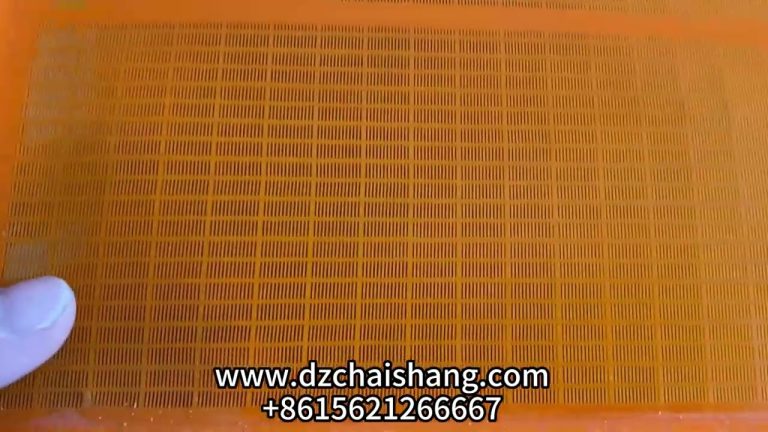
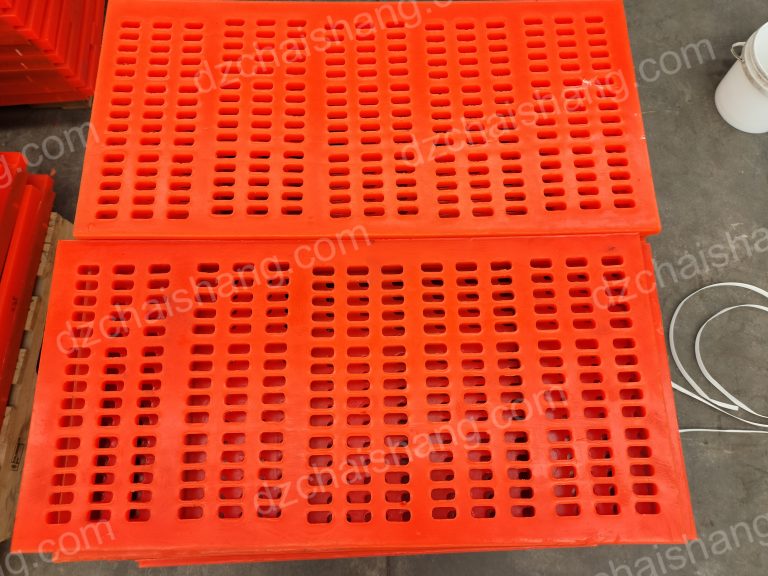
A text-only specification typically omits critical geometry such as hook strips, tension flanges, cross-support ribs, tapered edges, and bolt-hole patterns. These features directly affect material volume, mold complexity, and production time — all of which change the price. That is why a quote based solely on written dimensions is an estimate at best, not a commitment.

The Hidden Variables in Every Screen Panel
When I receive a request that says "polyurethane screen, 300 × 600 × 30 mm, 10 mm square aperture," it seems specific. But consider what that single line does not tell me:
- Aperture shape and pattern: Square, rectangular, slotted, or round? Staggered or aligned? The open area percentage changes material usage[^1].
- Mounting mechanism: Hook strips, bolt-down flanges, tension rails, or modular interlocking clips? Each type adds different geometry and cost.
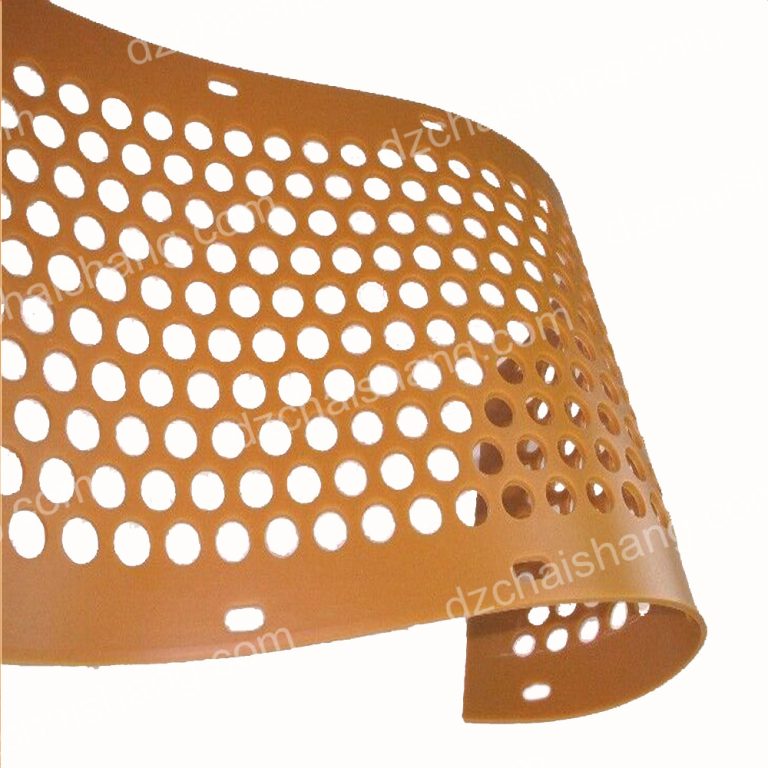
- Panel profile: Flat, crowned, or curved to match a trommel drum? Curved panels require specialized molds[^2].
- Support rib layout: Underside ribs add strength but also material. Their height, width, and spacing vary widely.
- Edge sealing and wear lips: Some panels have raised edges or wear-protection lips that require extra polyurethane.
- Hardness and material grade: Shore A 60 vs. Shore A 85 polyurethane have different raw-material costs and processing parameters[^3].
Each unknown variable forces the supplier to make a choice. If the supplier assumes a flat, bolt-down panel but the actual application uses hook-strip tensioned panels with curved profiles, the material volume could differ by 20–40%[^4]. That translates directly into a price gap.
Real Cost of Assumptions
| Variable Assumed Incorrectly | Typical Price Impact |
|---|---|
| [Mounting type (hook strip vs. bolt-down) | 10–25%](https://apscreens.com/replacement-polyurethane-screen-panels/)[^5] |
| Panel curvature (flat vs. crowned) | 15–30% |
| Support rib configuration | 5–15% |
| Aperture pattern (aligned vs. staggered) | 5–10% |
| Material hardness grade | 5–20% |
Key takeaway: A single wrong assumption can skew a polyurethane screen quotation by 10% or more. Stack several wrong assumptions together, and the quote becomes meaningless.
In my experience, about half of the initial quote requests we receive contain only text descriptions[^6]. We always follow up asking for drawings or photos. The customers who provide them move through the procurement process significantly faster.
How Do Engineering Drawings Improve Quotation Accuracy?
Engineering drawings are the gold standard for quotation requests. They eliminate ambiguity by specifying every dimension, tolerance, and design feature in a universal visual language.
When a buyer submits a 2D drawing or 3D CAD model, our engineering team can calculate exact material volumes, identify the correct mold geometry, and estimate production time with confidence. The resulting polyurethane screen quotation reflects the actual product — not a best guess. If you have access to OEM drawings, they are the single most valuable document you can share with a supplier.

What Should a Good Drawing Include?
Not all drawings are created equal. The most useful drawings for polyurethane screen quotation purposes include:
- Overall panel dimensions — length, width, and thickness with tolerances.
- Aperture detail — shape, size, pitch (center-to-center spacing), and open area percentage.
- Cross-section view — showing panel profile, rib layout, and mounting features.
- Mounting detail — hook-strip geometry, bolt-hole diameter and spacing, or interlocking clip profiles.
- Material specification — polyurethane type, Shore hardness, and any performance requirements (e.g., abrasion resistance, FDA compliance).
- Surface finish notes — smooth, textured, or anti-blinding coatings.
What If You Don't Have OEM Drawings?
Many buyers operate screens from older equipment where original drawings have been lost. This is extremely common — I encounter it weekly. In this scenario, there are two practical options:
- Reverse-engineer from a sample panel. Ship us an existing panel (even a worn one), and we can measure and model it precisely.
- Provide detailed site photos with measurements. This is where photography becomes your second-best tool for quotation accuracy.
CAD Files Speed Everything Up
If you can share STEP, IGES, or DWG files, our team can import them directly into our production software. This shortens the quotation turnaround from days to hours because we skip the manual dimensioning step entirely. It also reduces the risk of transcription errors — nobody has to re-type numbers from a PDF.
| Drawing Format | Quotation Speed | Accuracy Level |
|---|---|---|
| 3D CAD file (STEP/IGES) | Fastest (hours) | Highest |
| 2D DWG/DXF with sections | Fast (1–2 days) | Very high |
| PDF drawing with dimensions | Moderate (2–3 days) | High |
| Hand sketch with measurements | Slower (3–5 days) | Moderate |
| Text description only | Slowest (requires follow-up) | Low |
Why Are Site Photos So Valuable for Polyurethane Screen Quotes?
Site photos solve a problem that even detailed text descriptions cannot: they show real-world context. A photograph of the screen deck reveals the mounting system, panel arrangement, wear pattern, and surrounding equipment in seconds.
When drawings are unavailable, clear site photos become the most practical path to an accurate polyurethane screen quotation. They allow our engineers to identify the screen type, estimate panel geometry, and spot application-specific details — such as side-clamping mechanisms or unusual deck curvatures — that a buyer might not think to mention in a written description.

What Makes a Useful Site Photo?
Not every phone snapshot helps. Here are guidelines I share with customers to make their photos as useful as possible:
- Shoot from multiple angles. Top-down, side profile, and underneath the deck. Each view reveals different features.
- Include a scale reference. Place a ruler, tape measure, or known-size object next to the panel. This helps us verify dimensions.
- Capture the mounting detail. Zoom in on how the panel attaches to the deck — hook strips, bolts, clamps, or tension bars.
- Show the wear pattern. Worn panels tell us a lot about the application. Heavy center wear suggests impact loading; edge wear suggests misalignment[^7].
- Photograph the full deck. Seeing how panels tile together reveals overlap zones, staggered joints, and support bar spacing.
- Good lighting matters. Avoid dark, shadowy images. Natural daylight or a strong flashlight helps us see surface details.
What Site Photos Reveal That Descriptions Miss
I recall a customer who described their product as a "flat polyurethane screen, 600 × 400 mm, 12 mm square holes." Based on that, we quoted a standard bolt-down modular panel. When they later sent photos, we discovered the panels were actually tensioned panels with integral hook strips on both short edges and a 5-degree longitudinal crown. The revised quote was 22% higher — not because we were trying to upsell, but because the actual product required more material and a completely different mold.
This is not unusual. Here are common details that site photos expose:
| Detail | Often Missed in Text? | Visible in Photos? |
|---|---|---|
| Hook-strip profile | Yes | Yes |
| Panel crown or curvature | Yes | Yes |
| Cross-support rib pattern | Sometimes | Yes (underside photos) |
| Bolt-hole layout | Sometimes | Yes |
| Overlap or interlocking edges | Yes | Yes |
| Wear indicators and application severity | Always | Yes |
Pro tip: Even a short video clip taken on a smartphone — slowly panning across the <a href="/tag/screen" target="_blank"><strong>screen</strong></a> deck — can be more informative than a dozen still photos. Several of our most successful OEM partnerships started with a 30-second video sent via WhatsApp.
What Should a Complete Quotation Request Include?
The best quotation requests combine all three elements: written specifications, engineering drawings, and site photographs. When buyers submit a complete request, we can typically return an accurate <a href="/tag/polyurethane-screen" target="_blank"><strong><a href="/tag/polyurethane" target="_blank"><strong>polyurethane</strong></a> screen</strong></a> quotation within 24–48 hours.
A complete request eliminates the back-and-forth clarification emails that slow down procurement. It also prevents the costly scenario where a buyer accepts a quote based on assumptions, orders product, and then discovers the panels don't fit their screen deck.

The Ideal Quotation Request Checklist
Here is the checklist I recommend to every buyer:
Written specifications
- Panel dimensions (L × W × T)
- Aperture size and shape
- Material type and Shore hardness
- Quantity required
- Application description (what material is being screened, throughput rate)
Engineering drawing (any format)
- Cross-section showing panel profile
- Mounting detail
- Aperture pattern and pitch
- Tolerances for critical dimensions
Site photos (minimum 5 images)
- Top view of installed panels
- Side view showing panel profile
- Close-up of mounting mechanism
- Underside of a removed panel
- Full deck overview
Additional context
- Equipment brand and model (e.g., Metso, Sandvik, Derrick)
- Existing panel material (rubber, polyurethane, wire cloth)
- Known issues with current panels (premature wear, blinding, pegging)
- Delivery location and timeline requirements
What Happens When Information Is Incomplete?
When we receive an incomplete request, we have two choices:
- Quote with stated assumptions. We clearly list every assumption in the quotation document so the buyer knows what might change. This is transparent but introduces risk.
- Request clarification before quoting. This is our preferred approach. It takes a few extra days but produces a firm, reliable price.
Either way, the procurement cycle lengthens. In competitive bidding situations, the supplier who quotes fastest with the most confidence often wins the order. Providing complete information upfront gives you a strategic advantage — you receive faster, firmer pricing from every supplier you approach.
How Does Quotation Accuracy Affect Total Cost of Ownership?
An inaccurate polyurethane screen quotation doesn't just create a pricing surprise — it cascades into procurement delays, production rework, and operational downtime. Getting the quote right the first time has a measurable impact on total cost.
When a quote is based on incomplete information, the final product often requires design adjustments after order placement. These mid-production changes add engineering time, may require new molds, and almost always push back the delivery date. For <a href="/tag/mining" target="_blank"><strong>mining</strong></a> and aggregate operations running 24/7, screen downtime is extremely expensive — often thousands of dollars per hour[^8].

Direct Costs of Quoting Errors
- Mold rework: If the quoted design doesn't match the actual requirement, molds may need modification or complete replacement. Polyurethane screen molds are precision-machined steel tools — modifications cost $500–$5,000 depending on complexity[^9].
- Material waste: Panels produced to an incorrect specification are scrap. The polyurethane cannot be reused[^10].
- Expedited shipping: Rush deliveries to compensate for delays can double or triple freight costs.
- Installation failures: Panels that don't fit the deck require field modification or immediate reorder.
Indirect Costs
- Production downtime: Waiting for replacement panels means the screen is either idle or running with degraded performance.
- Procurement team time: Every clarification email, revised quote, and re-approval cycle consumes hours of staff time.
- Supplier relationship strain: Repeated quoting errors erode trust and make future negotiations harder.
A Simple Comparison
| Scenario | Quote-to-Delivery Time | Risk of Fit Issues | Total Cost Impact |
|---|---|---|---|
| Complete request (drawing + photos + specs) | 2–4 weeks[^11] | Very low | Lowest |
| Partial request (specs + photos, no drawing) | 3–5 weeks | Low to moderate | Moderate |
| Minimal request (text specs only) | 4–8 weeks | High | Highest |
The pattern is clear. Investing 30 minutes to gather drawings and site photos before requesting a quote can save weeks and thousands of dollars downstream.
Frequently Asked Questions
Can you quote polyurethane screens from a sample panel instead of drawings?
Yes. Shipping a physical sample — even a heavily worn one — allows us to reverse-engineer exact dimensions, aperture patterns, and mounting geometry. We measure the sample, create a production drawing for your approval, and then provide a precise quotation[^12]. This is an excellent option when OEM drawings are lost.
What if I only have a competitor's product datasheet?
A competitor datasheet gives us a starting point, but it rarely includes full geometry details like cross-sections or mounting profiles. We recommend supplementing the datasheet with site photos showing the installed panels. Together, these two sources usually provide enough information for an accurate polyurethane screen quotation.
How quickly can you provide a quotation once I send complete information?
With a complete request — including drawings or photos, specifications, and quantity — we typically return a firm quotation within 24 to 48 hours. For standard <a href="/tag/modular-panel" target="_blank"><strong>modular panel</strong></a> sizes, same-day quotes are often possible. Complex custom panels requiring new mold designs may take 3 to 5 business days for a full technical and commercial proposal.
Do you charge for creating drawings from my photos or samples?
No. Drawing creation and reverse engineering are part of our pre-sale technical support. We produce a dimensioned drawing, send it for your confirmation, and only proceed once you approve. This ensures the final product matches your exact requirements without any additional cost to you.
What file formats do you accept for engineering drawings?
We accept all common formats: STEP, IGES, DWG, DXF, PDF, and even clear photographs of hand sketches with dimensions. Our engineering team works with SolidWorks and AutoCAD, so native files in those formats are ideal. However, a well-dimensioned PDF works perfectly fine for quotation purposes.
Conclusion
Polyurethane screen quotation accuracy is not about the supplier's pricing model — it is about the quality of information the buyer provides. Text descriptions alone leave too many variables to assumption, and assumptions cost everyone time and money. Engineering drawings eliminate ambiguity. Site photos fill in the real-world context that even good descriptions miss. Together with written specifications, they form the foundation for a firm, reliable quote.
With over 30 years of manufacturing experience, our own production lines, imported raw materials, and precision equipment, we are set up to deliver accurate quotes quickly — but only when we have the right information to work with. If you are sourcing polyurethane screens, <a href="/tag/rubber-screen-panels" target="_blank"><strong><a href="/tag/rubber-screen" target="_blank"><strong>rubber screen</strong></a> panels</strong></a>, or any custom <a href="/tag/screening-media" target="_blank"><strong>screening media</strong></a>, send us your drawings and site photos along with your specifications. You will receive a precise quotation, faster delivery, and panels that fit your deck the first time. Contact our engineering team today to get started.
[^1]: "AMIT 145: Lesson 1 Industrial Screens", https://millops.community.uaf.edu/amit-145/amit-145-lesson-1/. Screening media design references confirm that open area percentage—determined by aperture size, shape, and pitch—is inversely related to the solid material volume of the panel, making it a primary determinant of raw material consumption per unit. Evidence role: mechanism; source type: education. Supports: That higher open area percentages in <a href="/tag/screen-panels" target="_blank"><strong>screen panels</strong></a> reduce the volume of polyurethane per panel, directly affecting material cost. Scope note: The relationship is straightforward in principle but is modulated by other design features such as rib structures and edge reinforcements that may partially offset material savings from higher open area. [^2]: "33 FLEXIBLE PANEL MOULDING ideas", https://www.pinterest.com/oracdecorusa/flexible-panel-moulding/. Manufacturing engineering principles for cast polyurethane components confirm that non-planar geometries require mold cavities machined to precise curvature specifications, increasing both CNC machining time and tooling cost relative to flat-surface molds. Evidence role: mechanism; source type: education. Supports: That curved <a href="/tag/polyurethane-panels" target="_blank"><strong>Polyurethane Panels</strong></a>, such as those used in trommel screens, require molds with matching curvature profiles that are more complex and costly to machine than flat-panel molds. Scope note: The degree of additional complexity depends on the radius of curvature and whether the mold is single-use or production-grade. [^3]: "Shore hardness of bulk polyurethane affects the properties ...", https://pubmed.ncbi.nlm.nih.gov/39520867/. Polyurethane engineering textbooks (e.g., Oertel, 'Polyurethane Handbook') explain that Shore hardness is controlled by the ratio of hard to soft segments in the polymer chain, with higher-hardness formulations typically requiring different curative systems and processing temperatures that influence manufacturing cost. Evidence role: mechanism; source type: education. Supports: That polyurethane formulations of different Shore A hardness values require different prepolymer chemistries, chain extenders, and curing conditions, which affect both material cost and processing complexity. Scope note: Cost differences are formulation- and supplier-dependent and may not follow a simple linear relationship with hardness. [^4]: "How to Choose <a href="/tag/polyurethane-screen-panel" target="_blank"><strong>polyurethane screen panel</strong></a> Hardness", https://apscreens.com/polyurethane-screen-panel-hardness/. Published studies on polyurethane screen panel design and manufacturing parameters could substantiate the claimed 20–40% material volume difference attributable to geometric complexity, though specific figures may vary by panel size and application. Evidence role: statistic; source type: research. Supports: That variations in panel geometry such as curvature and mounting features significantly affect <a href="/tag/polyurethane-material" target="_blank"><strong>polyurethane material</strong></a> volume in screen panel manufacturing. Scope note: Exact percentages are likely application-specific and may not be generalizable across all <a href="/tag/screen-panel-types" target="_blank"><strong>screen panel types</strong></a>. [^5]: "Replacement <a href="/tag/polyurethane-screen-panels" target="_blank"><strong>polyurethane screen panels</strong></a>: Before You Order", https://apscreens.com/replacement-polyurethane-screen-panels/. Industry analyses of screening media manufacturing costs indicate that mounting mechanism complexity is a primary cost variable, though published percentage breakdowns specific to hook-strip versus bolt-down configurations are limited in the open literature. Evidence role: statistic; source type: research. Supports: That mounting type is a significant cost driver in polyurethane screen panel manufacturing, with hook-strip designs requiring more material and tooling than bolt-down configurations. Scope note: The specific 10–25% range appears to be based on manufacturer experience rather than independently verified data. [^6]: "Guide to High-Quality Manufacturing Specifications", https://www.specright.com/blog/high-quality-manufacturing-specification-guide/. Supply chain management research indicates that incomplete technical specifications are a common source of procurement inefficiency in custom manufacturing, though specific prevalence rates vary by industry and product complexity. Evidence role: general_support; source type: research. Supports: That a significant proportion of industrial procurement requests lack sufficient technical documentation such as engineering drawings. Scope note: No published study specifically quantifies the rate of drawing-less quotation requests in the <a href="/tag/polyurethane-screening" target="_blank"><strong>polyurethane screening</strong></a> media industry; the 50% figure reflects the author's operational experience. [^7]: "<a href="/tag/vibrating-screen-bearing-failure" target="_blank"><strong><a href="/tag/vibrating-screen" target="_blank"><strong>vibrating screen</strong></a> bearing failure</strong></a> Signs", https://www.screenerking.com/blogs/news/vibrating-screen-bearing-failure-detection?srsltid=AYCX9vLCzw8cx2KwEdzLE9texez73LXrg1YFgsIC7rm8KCsBAnWF-Qcy. Mineral processing and screening engineering literature (e.g., Wills' 'Mineral Processing Technology') discusses how feed distribution and deck alignment affect localized wear on <a href="/tag/screen-media" target="_blank"><strong>screen media</strong></a>, supporting the use of wear patterns as diagnostic indicators of operational conditions. Evidence role: expert_consensus; source type: research. Supports: That wear pattern distribution on screen panels is diagnostic of operational conditions, with center wear correlating to feed impact zones and edge wear indicating deck alignment or support issues. Scope note: Wear pattern interpretation can be multifactorial; center wear may also result from feed distribution issues rather than impact loading alone. [^8]: "Digging Deeper: Reducing machine downtime in mining", https://www.cummins.com/en-na/news/2021/03/23/reducing-machine-downtime-mining. Studies on mining operational efficiency consistently report that unplanned equipment downtime costs range from several thousand to tens of thousands of dollars per hour depending on operation scale and commodity value (see, e.g., analyses published by mining engineering departments and industry bodies such as the AusIMM). Evidence role: statistic; source type: research. Supports: That unplanned equipment downtime in mining and mineral processing operations incurs costs of thousands of dollars per hour due to lost production. Scope note: Most published downtime cost figures refer to major equipment categories broadly rather than vibrating screen downtime specifically. [^9]: "Advanced Injection Molding Methods: Review - PMC", https://pmc.ncbi.nlm.nih.gov/articles/PMC10489002/. Manufacturing engineering references on polyurethane casting tooling confirm that steel mold fabrication and modification represent substantial cost items, with prices dependent on mold size, geometric complexity, and machining tolerances required. Evidence role: general_support; source type: research. Supports: That precision-machined steel molds for polyurethane casting represent a significant tooling investment, with modification costs varying by complexity. Scope note: Published mold cost data tends to cover broader polyurethane molding applications rather than screen panels specifically, so the $500–$5,000 range may not be directly corroborated. [^10]: "Polyurethane Manufacturing Operations - MnTAP", http://www.mntap.umn.edu/interns/pastprojects/polyurethane/. As a thermoset polymer, cast polyurethane elastomer undergoes irreversible cross-linking during curing, which prevents it from being remelted and recast like thermoplastics (see, e.g., the Wikipedia article on polyurethane or Szycher's 'Handbook of Polyurethanes'). Evidence role: mechanism; source type: encyclopedia. Supports: That cast polyurethane elastomers are thermoset materials with cross-linked molecular structures that prevent simple remelting and recasting, making scrap panels difficult to reuse in the same application. Scope note: While direct recasting is not feasible, some polyurethane waste can be mechanically recycled as filler or chemically recycled via glycolysis, so the claim of zero reusability is somewhat overstated. [^11]: "Global <a href="/tag/polyurethane-screen-panel-manufacturer" target="_blank"><strong>polyurethane screen panel manufacturer</strong></a> - Huatao", https://www.huataoscreen.com/global-polyurethane-screen-panel-manufacturer-complete-supplier-guide.html. Supply chain studies in custom manufacturing contexts demonstrate that front-loading technical information in procurement requests reduces iterative clarification cycles and compresses overall order-to-delivery timelines. Evidence role: general_support; source type: research. Supports: That complete technical documentation at the quotation stage significantly reduces overall procurement lead times for custom-manufactured screening media. Scope note: Specific lead times (2–4 weeks vs. 4–8 weeks) are manufacturer-dependent and influenced by factors such as mold availability, production backlog, and shipping logistics. [^12]: "Guide to Reverse Engineering: All You Need To Know", https://formlabs.com/blog/reverse-engineering/. Engineering metrology references confirm that modern reverse engineering techniques, including CMM measurement and 3D laser scanning, can capture part geometry to tolerances of ±0.05–0.1 mm, enabling accurate reproduction of components when original drawings are unavailable. Evidence role: mechanism; source type: education. Supports: That reverse engineering from physical samples using coordinate measurement or 3D scanning techniques can reproduce part geometry with high dimensional accuracy. Scope note: Accuracy of reverse engineering from worn samples depends on the degree of wear; heavily degraded panels may require engineering judgment to reconstruct original dimensions.