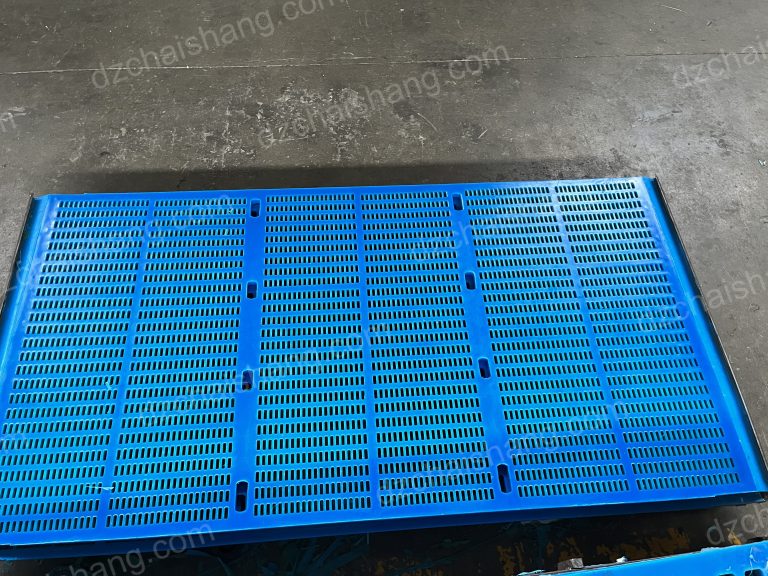

What affects wear life of Polyurethane Screen Panels with Steel Frame
What affects wear life of <a href="/tag/polyurethane-screen-panels" target="_blank"><strong><a href="/tag/polyurethane-screen" target="_blank"><strong><a href="/tag/polyurethane" target="_blank"><strong>polyurethane</strong></a> <a href="/tag/screen" target="_blank"><strong>screen</strong></a></strong></a> panels</strong></a> with Steel Frame
Polyurethane <a href="/tag/screen-panels" target="_blank"><strong>screen panels</strong></a> with steel frame are a staple in mineral processing, yet their wear life varies dramatically from site to site. Two operations running the same panel can report completely different lifespans — one gets months of service, the other barely weeks. This inconsistency frustrates procurement teams and drives up screening costs.
The wear life of polyurethane screen panels with steel frame depends on three interconnected factors: the material being screened (hardness, particle size, angularity), the polyurethane compound formulation (hardness balanced with elasticity and tear resistance), and the installation and operating conditions of the screening machine (tensioning, alignment, and support structure fit). Optimizing all three factors together — not just one — is the key to maximizing panel longevity.

I get this question from customers more often than you might expect. Someone switches to our panels and gets outstanding results, while another buyer with a seemingly identical setup sees premature wear. The difference almost always comes down to the details I will walk through below. Let me break down each factor so you can evaluate — and extend — the service life of your panels with confidence.
How Does Feed Material Affect <a href="/tag/polyurethane-screen-panel" target="_blank"><strong>polyurethane <a href="/tag/screen-panel" target="_blank"><strong>screen panel</strong></a></strong></a> Wear Life?
Many buyers focus exclusively on the screen panel itself when troubleshooting wear issues. But the single biggest variable is often sitting right on top of the deck: the feed material. Ignoring material characteristics is like blaming tires for wearing out on gravel roads.
The physical properties of the ore or aggregate being screened — specifically its hardness, particle size distribution, angularity, moisture content, and drop height — directly determine how aggressively the material abrades the polyurethane surface. A panel that lasts 6 months screening rounded river sand may last only 6 weeks under angular quartzite with high impact loading[^1].

Mineral Hardness and Abrasiveness
The Mohs hardness scale is a useful starting point[^2], but real-world abrasiveness depends on more than just hardness. Silica content, for example, is a reliable indicator[^3]. Materials with high free silica — like quartzite, granite, and certain iron ores — are exceptionally abrasive. I have seen customers screening limestone (Mohs 3–4) get two to three times the panel life compared to customers screening silica sand (Mohs 7) under otherwise similar conditions.
| Material | Mohs Hardness | Relative Abrasiveness | Typical Panel Life Impact |
|---|---|---|---|
| Limestone | 3–4 | Low | Longer wear life |
| Copper ore | 3–4 | Low–Medium | Moderate wear life |
| Iron ore (hematite) | 5.5–6.5 | Medium–High | Reduced wear life |
| Quartzite / Silica sand | 7 | High | Significantly reduced |
| Corundum / Emery | 9 | Very High | Shortest wear life |
Particle Size and Angularity
Particle shape matters as much as hardness. Angular, freshly crushed particles act like tiny cutting tools against the polyurethane surface. They concentrate stress on small contact points, which accelerates abrasive cutting and gouging. In contrast, naturally rounded particles — like alluvial deposits — distribute force over a larger contact area, producing less localized damage.
Oversized particles present another risk. When material significantly larger than the aperture size strikes the panel, it creates impact damage rather than gradual abrasion. This is especially problematic at the feed end of the screen deck, where material first contacts the panel surface at high velocity.
Impact Force and Drop Height
The height from which material falls onto the screen deck directly translates to impact energy. A 200mm drop is very different from a 1.5-meter drop. High impact zones — particularly the first panel positions at the feed end — experience accelerated wear. I always recommend customers consider using thicker or harder-durometer panels in these high-impact feed zones while using more flexible panels in the discharge area. This zoned approach balances wear life with screening efficiency.
Moisture and Slurry Conditions
Wet screening applications introduce their own challenges. While moisture can actually reduce abrasion by lubricating the contact surface, slurry conditions with fine abrasive particles can accelerate wear through a hydraulic erosion mechanism. Fine particles suspended in water can penetrate the polyurethane surface at a micro level, especially around aperture edges, causing erosion that dry screening would not produce.
Does Polyurethane Formulation and Hardness Determine Panel Durability?
It is tempting to assume that harder polyurethane equals longer wear life. I have had countless conversations with buyers who request the highest available Shore hardness, thinking it is the safest choice. But this assumption can actually backfire and shorten your panel life.
Polyurethane formulation is a balance of competing properties: abrasion resistance, tear strength, elasticity, and resilience. The ideal hardness depends on the specific application. A panel that is too hard for a given application may crack or chunk under impact, while one that is too soft may abrade quickly. Typical industrial screening panels range from 55A to 70D Shore hardness, with the optimal choice driven by the screening application.

Understanding Shore Hardness in Context
Shore hardness measures resistance to indentation, not abrasion resistance directly[^4]. These two properties are related but not interchangeable. A 90A Shore <a href="/tag/polyurethane-panel" target="_blank"><strong>polyurethane panel</strong></a> offers excellent abrasion resistance in sliding-wear applications. But in a high-impact screening environment, that same hardness may cause the material to become brittle under repeated stress, leading to cracking, chunking, or delamination from the steel frame.
Here is a general guide I share with customers:
| Application Type | Recommended Shore Hardness | Why |
|---|---|---|
| <a href="/tag/fine-screening" target="_blank"><strong>fine screening</strong></a>, low impact | 80A–90A | Maximizes abrasion resistance |
| Medium screening, moderate impact | 60A–80A | Balances wear and flexibility |
| Coarse screening, high impact | 55A–65A | Absorbs impact, prevents cracking |
| Scalping / heavy-duty feed end | 40D–60D (or hybrid) | Resists gouging and cutting |
Elasticity, Tear Resistance, and Rebound
A good polyurethane screen panel needs to flex and recover millions of times during its service life. The vibrating screen deck subjects every panel to cyclic stress. If the polyurethane compound lacks sufficient resilience — the ability to snap back to its original shape after deformation — it will fatigue and fail prematurely.
Tear resistance is equally critical, especially around aperture edges. Every time a near-size particle wedges into an opening, it exerts a tearing force on the polyurethane surrounding that aperture. Panels with poor tear strength develop enlarged openings over time, which compromises screening accuracy long before the overall panel surface wears through.
Raw Material Quality
Not all polyurethane is created equal. The performance gap between premium raw materials and cheaper alternatives is substantial. In our factory, we use imported polyurethane raw materials and processing equipment specifically because the consistency and purity of the base chemicals — MDI or TDI prepolymers and chain extenders[^5] — directly affect the final product's mechanical properties.
Cheaper formulations may test adequately in the lab but degrade faster under UV exposure, heat cycling, and chemical contact in real-world conditions. When evaluating suppliers, I recommend asking for:
- Specific raw material sourcing (brand and grade of prepolymer)
- Test data for abrasion resistance (DIN or Taber), tear strength, and tensile strength
- Batch-to-batch consistency records
The Role of the Steel Frame
The steel frame in a polyurethane screen panel with steel frame is not just structural — it influences wear life too. The bond between polyurethane and steel must withstand constant vibration. Poor bonding leads to delamination, where the polyurethane separates from the frame, allowing material to penetrate underneath and accelerate destruction. Quality manufacturers use chemical bonding agents and controlled casting processes to ensure this bond remains intact throughout the panel's service life.
How Do Installation and Screen Machine Conditions Impact Wear?
This is the factor that catches people off guard. I have seen perfectly formulated polyurethane screen panels with steel frame fail prematurely because of installation mistakes or neglected machine maintenance. It is an easily overlooked cause, and correcting it costs nothing compared to replacing panels.
Improper installation — including incorrect tensioning, misaligned panels, poor fit between panels and support rails, and uneven deck surfaces — creates localized stress points that cause premature wear. Additionally, screening machine issues like worn vibrator bearings, incorrect stroke amplitude, and overloaded feed rates compound the problem. A well-made panel installed on a poorly maintained machine will never reach its full wear life potential.

Tensioning and Clamping
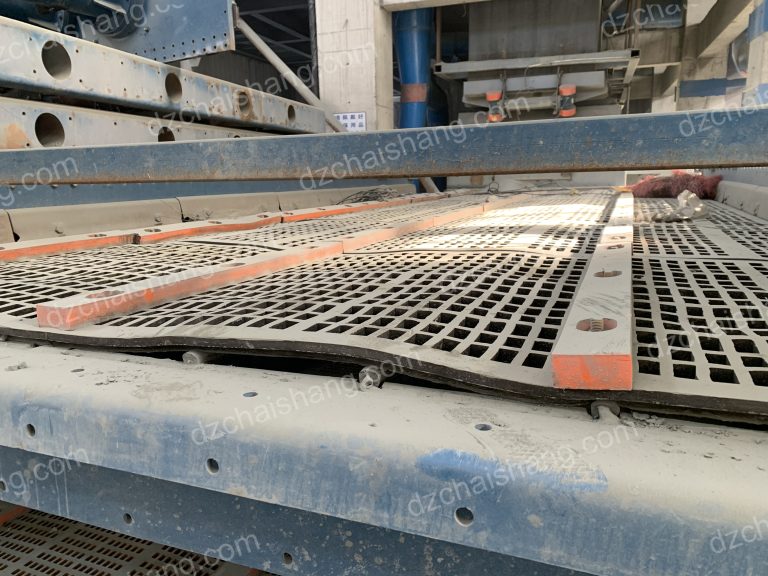
For <a href="/tag/modular-polyurethane-screen-panels" target="_blank"><strong><a href="/tag/modular-polyurethane-screen" target="_blank"><strong>modular polyurethane screen</strong></a> panels</strong></a> with steel frame, correct clamping is essential. If panels are not secured firmly, they shift and vibrate independently of the screen deck. This relative movement grinds the steel frame against the support structure, damages the polyurethane edges, and creates gaps where material can bypass the screening surface entirely.
Key installation checks include:
- All clamps tightened to manufacturer specifications — over-tightening can deform the steel frame and crack the polyurethane
- Uniform contact between the panel's steel frame and the screen deck's cross-support rails
- No gaps between adjacent panels — gaps allow material to impact unprotected edges, causing accelerated wear
Panel-to-Deck Fit
Not every polyurethane screen panel with steel frame fits every screen. Dimensional mismatches — even a few millimeters — create problems. Panels that are slightly too large may bow when forced into position, creating stress fractures. Panels that are too small leave gaps that expose edges to direct material impact.
This is one reason I always recommend that customers provide accurate screen deck dimensions and support rail spacing before ordering. Our engineering team can then design the steel frame to match precisely. With over 30 years of manufacturing experience, we have encountered virtually every screen brand and model in the market. Custom ODM and OEM support is where we prevent these fit issues before they cause field failures.
Vibrating Screen Machine Health
The condition of the screening machine itself plays a significant role:
| Machine Issue | Effect on Panel Wear |
|---|---|
| Worn vibrator bearings | Uneven vibration pattern, localized stress |
| Incorrect stroke amplitude | Excessive material bouncing or insufficient stratification |
| Overloaded feed rate | Material buildup increases impact and abrasion |
| Worn or missing support rails | Unsupported panel areas flex excessively |
| Incorrect screen inclination | Material slides rather than bounces, increasing sliding abrasion |
I always advise customers to inspect their screen machine condition before attributing premature wear to the panels themselves. A $50 bearing replacement might save thousands in panel replacements.
Feed Distribution
How material is distributed across the screen deck width matters enormously. If the feed chute directs material predominantly to one side or one area, those panels will wear disproportionately faster. Uniform feed distribution across the full deck width ensures all panels wear evenly and reach their maximum service life.
Can You Extend Polyurethane Screen Panel Life with a Zoned Approach?
Many operations treat the entire screen deck as one uniform surface, installing identical panels across every position. This approach leaves performance — and money — on the table.
A zoned panel strategy uses different polyurethane hardness, thickness, and aperture configurations at different positions on the screen deck. Harder, thicker panels at the feed end absorb the initial high-impact zone, while more flexible panels with optimized apertures in the middle and discharge zones maximize screening efficiency. This approach can extend overall deck life by 30–50% compared to using uniform panels everywhere.

Mapping Wear Patterns
Before implementing a zoned strategy, I recommend that customers document their current wear patterns. After removing a set of worn panels, photograph and measure the remaining polyurethane thickness at each position. This wear map reveals:
- High-impact zones (typically the first 1–3 panel rows at the feed end)
- High-abrasion zones (middle sections where material stratification occurs)
- Low-wear zones (discharge end, where most oversized material has already passed)
Practical Zoning Recommendations
Based on the wear map, we can recommend:
- Feed zone (first 20–30% of deck): Thicker panels, higher hardness, possibly blind (no apertures) or with larger apertures to prevent blinding. These panels sacrifice screening precision for durability.
- Working zone (middle 40–50% of deck): Standard thickness and hardness optimized for the target cut point. This is where most of the actual separation happens.
- Discharge zone (final 20–30% of deck): Thinner panels with maximum open area to capture the last near-size particles. Wear is lowest here, so thinner panels improve screening efficiency without sacrificing life.
Cost-Benefit Analysis
A zoned approach requires slightly more inventory management — you need to stock two or three panel variants instead of one. However, the cost savings from extended deck life and improved screening efficiency typically far outweigh this complexity. I have worked with <a href="/tag/mining" target="_blank"><strong>mining</strong></a> operations that reduced their annual <a href="/tag/screen-media" target="_blank"><strong>screen media</strong></a> spend by 25–40% simply by switching from a uniform to a zoned panel layout.
Frequently Asked Questions
What is the typical wear life of polyurethane screen panels with steel frame?
Wear life varies widely depending on application. In moderate abrasion environments (limestone, coal), panels typically last 3–6 months. In highly abrasive applications (silica sand, iron ore), 4–12 weeks is common. The factors discussed above — material properties, formulation, and installation — all influence the actual result. Always request application-specific estimates from your supplier.
Are polyurethane screen panels better than <a href="/tag/rubber-screen-panels" target="_blank"><strong><a href="/tag/rubber-screen" target="_blank"><strong>rubber screen</strong></a> panels</strong></a>?
Polyurethane generally offers superior abrasion resistance (2–3 times that of natural rubber) and better aperture accuracy over time. However, rubber may outperform in very high-impact applications due to its superior energy absorption. The best choice depends on your specific material and operating conditions. A qualified supplier can help you evaluate both options.
How do I know when to replace polyurethane screen panels with steel frame?
Replace panels when aperture size has increased beyond acceptable tolerance (typically 10–15% over nominal), when polyurethane thickness has worn to less than 30% of original, or when delamination from the steel frame is visible. Regular visual inspections — at least weekly in abrasive applications — help catch issues before they cause product quality problems downstream.
Does temperature affect polyurethane screen panel wear life?
Yes. Polyurethane performance degrades at elevated temperatures. Most standard formulations begin losing mechanical properties above 80°C (176°F). If your application involves hot material or high ambient temperatures, inform your supplier so they can recommend a heat-resistant formulation. Cold temperatures can also increase brittleness in some compounds.
Can polyurethane screen panels with steel frame be custom-made for my screen?
Absolutely. Reputable manufacturers offer ODM and OEM services to produce panels matched to your exact screen deck dimensions, aperture specifications, and operating conditions. Custom panels eliminate the fit issues that contribute to premature wear. Providing detailed drawings or measurements of your existing panels and screen deck ensures optimal results.
Conclusion
The wear life of polyurethane screen panels with steel frame is never determined by a single factor. It is the combined result of feed material characteristics, polyurethane formulation and hardness, installation quality, and screening machine condition. Buyers who evaluate all four variables together — rather than blaming the panel alone — consistently achieve longer service life and lower total screening costs.
If you are experiencing inconsistent panel wear or want to optimize your screen media strategy, I encourage you to reach out. With over 30 years of manufacturing experience, our own production lines, imported raw materials, and fast delivery times, we work closely with customers to match the right polyurethane screen panel with steel frame to every unique application. Contact us for a consultation and let us help you get the most out of every panel.
[^1]: "Aggregate Roundness Classification Using a <a href="/tag/wire-mesh" target="_blank"><strong>wire <a href="/tag/mesh" target="_blank"><strong>mesh</strong></a></strong></a> Method", https://pmc.ncbi.nlm.nih.gov/articles/PMC7504316/. Field experience and wear testing in mineral processing confirm that screen media life can vary by a factor of 4–10× or more between low-abrasion materials (e.g., rounded alluvial sand, limestone) and highly abrasive angular materials (e.g., quartzite, crushed granite), consistent with the article's stated range. Evidence role: case_reference; source type: research. Supports: <a href="/tag/polyurethane-screen-media" target="_blank"><strong>polyurethane screen media</strong></a> wear life can vary by an order of magnitude depending on the abrasiveness and angularity of the screened material. Scope note: Exact lifespan ratios depend on many site-specific variables including feed rate, panel formulation, and machine condition, so the 6-month vs. 6-week comparison is illustrative rather than universal. [^2]: "Prediction of Mohs Hardness with Machine Learning ...", https://par.nsf.gov/servlets/purl/10187152. The Mohs scale, developed by Friedrich Mohs in 1812, ranks minerals by their relative scratch resistance on a 1–10 ordinal scale; however, it does not capture differences in fracture toughness, particle shape, or dynamic wear behavior, which are critical factors in industrial abrasion (see, e.g., the Bond Abrasion Index or Cerchar Abrasivity Index for more application-specific measures). Evidence role: definition; source type: encyclopedia. Supports: The Mohs hardness scale is an ordinal ranking of scratch resistance among minerals, not a direct measure of abrasive wear potential. Scope note: The Mohs scale remains widely used as a first approximation in industry despite its ordinal and non-linear nature. [^3]: "Abrasivity database of different genetic rocks based on ... - PMC", https://pmc.ncbi.nlm.nih.gov/articles/PMC11178864/. Research in comminution and wear science has established that free silica content is a primary contributor to abrasive wear in mineral processing, owing to the high hardness (Mohs 7) and fracture characteristics of quartz grains that produce sharp, angular fragments during crushing. Evidence role: mechanism; source type: research. Supports: Free silica content correlates with abrasive wear rates in mineral processing equipment. Scope note: Abrasiveness is also influenced by particle shape, moisture, and ore matrix composition, so silica content alone is not a complete predictor. [^4]: "<a href="/tag/polyurethane-material" target="_blank"><strong>polyurethane material</strong></a> Guide for Bolts, Pushers, and Stoppers", https://us.misumi-ec.com/blog/polyurethane-material-guide/. Shore hardness (ASTM D2240) quantifies resistance to localized surface deformation under a specified indenter load and is not a direct measure of abrasion resistance; while harder polyurethanes often show improved sliding abrasion resistance, the relationship is non-linear and modulated by resilience, tear strength, and hysteresis properties (Szycher, 'Szycher's Handbook of Polyurethanes'). Evidence role: definition; source type: research. Supports: Shore hardness measures resistance to surface indentation and does not directly predict abrasive wear resistance in polyurethane elastomers. Scope note: In practice, hardness remains a widely used proxy in industry due to its ease of measurement. [^5]: "Effect of Aromatic Chain Extenders on Polyurea and ... - PMC", https://pmc.ncbi.nlm.nih.gov/articles/PMC9920908/. Cast polyurethane elastomers are typically produced by reacting MDI- or TDI-based prepolymers with diamine or diol chain extenders; MDI-based systems generally yield elastomers with superior mechanical properties and hydrolytic stability compared to TDI systems, making them preferred for demanding wear applications (Hepburn, 'Polyurethane Elastomers,' 2nd ed.). Evidence role: definition; source type: encyclopedia. Supports: MDI (methylene diphenyl diisocyanate) and TDI (toluene diisocyanate) prepolymers reacted with chain extenders are the standard chemistry for cast polyurethane elastomers used in industrial applications.