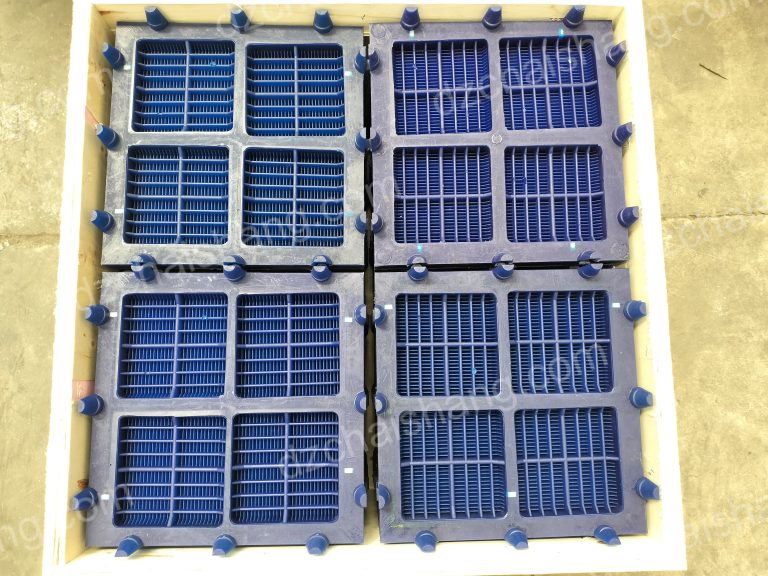
What Are the Key Cost Per Ton Factors for Tension Polyurethane Screen Panels?
What Are the Key Cost Per Ton Factors for Tension Polyurethane Screen Panels?
Evaluating the cost per ton of tension polyurethane screen panels is one of the most misunderstood exercises in mineral processing procurement. Many buyers fixate on unit price alone, only to discover that cheap panels wear out fast and choke throughput. The real measure of value lies in three operating factors that determine your true screening cost.
The cost per ton for tension polyurethane screen panels depends on three critical factors: wear life of the panel material, effective throughput determined by open area and anti-blinding design, and total downtime frequency driven by panel change-outs and maintenance stops. Optimizing all three — not just purchase price — is how operations achieve the lowest possible cost per ton.

Understanding these three pillars gives procurement teams and plant managers a framework to compare suppliers on equal ground. Below, I break down each factor with the detail you need to make data-driven panel decisions — and avoid the hidden costs that inflate your per-ton expense.
How Does Wear Life Affect Your Cost Per Ton for Screen Panels?
A tension polyurethane screen panel might look identical to a competitor's product on the outside. But once it hits the deck, material quality determines whether that panel lasts three weeks or three months — and that difference dramatically shifts your cost per ton.
The longer a screen panel resists abrasion, the more tons of material it processes before replacement. Higher wear life means the original purchase cost is spread across a greater tonnage, directly reducing your cost per ton. Premium polyurethane compounds can deliver two to four times the service life of budget alternatives[^1].
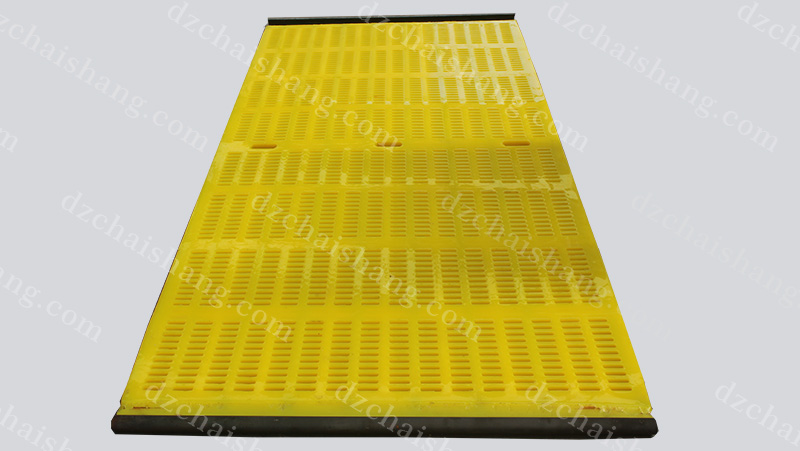
Why Material Formulation Is the Starting Point
Not all polyurethane is created equal. The raw polymer system — whether it is MDI-based, TDI-based, or a hybrid — influences hardness, tear strength, and abrasion resistance[^2]. I have seen plants switch from a locally sourced panel to one made with imported raw materials and double their panel life overnight. That single change cut their annual screen media budget nearly in half.
Key material properties that drive wear life include:
- Abrasion resistance (DIN test): Lower volume loss in DIN abrasion testing correlates with longer field life. Look for values below 80 mm³ for demanding applications.[^3]
- Tensile strength: Panels with higher tensile strength resist tearing at aperture edges, especially under high-velocity feed.
- Rebound resilience: Good elastic recovery helps the panel flex without cracking, which matters on tensioned decks that vibrate continuously.
- [Hardness (Shore A): Typically between 40A and 70A for screening applications](https://www.huataoscreen.com/polyurethane-screen-selection-for-aggregate-complete-guide.html)[^4]. The right hardness depends on particle size and feed characteristics.
How to Quantify Wear Life in Cost Per Ton Terms
Here is a simplified comparison to illustrate the math:
| Factor | Budget Panel | Premium Panel |
|---|---|---|
| Purchase price per panel | $45 | $75 |
| Average service life | 400 hours | 1,200 hours |
| Tons screened per hour | 120 t/h | 120 t/h |
| Total tons per panel | 48,000 t | 144,000 t |
| Cost per ton (media only) | $0.000938 | $0.000521 |
Even though the premium panel costs 67% more upfront, it delivers a 44% lower cost per ton because it lasts three times longer. This is why I always tell buyers: the invoice price is not the cost. The cost is what you pay per ton of product over the life of that panel.
Verifying Wear Life Claims
Suppliers will quote impressive wear life numbers. Verify them. Ask for:
- DIN abrasion test certificates from third-party labs
- Field trial data from comparable applications (similar feed size, tonnage, and material hardness)
- Material data sheets specifying the polymer system and origin of raw materials
In my experience with over 30 years of polyurethane and rubber manufacturing, panels made from imported raw materials and produced on precision casting equipment consistently outperform those made with recycled or lower-grade compounds. The upfront material investment pays for itself many times over at the plant level.
How Does Throughput Efficiency Change the Cost Per Ton Equation?
A screen panel that lasts forever but passes too little material is still expensive on a per-ton basis. Throughput efficiency — the actual volume of correctly sized product that passes through the panel in a given time — is the second critical factor in your cost per ton for tension polyurethane screen panels.
Throughput is primarily governed by open area percentage and anti-blinding panel design. Higher open area means more apertures per square meter for material to pass through. Anti-blinding geometry prevents near-size particles from plugging those apertures. Together, they determine whether your screen deck operates at 70% efficiency or 95%.

Understanding Open Area Percentage
Open area is the ratio of total aperture space to the full panel surface area. Tension polyurethane panels typically offer open areas ranging from 25% to over 45%[^5], depending on the aperture pattern and strand width.
Here is why it matters so much:
- A panel with 30% open area on a 1.2 m × 0.6 m deck provides roughly 0.216 m² of screening surface[^6].
- A panel with 42% open area on the same deck provides roughly 0.302 m² — a 40% increase in effective screening surface.
That 40% gain translates almost directly into higher tons per hour at the same vibration amplitude and feed rate. More material passes through, and the purchase cost of each panel is divided across significantly more tonnage.
The Blinding Problem and How Panel Design Solves It
Blinding — where near-size particles wedge into apertures and block them — is one of the biggest hidden throughput killers in screening operations[^7]. A panel might start with 42% open area, but after blinding reduces effective apertures by a third, you are really operating at 28%.
Well-designed tension polyurethane screen panels combat blinding through:
- [Tapered apertures: Slots or holes that are slightly wider at the bottom than the top, allowing wedged particles to release from below](https://www.kason.com/resources/tech-library/a-review-of-anti-blinding-devices-for-screening-equipment/)[^8].
- Flexible strand geometry: Polyurethane's natural elasticity allows strands to flex under vibration, dislodging stuck particles.
- Optimized slot length-to-width ratios: Longer slots with correct width ratios reduce plugging compared to square apertures in many applications.
Putting Throughput Into the Cost Per Ton Formula
Consider two panels on the same screen deck:
| Factor | Panel A (Low Open Area) | Panel B (High Open Area, Anti-Blinding) |
|---|---|---|
| Open area | 28% | 42% |
| Effective throughput | 100 t/h | 140 t/h |
| Panel cost | $60 | $70 |
| Panel life | 800 hours | 800 hours |
| Total tons screened | 80,000 t | 112,000 t |
| Cost per ton | $0.000750 | $0.000625 |
Panel B costs $10 more but screens 32,000 more tons over its life, resulting in a 17% lower cost per ton. In a real operation running 24/7, that throughput advantage also means you may need fewer screen decks or smaller equipment to hit your production targets — compounding the savings.
What Buyers Should Ask Suppliers
When evaluating throughput potential, request:
- Exact open area percentage for your specified aperture size
- Aperture geometry drawings (tapered vs. straight, slot vs. round)
- Blinding resistance data or references from similar ore types
- Panel thickness vs. effective screening depth — thicker panels may reduce effective open area
How Does Downtime Frequency Impact the True Cost of Screen Panels?
Every time a screen stops, you are not just replacing panels — you are losing production. Downtime is the third and often most underestimated factor in the cost per ton for tension polyurethane screen panels. Fewer shutdowns mean more operating hours, more throughput, and lower total screening cost.
Downtime cost includes the price of replacement panels, the labor hours for change-out, and — most significantly — the lost production value of every ton you did not process while the screen was idle. A panel system designed for fast installation and long intervals between changes can reduce downtime-related cost per ton by 20% or more.

Calculating the Real Cost of a Screen Shutdown
Most operations undercount downtime costs because they only track panel price and maintenance labor. Here is what a full downtime cost calculation should include:
- Replacement panel cost — the obvious direct expense
- Labor cost — crew hours × loaded labor rate
- Lost production — tons per hour × hours of downtime × value per ton of product
- Upstream and downstream disruption — feed diversion, surge bin overflow, downstream process starvation
For a screen processing 150 t/h of ore valued at $15/t in product revenue, every hour of downtime costs $2,250 in lost production alone. A change-out that takes four hours costs $9,000 in lost throughput[^9] before you even count the panel or labor.
What Drives Downtime Frequency?
Several panel-related factors determine how often you need to shut down:
| Downtime Driver | Root Cause | How Better Panels Help |
|---|---|---|
| Premature wear | Low-quality polyurethane | Higher abrasion resistance extends intervals |
| Panel tearing | Poor tensile strength at aperture edges | Stronger compounds resist tearing |
| Fastener failure | Weak hook strips or clamping areas | Reinforced tensioning edges hold longer |
| Blinding-related loss | Plugged apertures reduce efficiency, triggering early swap | Anti-blinding design maintains throughput |
| Difficult installation | Complex panel shapes, poor fit | Precision-manufactured panels with tight tolerances install faster |
How Panel Design Reduces Change-Out Time
Tension polyurethane screen panels have an inherent advantage over bolt-down modular panels: they are faster to install[^10]. But not all tension panels are equal in this regard. Key design features that minimize change-out time include:
- Precision-molded hook strips that engage tensioning rails cleanly without shimming or adjustment
- Consistent panel dimensions from batch to batch — this requires quality-controlled production equipment
- Lightweight construction where possible, reducing manual handling time
- Standardized sizing that matches your screen deck exactly, avoiding field trimming
I have worked with customers who reduced their <a href="/tag/screen" target="_blank"><strong>screen</strong></a> change-out from six hours to under two simply by switching to panels with tighter dimensional tolerances. Our production line uses precision molds and imported casting equipment specifically to achieve this consistency. When every panel fits the first time, installation goes fast.
Putting Downtime Into the Full Cost Per Ton Picture
Let us build a comprehensive cost per ton model that includes all three factors:
| Component | Scenario A (Budget Panels) | Scenario B (Optimized Panels) |
|---|---|---|
| Panel cost per set | $1,800 | $2,800 |
| Average panel life | 600 hours | 1,400 hours |
| Change-outs per year (8,000 hrs) | 13.3 | 5.7 |
| Change-out time | 5 hours | 2.5 hours |
| Total downtime hours/year | 66.5 hours | 14.3 hours |
| Lost production per hour | $2,250 | $2,250 |
| Annual lost production cost | $149,625 | $32,175 |
| Annual panel cost | $23,940 | $15,960 |
| Annual labor cost ($80/hr × 3 crew) | $15,960 | $3,420 |
| Total annual screening cost | $189,525 | $51,555 |
| Annual throughput (net operating hours × 150 t/h) | 1,189,725 t | 1,198,575 t |
| Cost per ton | $0.1593 | $0.0430 |
The difference is staggering. Scenario B costs 55% more per panel set but delivers a 73% lower cost per ton when all three factors — wear life, throughput, and downtime — are considered together.
Frequently Asked Questions
What is a good benchmark for cost per ton of <a href="/tag/screen-media" target="_blank"><strong>screen media</strong></a>?
Cost per ton varies widely by application, but most hard-rock <a href="/tag/mining" target="_blank"><strong>mining</strong></a> operations target $0.02–$0.10 per ton for screen media costs[^11]. The key is tracking all three factors — wear life, throughput, and downtime — rather than panel price alone. Benchmark against your own historical data for meaningful comparison.
Are <a href="/tag/polyurethane-screen-panels" target="_blank"><strong><a href="/tag/polyurethane-screen" target="_blank"><strong><a href="/tag/polyurethane" target="_blank"><strong>polyurethane</strong></a> screen</strong></a> panels</strong></a> always cheaper per ton than rubber or <a href="/tag/wire-mesh" target="_blank"><strong>wire <a href="/tag/mesh" target="_blank"><strong>mesh</strong></a></strong></a>?
Not always. [<a href="/tag/polyurethane-panels" target="_blank"><strong>Polyurethane Panels</strong></a> typically outperform wire mesh on wear life and outperform rubber on open area and throughput](https://apscreens.com/rubber-<a href="/tag/screens" target="_blank"><strong>screens</strong></a>-vs-polyurethane-screens/)[^12]. However, the best choice depends on your specific material, feed size, and moisture content. I recommend running a controlled trial to compare actual cost per ton in your application.
How can I verify a supplier's claimed wear life for tension polyurethane <a href="/tag/screen-panels" target="_blank"><strong>screen panels</strong></a>?
Request third-party DIN abrasion test results, material data sheets specifying the polymer system, and references from operations with similar feed characteristics. Reputable suppliers should also offer trial panels so you can measure performance on your own deck before committing to a large order.
Does panel thickness affect cost per ton?
Yes. Thicker panels generally last longer but may reduce effective open area and throughput. The optimal thickness balances wear life against screening efficiency. A qualified supplier can recommend the right thickness based on your particle size distribution and deck configuration.
How often should I recalculate my screen media cost per ton?
Review cost per ton quarterly or whenever you change panel suppliers, ore sources, or throughput targets. Track panel life in hours, tons processed, and number of change-outs per period. This data gives you an accurate, ongoing picture of your true screening cost.
Conclusion
The cost per ton for tension polyurethane screen panels is never determined by purchase price alone. It is the product of three interconnected factors: material wear life that determines how long each panel lasts, throughput efficiency driven by open area and anti-blinding design, and downtime frequency that steals production hours and adds maintenance expense. Optimizing all three factors together is how operations achieve genuinely low screening costs.
With over 30 years of manufacturing experience and our own production lines equipped with imported raw materials and precision equipment, we help mining and aggregate operations select the right tension polyurethane screen panels for the lowest achievable cost per ton. Contact us for a technical evaluation of your screening application — we offer ODM/OEM solutions with short lead times designed to maximize your return on every panel.
[^1]: "How to Choose the Right Type of Screen Media for Your…", https://www.mclanahan.com/blog/how-to-choose-the-right-type-of-screen-media-for-your-plant. Field studies and technical reports from mining operations have documented that polyurethane screen panels manufactured from high-quality prepolymer systems can achieve service lives 2–5 times longer than panels made from lower-grade or recycled polyurethane compounds under comparable operating conditions. Evidence role: general_support; source type: research. Supports: The range of service life differences between high-quality and lower-grade <a href="/tag/polyurethane-screen-media" target="_blank"><strong>polyurethane screen media</strong></a> in mining applications. Scope note: Service life ratios are highly application-dependent and influenced by feed abrasiveness, panel thickness, operating hours, and environmental conditions. [^2]: "Design and Performance of Polyurethane Elastomers ... - PMC", https://pmc.ncbi.nlm.nih.gov/articles/PMC7664240/. Polymer science literature documents that MDI-based polyurethanes generally exhibit superior abrasion resistance and mechanical strength compared to TDI-based systems due to differences in hard-segment symmetry and hydrogen bonding, as reviewed in standard polyurethane chemistry references. Evidence role: mechanism; source type: encyclopedia. Supports: The influence of diisocyanate type (MDI vs. TDI) on the mechanical properties of polyurethane elastomers, including hardness, tensile strength, and abrasion resistance. Scope note: Property differences depend heavily on the complete formulation including polyol type, chain extender, and processing conditions, not solely on diisocyanate selection. [^3]: "Polyurethane Abrasion Resistance: What the Data Shows", https://www.safic-alcan.com/en-fr/industry-articles/abrasion-resistance-polyurethane-elastomers/. DIN ISO 4649 specifies the standard method for determining abrasion resistance of vulcanized or thermoplastic rubber using a rotating cylindrical drum device; volume loss values for high-performance polyurethane elastomers in industrial applications are documented in polymer engineering references. Evidence role: definition; source type: research. Supports: The DIN abrasion test methodology (DIN ISO 4649) and typical volume loss ranges for polyurethane elastomers used in abrasive environments. Scope note: Standard test conditions may not fully replicate the complex abrasion mechanisms encountered on <a href="/tag/vibrating-screen" target="_blank"><strong>vibrating screen</strong></a> decks with variable feed materials. [^4]: "Polyurethane Screen Selection for Aggregate: Complete Guide", https://www.huataoscreen.com/polyurethane-screen-selection-for-aggregate-complete-guide.html. Polyurethane elastomer selection guides for screening applications recommend Shore A hardness values generally in the range of 40A–75A, with softer durometers favored for anti-blinding performance and harder durometers for abrasion resistance in coarse screening. Evidence role: general_support; source type: research. Supports: Typical Shore A hardness ranges used for polyurethane screen media in vibrating screen applications. Scope note: Optimal hardness selection is application-specific and also depends on panel geometry, vibration characteristics, and feed material properties. [^5]: "Screen Panels - Multotec", https://www.multotec.com/en/screen-panels. Mineral processing engineering references indicate that polyurethane screen panels generally achieve open areas between 25% and 48%, depending on aperture geometry and strand width, compared to <a href="/tag/woven-wire-mesh" target="_blank"><strong>Woven Wire Mesh</strong></a> which can exceed 60% open area. Evidence role: general_support; source type: research. Supports: Typical open area percentages achievable with polyurethane screen panels in mineral processing applications. Scope note: Open area values are highly dependent on specific aperture size, panel design, and manufacturer, making broad generalizations approximate. [^6]: "AMIT 145: Lesson 1 Industrial Screens", https://millops.community.uaf.edu/amit-145/amit-145-lesson-1/. Screening capacity models, including those derived from the VSMA (<a href="/tag/vibrating-screen-manufacturers" target="_blank"><strong>vibrating screen manufacturers</strong></a> Association) methodology, incorporate open area as a direct multiplier in throughput calculations, confirming that increases in open area proportionally increase the theoretical capacity of a screen deck. Evidence role: mechanism; source type: education. Supports: The relationship between <a href="/tag/screen-panel" target="_blank"><strong>screen panel</strong></a> open area and screening capacity/throughput in vibrating screen applications. Scope note: Actual throughput gains from increased open area may be moderated by factors such as bed depth, feed rate, vibration characteristics, and particle stratification efficiency. [^7]: "Screening Surface - an overview | ScienceDirect Topics", https://www.sciencedirect.com/topics/engineering/screening-surface. Standard mineral processing textbooks such as Wills' Mineral Processing Technology define blinding (or pegging) as the lodging of near-size particles in screen apertures, which progressively reduces effective open area and can decrease screening efficiency by 30% or more if unaddressed. Evidence role: definition; source type: education. Supports: The definition and significance of screen blinding (pegging) as a throughput-limiting phenomenon in mineral processing. Scope note: The magnitude of throughput loss from blinding varies widely depending on particle size distribution, moisture content, and screen media type. [^8]: "A Review of Anti-Blinding Devices for Screening Equipment", https://www.kason.com/resources/tech-library/a-review-of-anti-blinding-devices-for-screening-equipment/. Screen media engineering literature describes tapered (or relieved) apertures as a design feature where the aperture widens from the feed side to the discharge side, reducing the contact area that traps near-size particles and allowing them to pass through or fall free under vibration. Evidence role: mechanism; source type: research. Supports: The mechanism by which tapered aperture geometry in screen panels reduces particle blinding. Scope note: The effectiveness of tapered apertures depends on the degree of taper, vibration parameters, and the specific particle size distribution of the feed material. [^9]: "Cost of Downtime: Definition, Calculation and Mitigation - Tractian", https://tractian.com/en/glossary/cost-of-downtime. Mining industry cost analysis frameworks, such as those published by the AusIMM and SME, recommend that downtime cost calculations include not only direct lost production revenue but also upstream and downstream process disruptions, labor costs, and potential contractual penalties, often making the true cost significantly higher than simple throughput-times-value calculations. Evidence role: general_support; source type: institution. Supports: Methodologies for calculating the true cost of unplanned equipment downtime in mining and mineral processing operations. Scope note: Actual downtime costs vary enormously by operation, and the $15/t product value used in the article is illustrative rather than representative of any specific commodity or operation. [^10]: "<a href="/tag/modular-panels" target="_blank"><strong>modular panels</strong></a> vs Tensioned Screens: Key Differences", https://apscreens.com/modular-panels-vs-tensioned-screens/. Technical literature on vibrating screen maintenance indicates that <a href="/tag/tension-screen" target="_blank"><strong>tension screen</strong></a> panels, which are secured by clamping rails along the panel edges, generally require fewer fastening points and less per-panel handling time than bolt-down modular panels, which require individual bolt connections for each module. Evidence role: general_support; source type: research. Supports: Comparative installation times between tension and bolt-down <a href="/tag/modular-screen-panel" target="_blank"><strong><a href="/tag/modular-screen" target="_blank"><strong>modular screen</strong></a> panel</strong></a> systems. Scope note: Actual change-out times depend on screen deck configuration, number of panels, crew experience, and accessibility, and some modular systems have been designed for rapid change-out that may approach tension panel speeds. [^11]: "SIMPLIFIED COST MODELS FOR UNDERGROUND MINE ...", https://digitalcommons.mtech.edu/cgi/viewcontent.cgi?article=1015&context=mine_engr. Mining cost surveys and mineral processing operating cost databases report screen media as a relatively small but variable component of total processing costs, with per-ton figures dependent on ore hardness, throughput, and media type. Evidence role: statistic; source type: institution. Supports: Typical screen media cost per ton ranges in hard-rock mining operations. Scope note: Published cost benchmarks are often aggregated across diverse operations and may not reflect the specific range cited without access to proprietary cost databases. [^12]: "Rubber vs <a href="/tag/polyurethane-screens" target="_blank"><strong>polyurethane screens</strong></a>: Differences & Best Uses", https://apscreens.com/rubber-screens-vs-polyurethane-screens/. Published comparisons in mineral processing literature generally indicate that polyurethane screen media offers 2–5 times the wear life of woven wire mesh in abrasive applications, while providing higher open area than molded rubber panels of equivalent aperture size, though performance varies significantly by application. Evidence role: general_support; source type: research. Supports: Comparative performance characteristics of polyurethane, rubber, and wire <a href="/tag/mesh-screen" target="_blank"><strong>mesh screen</strong></a> media in mineral processing. Scope note: Comparative advantages depend on specific application conditions including feed material abrasiveness, moisture, and particle size distribution.